Tree of Life
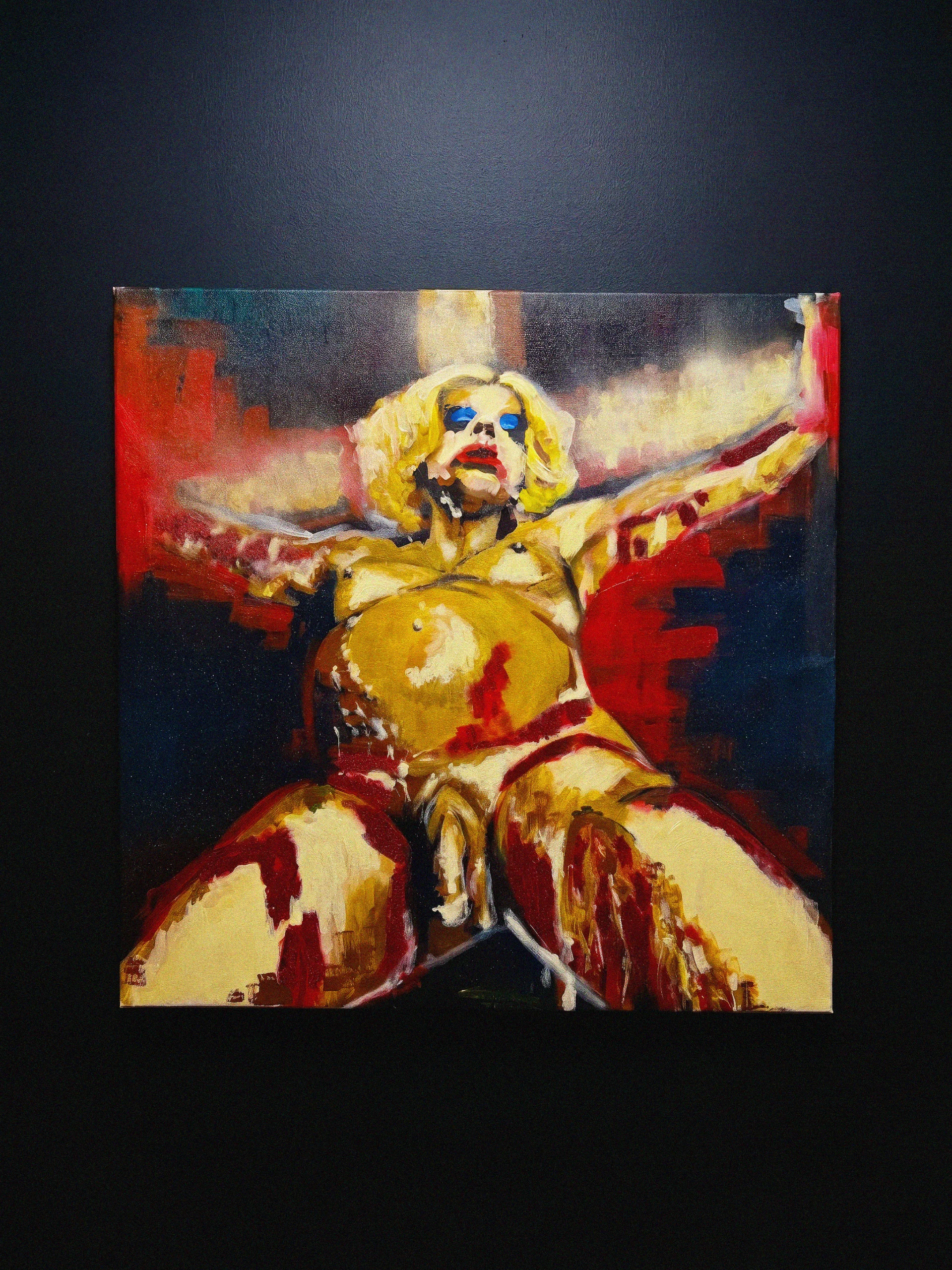
A pregnant figure carries two sacred structures at once: the kabbalistic Tree of Life and the cruciform body of Catholic imagery.
Curatorial Summary
The pregnant figure determines Tree of Life from the inside out. Its enlarged abdomen anchors the painting, while the arms stretch across its upper register and the open legs pull the composition downward. The body itself supplies the geometry.
The title brings the kabbalistic Tree of Life into view. The pose introduces another image almost immediately. With the arms spread wide, the figure recalls the cruciform body familiar from Catholic iconography. Both references remain recognisable, layered onto the same flesh without settling into a common religious language.
Pregnancy changes their proportions. The abdomen becomes the gravitational centre of an image whose sacred structures are usually organised elsewhere. The Tree of Life is translated into anatomy. The cross is made to pass through a body defined by gestation.
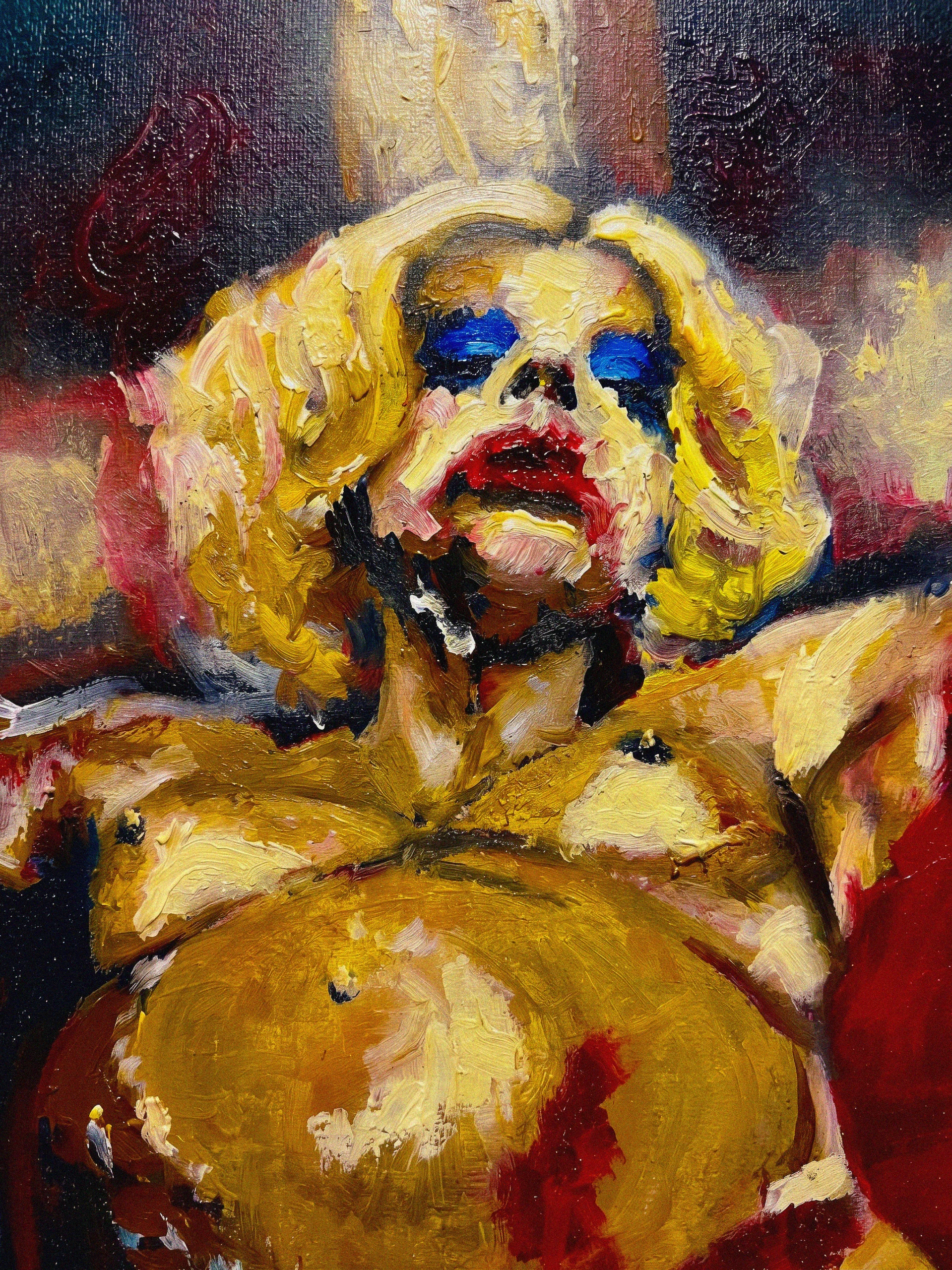
Gold lends the figure the intensity of a devotional image, though the surface refuses polish. Red cuts through the body in streaks and exposed patches; paint thickens, blurs and breaks its contours. The frontal pose promises the stability of an icon, but the body exceeds that promise.
The painting leaves both religious images intact enough to be recognised. Neither can now be separated from the pregnant figure that has taken over its shape.
artist
statement
I started with the belly. I made it too large because I wanted everything else in the painting to depend on it.
The arms came next. Once I stretched them across the canvas, I could see the cross in the pose. I was already working with the Tree of Life, so I kept both structures there instead of correcting the image toward one of them.
I wanted the figure to occupy almost the entire canvas. There is very little room around it. The arms hit the sides, the legs open toward the bottom edge, and the belly holds the middle.
Gold gave me the surface I needed for the religious references. I worked red back into it so the body would never become too clean or settled. I wanted the painting to keep the friction between an icon and a body that is swollen, exposed and still materially unstable.