Suicide Attempts
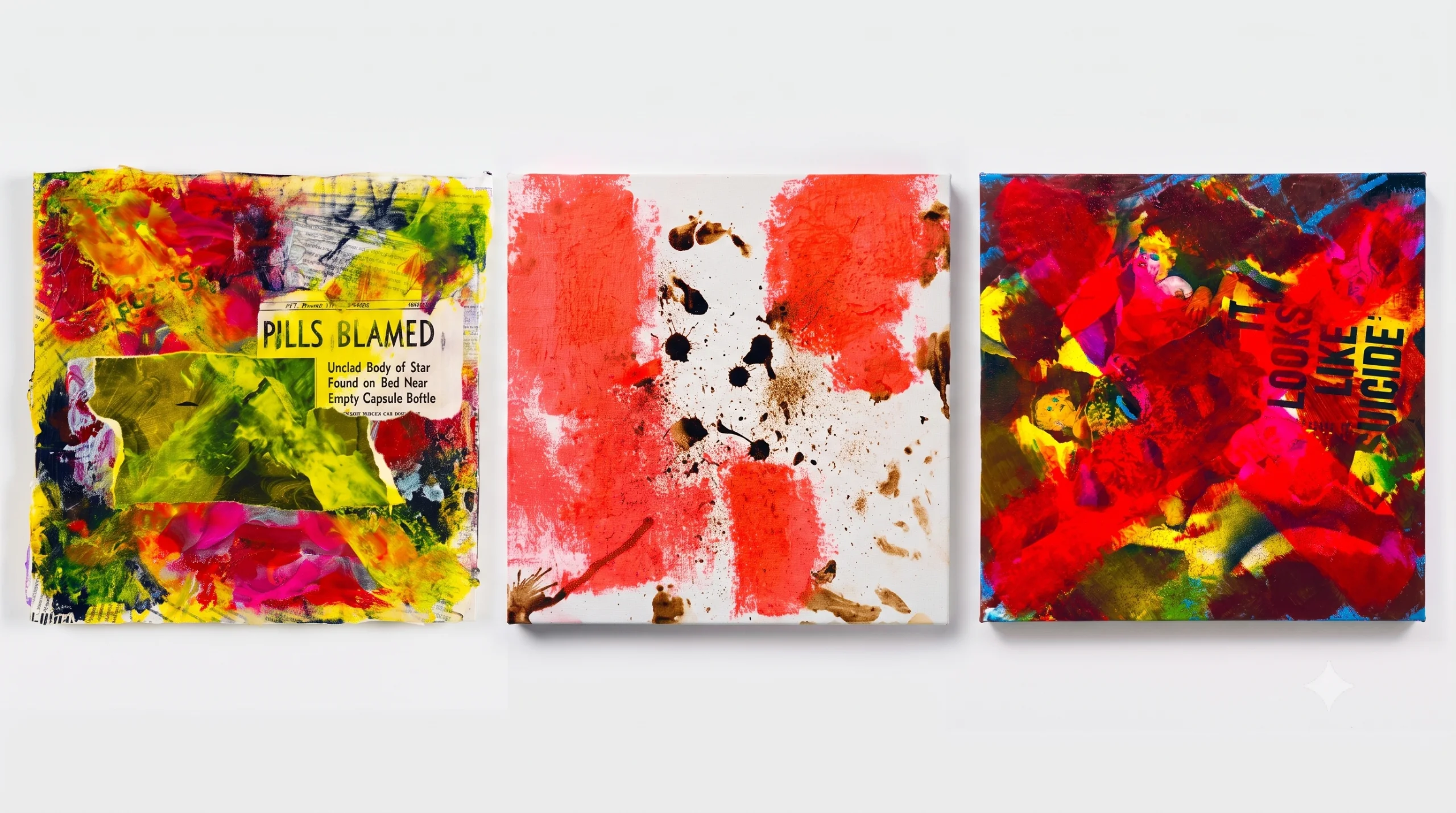
A triptych attaches posthumous headlines about Marilyn Monroe to photographs of the artist’s trans-femme body, while a central panel made with her blood tests how images and bodily traces are forced to testify to a suicide narrative.
Curatorial Summary
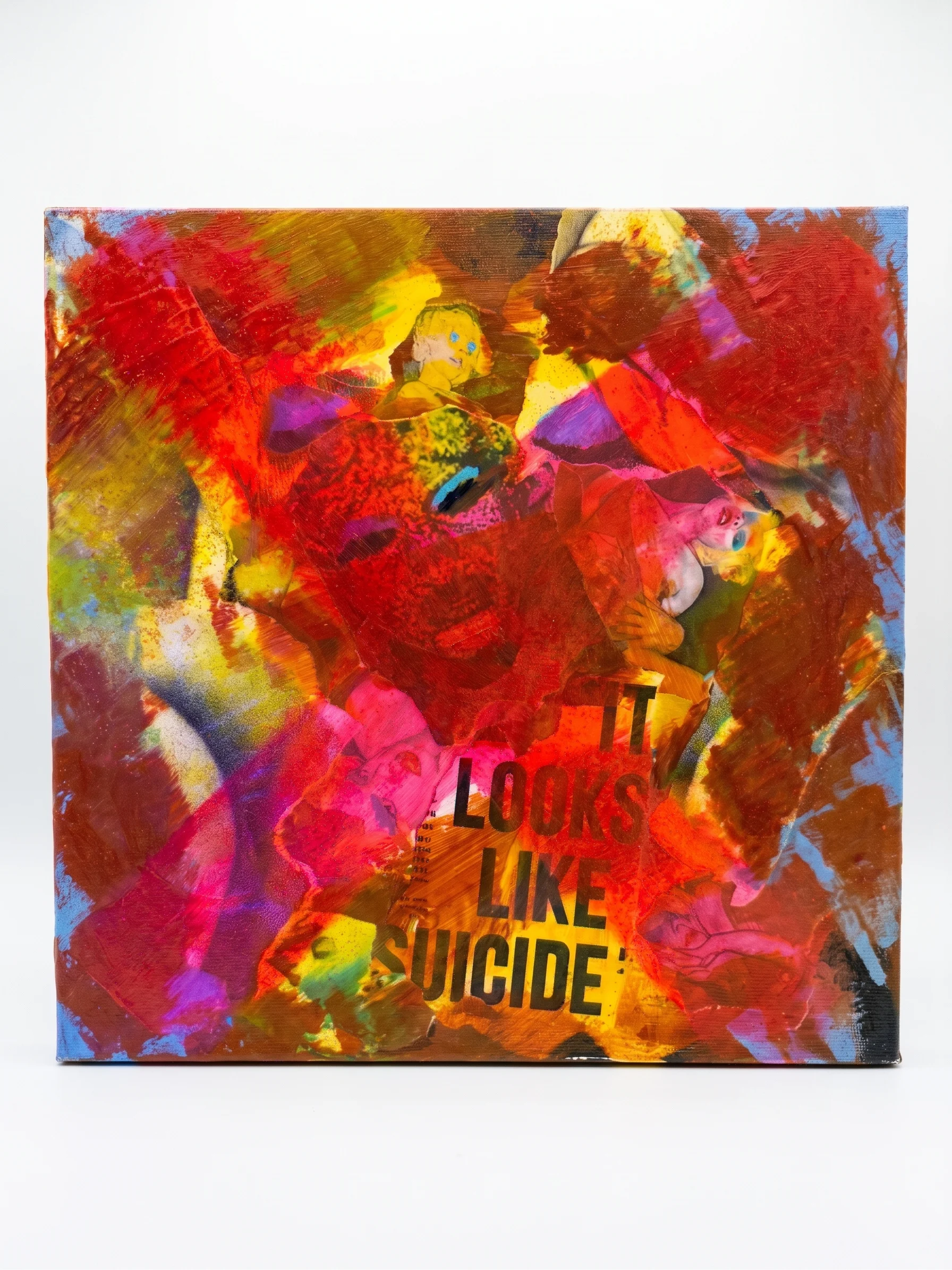
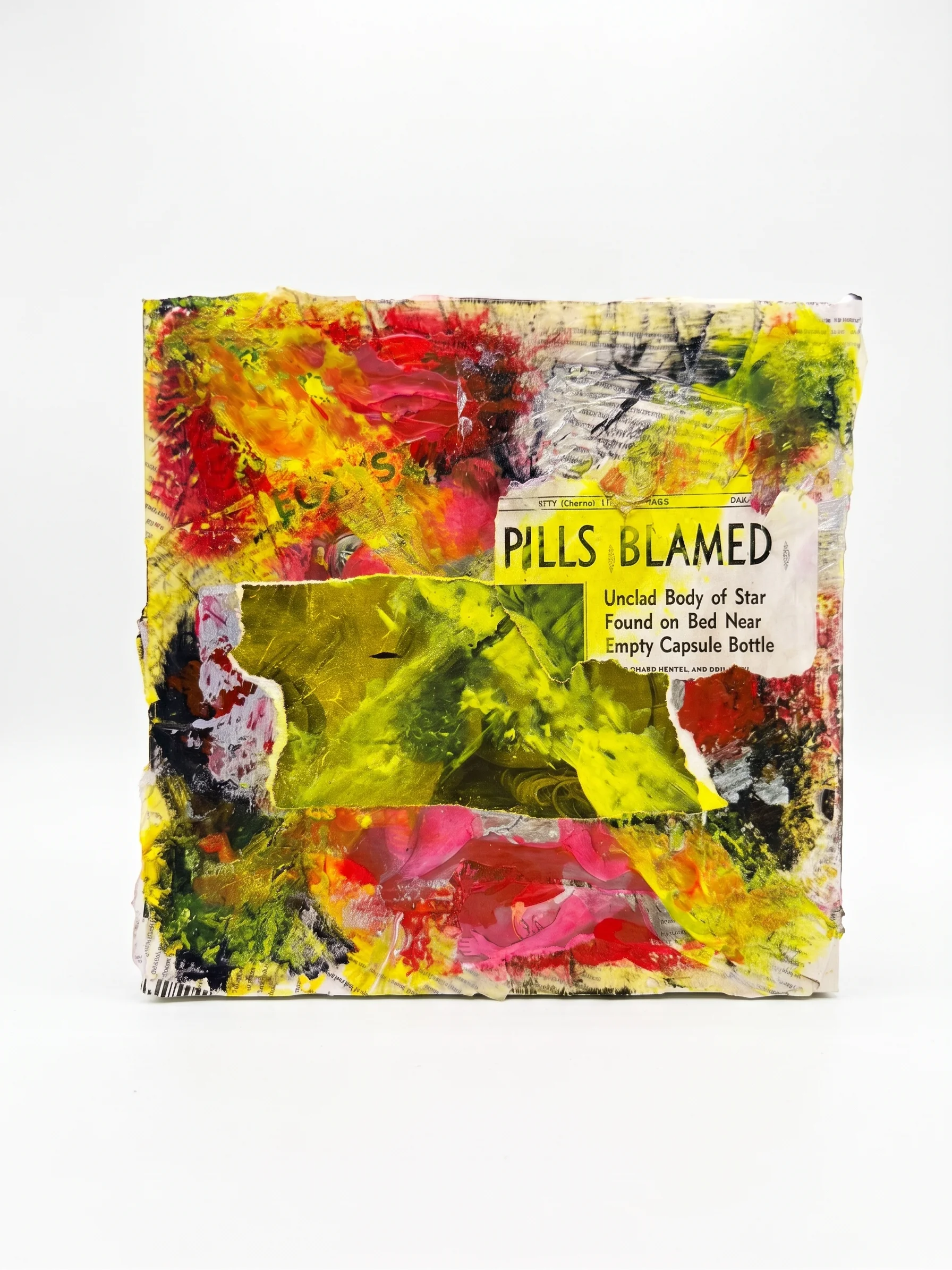
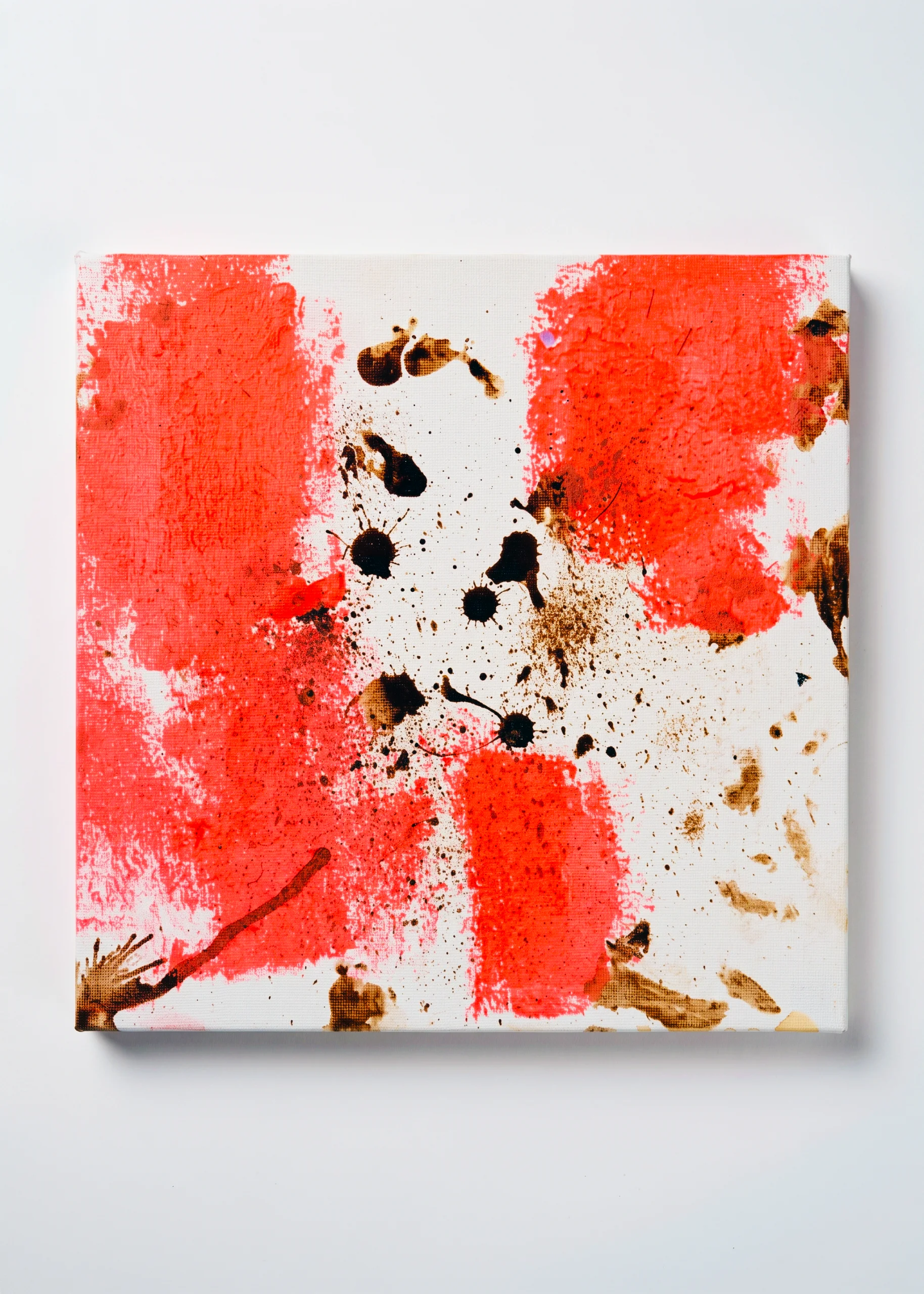
In “SUICIDE ATTEMPTS,” headlines published after Marilyn Monroe’s death are removed from their original context and attached to photographs of the artist made for another purpose. “PILLS BLAMED” and “LOOKS LIKE SUICIDE” reorganize her gestures into apparent evidence of an event the images never documented, revealing how journalistic language can retain its authority after losing contact with its original referent. Between the collages, the artist’s blood mixed with paint carries the visual weight of forensic evidence without identifying any event it might be taken to prove. The title extends the language of presumed suicide across all three panels, functioning as a caption even where no newspaper text appears. Through these repeated attempts to make an image confess, the triptych examines how photographs, headlines, and bodily traces are arranged into narratives that precede the bodies they claim to explain.
artist
statement
“SUICIDE ATTEMPTS” begins with newspaper headlines published after Marilyn Monroe’s death. Phrases such as “PILLS BLAMED” and “LOOKS LIKE SUICIDE” turned speculation into public knowledge, giving uncertainty the form of a verdict. In the outer panels, I detach these headlines from their original photographs and attach them to images of my own body. The newspaper archive becomes a script placed over my image, exposing how a caption can manufacture the event it appears to describe.
In the first panel, warning yellow, red, and green partially obscure my photograph while “PILLS BLAMED” remains sharply legible. In the third, repeated images of my body dissolve into saturated red beneath the words “LOOKS LIKE SUICIDE.” The headline organizes how the photograph can be seen, making gestures produced in another context available as evidence for a story imposed from outside. The substitution reveals a media structure capable of treating different feminized bodies as carriers of the same narrative.
The central panel contains no photography or newspaper collage. My blood, mixed with paint, appears in blocks, splashes, and stains across the canvas. Blood carries the visual authority of evidence, although its presence explains neither an event nor a body. Framing, pigment, and composition immediately subject it to interpretation. The material trace becomes another surface onto which a story can be projected.
I approach this archive from a trans-femme position shaped by the experience of having the body read through external categories and demands for legibility. Placing language associated with Monroe’s death over my photographs preserves the historical distance between us while testing the portability of the narrative once attached to her image. A phrase detached from its original event retains enough authority to reorganize another body into crisis, evidence, and presumed self-destruction.
The plural title refers to the repeated attempts made by headlines, photographs, bodily traces, and painting to stabilize the meaning of a death. Each panel tries to make an image confess. Paint covers evidence and produces new evidence; photographs change while language preserves its claim to certainty. “SUICIDE ATTEMPTS” examines how a narrative attached to one woman’s death can survive its original context and continue shaping the interpretation of other bodies.
exhibitions
& events
A record of the exhibition contexts in which this work has appeared.