Shekhinah in
Labor
- Year
- 2026
- Status
- AVAILABLE
- Concept, text, performance, objects, painting, video and music
- Simona Kasprowicz
- Curator
- Ewa Chomicka
- Production
- Alicja Kaczmarek-PoławskaJoanna Chodkowska
- Dramaturgical consultant
- Remigiusz RyzińskiSylwia HejnoBetty Q
works in performance
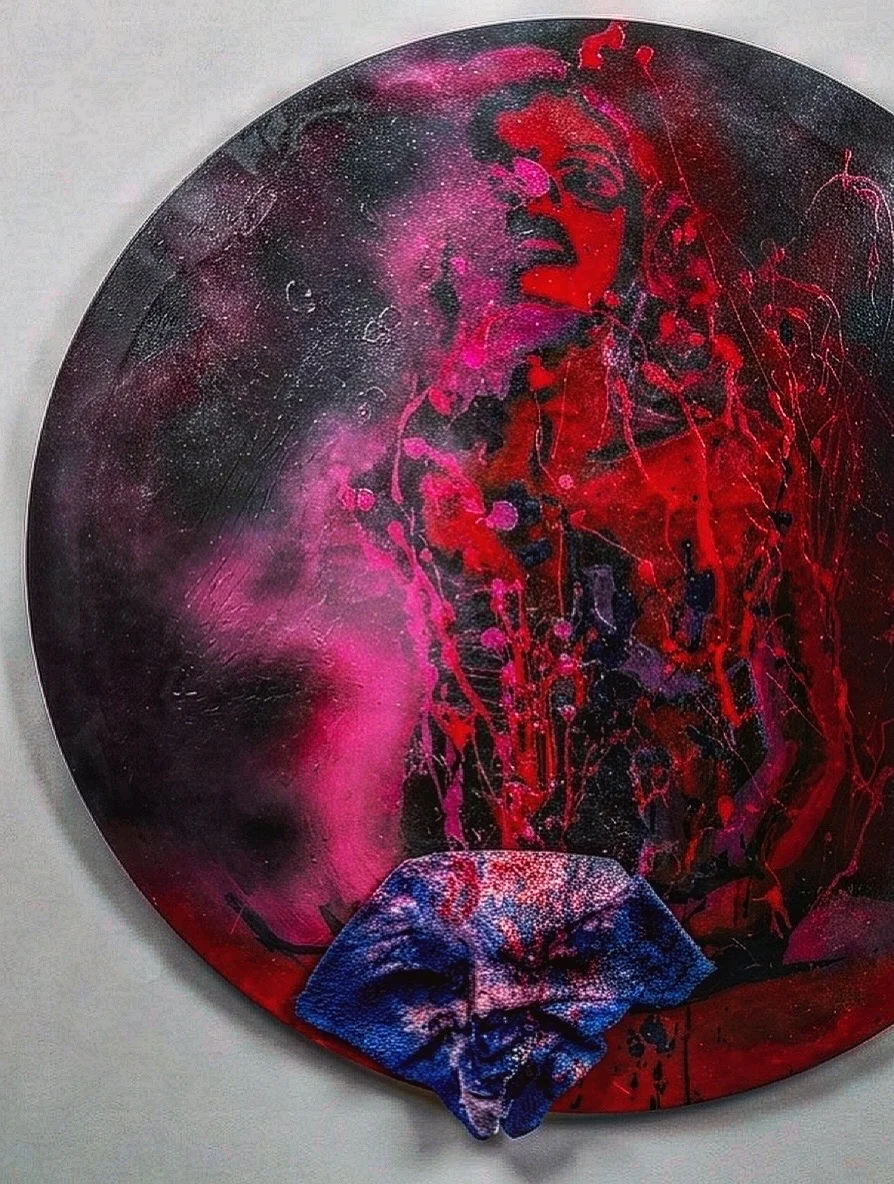
The Body Leaks the Image
2026Mixed media / 80 x 80 cm
A heavily pregnant figure inflected by Marilyn Monroe opens at the abdomen; paint runs and a rigid shroud passes beyond the circular edge of the canvas.
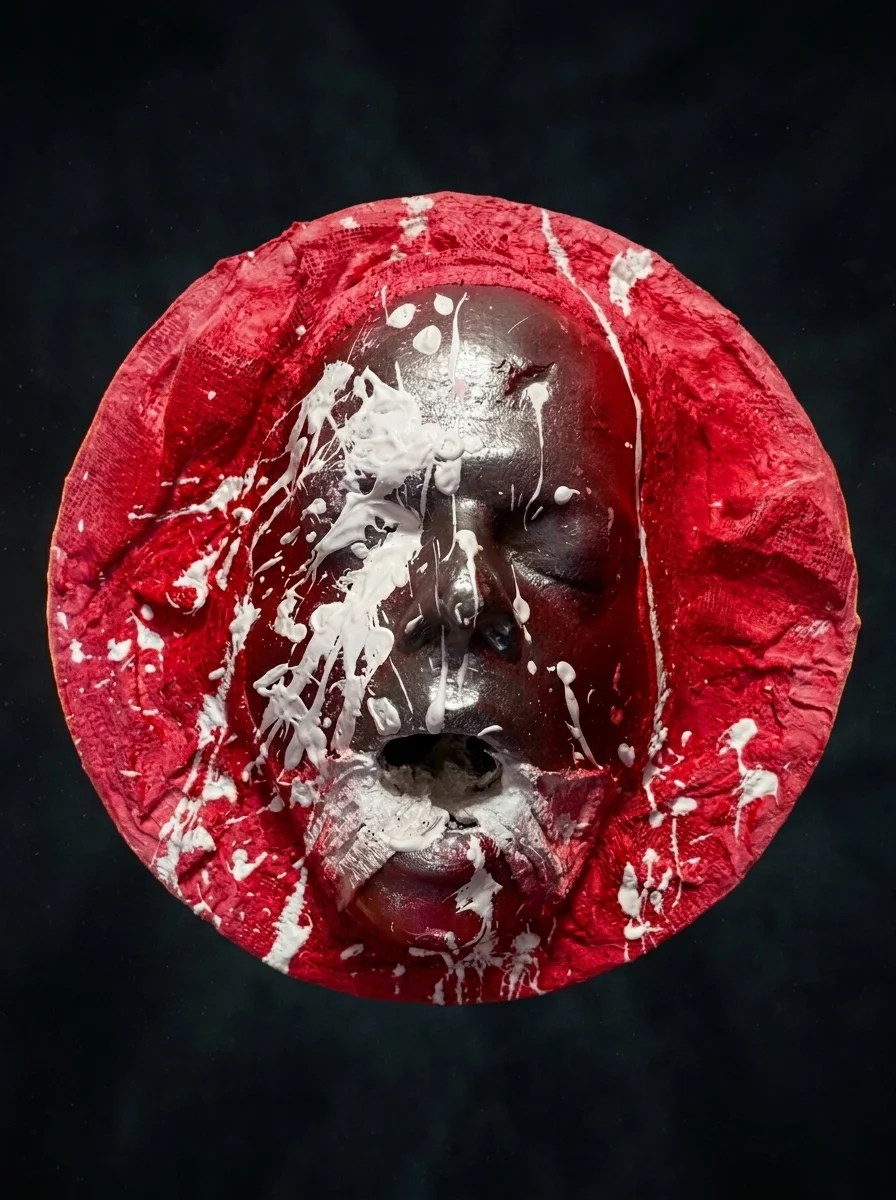
Fetus in Fetu
2026Series of mixed-media objects
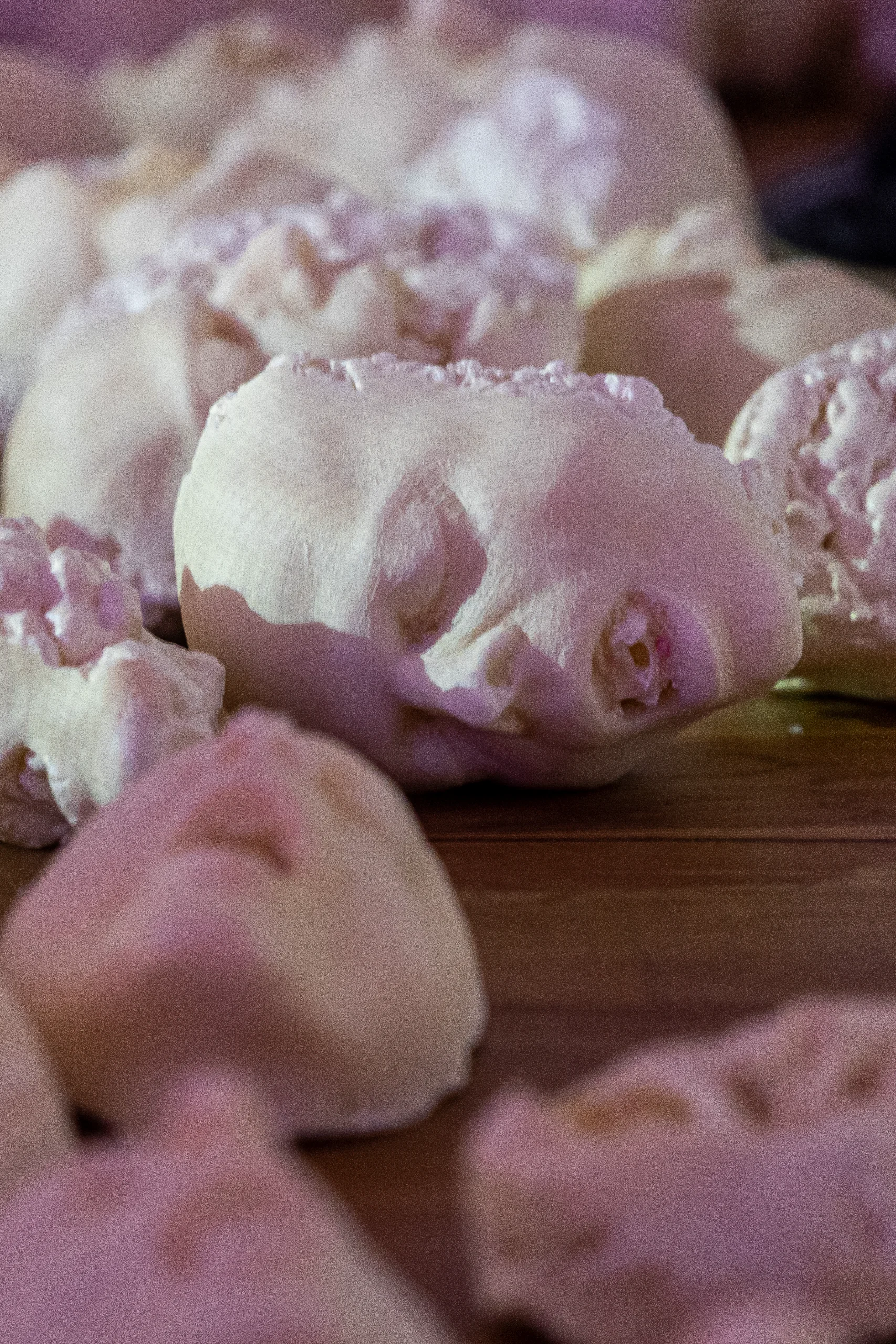
Faces are embedded and repeated until they begin to look less inserted into the objects than grown from within them.
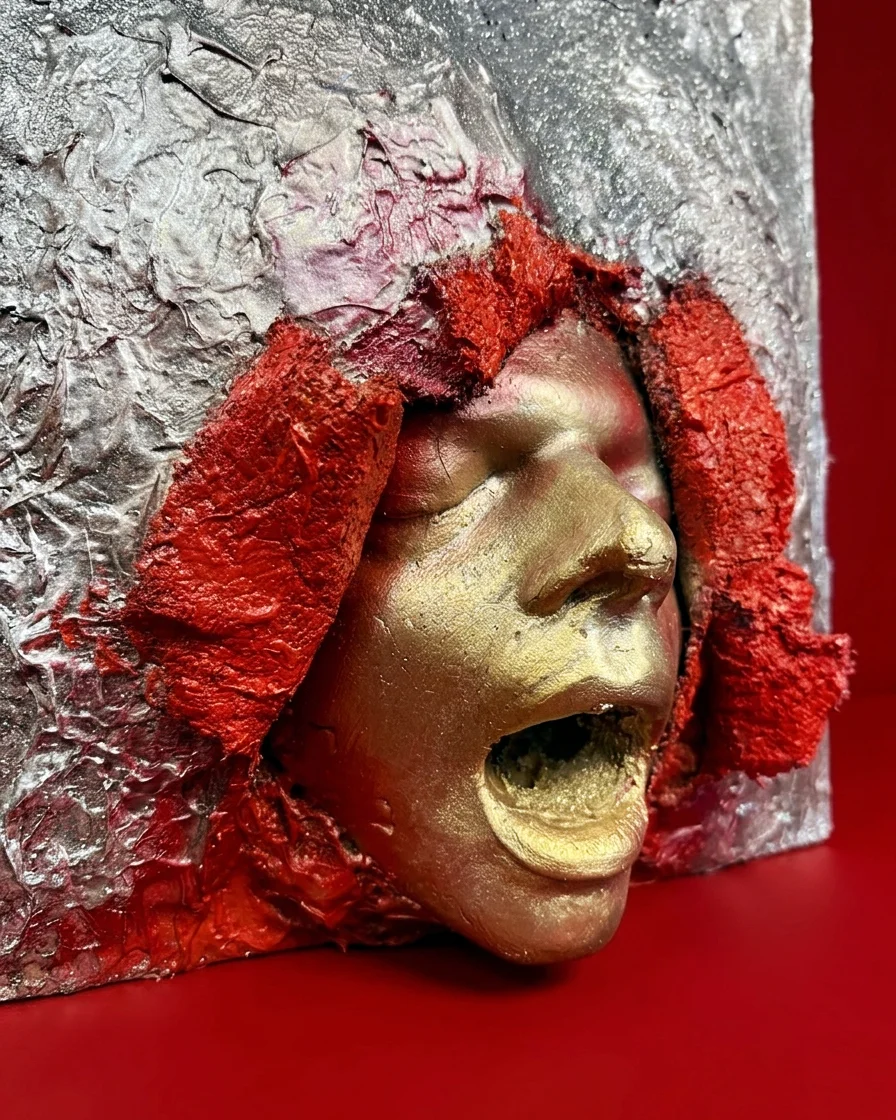
In Labor
2026Diptych of mixed-media objects / 40 x 40 cm
A mannequin belly and a cast of the artist’s ass are turned into improbable birthing surfaces, each opening onto a face.
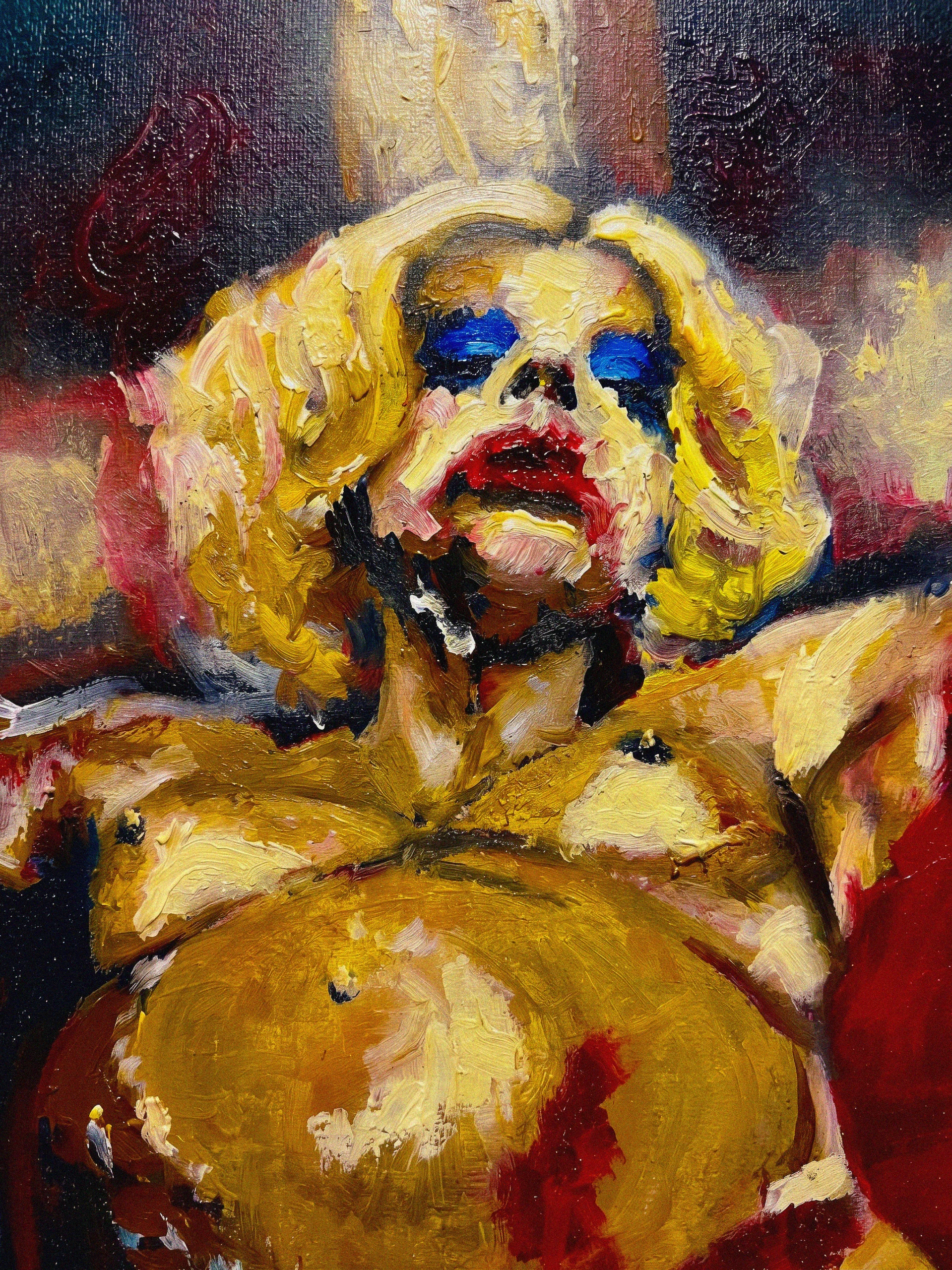
Tree of Life
2026Mixed media on canvas / 80 x 80 cm
A pregnant figure carries two sacred structures at once: the kabbalistic Tree of Life and the cruciform body of Catholic imagery.
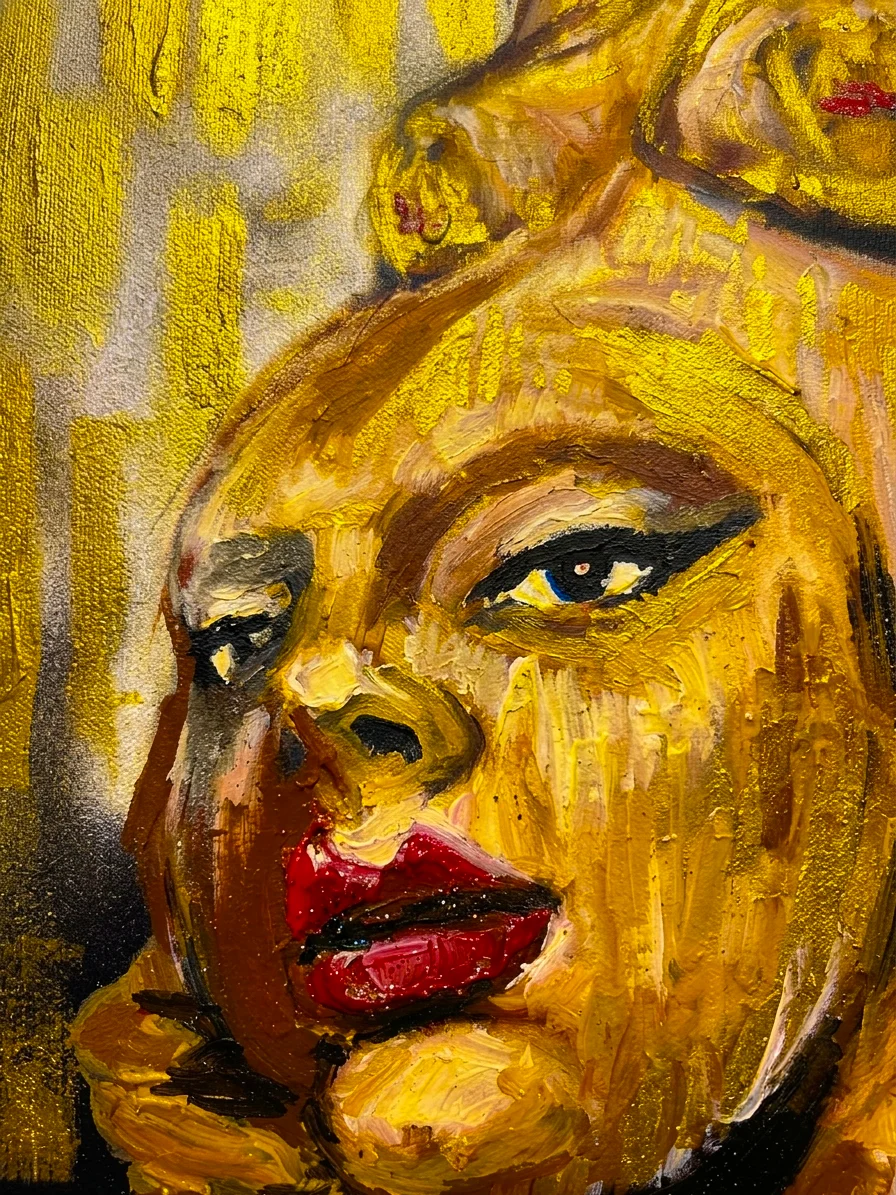
Bacherolette I
2026Mixed media on canvas / 80 x 80 cm
An oversized face fills the abdomen of a pregnant blonde figure, throwing the scale and coherence of her body out of balance.
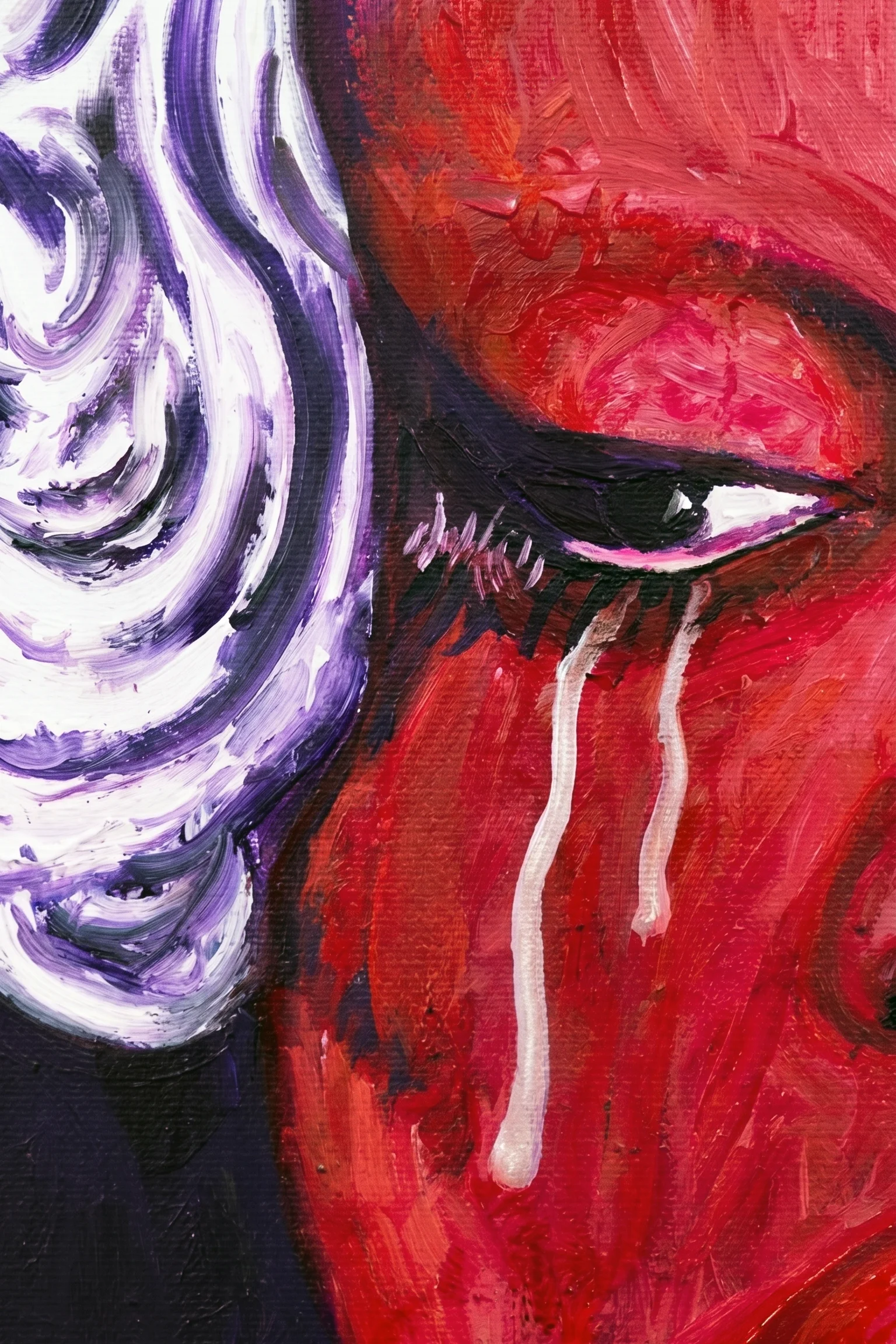
Bacherolette II
2026Mixed media on canvas / 80 x 80 cm
A red face presses against the limits of the canvas, its white tears held on the surface with the same insistence as eyeliner, lashes and lipstick.
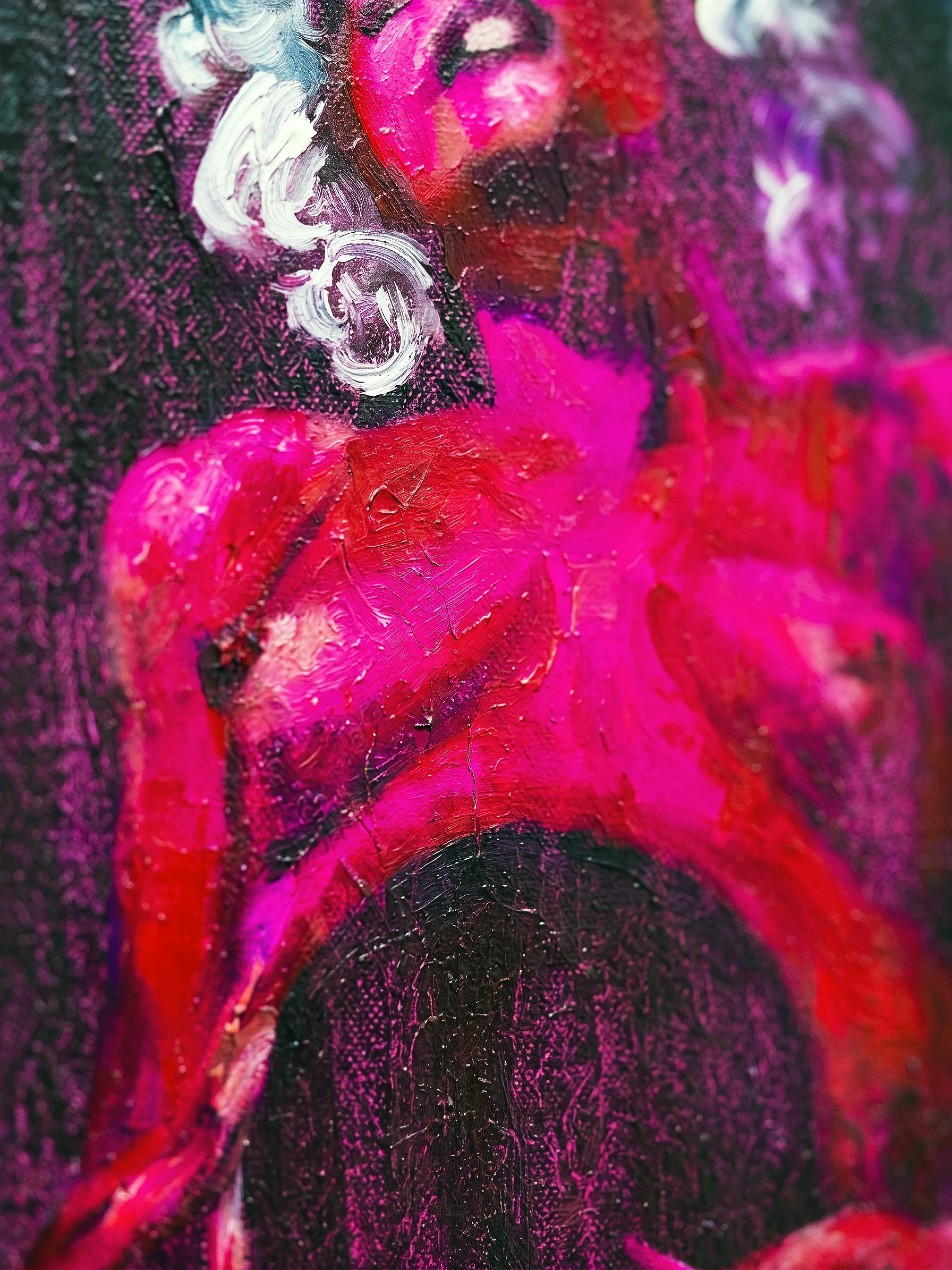
Black Hole
2026Mixed media on canvas / 80 x 80 cm
A black oval occupies the abdomen of a pregnant figure, replacing bodily volume with an opaque surface that stops the image at its centre.
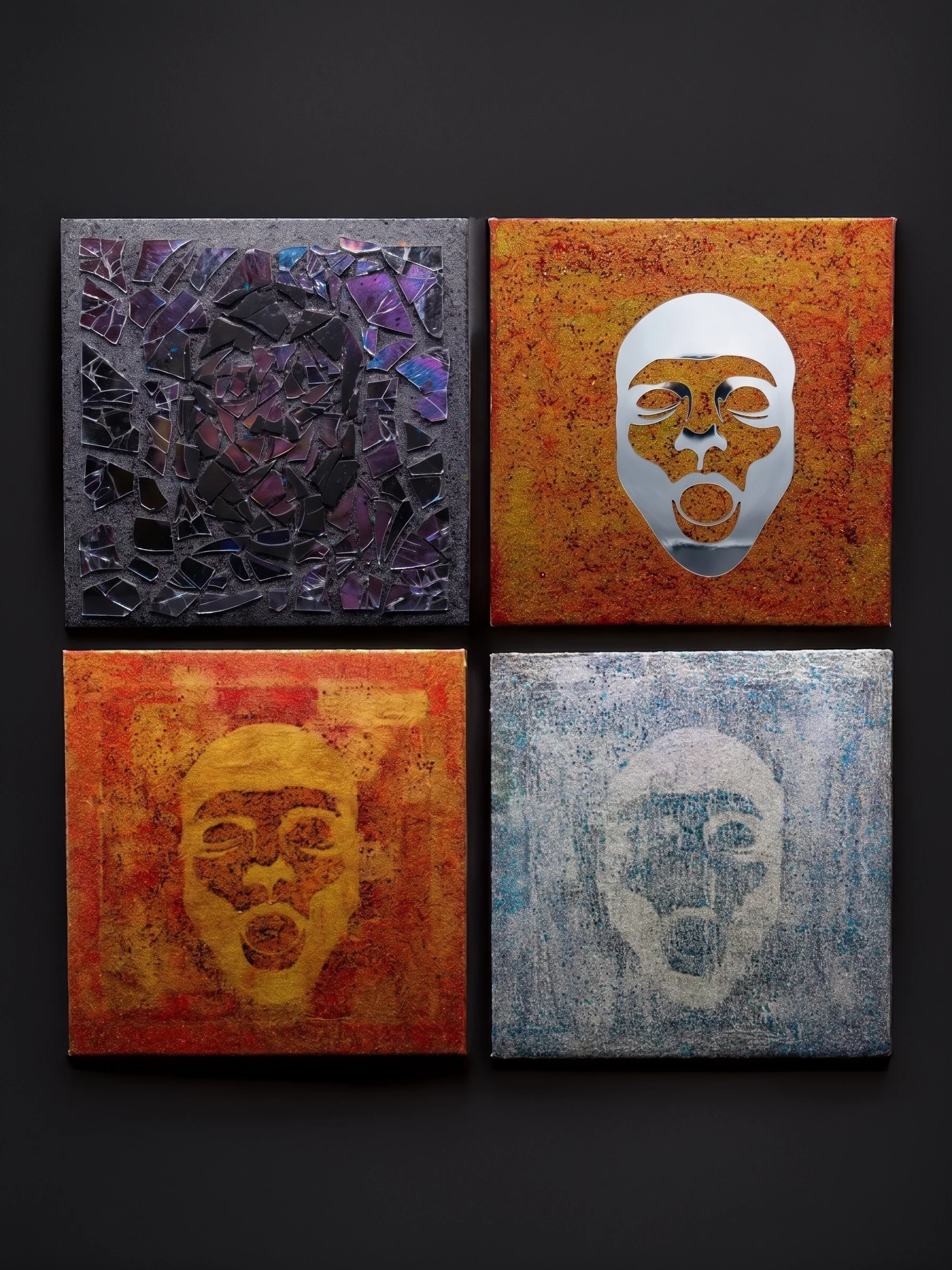
Facebirth
2026Mixed media on canvas / 40 x 40 cm
The same face returns across four works, each material altering the conditions under which it can still be recognised.
performance documentation
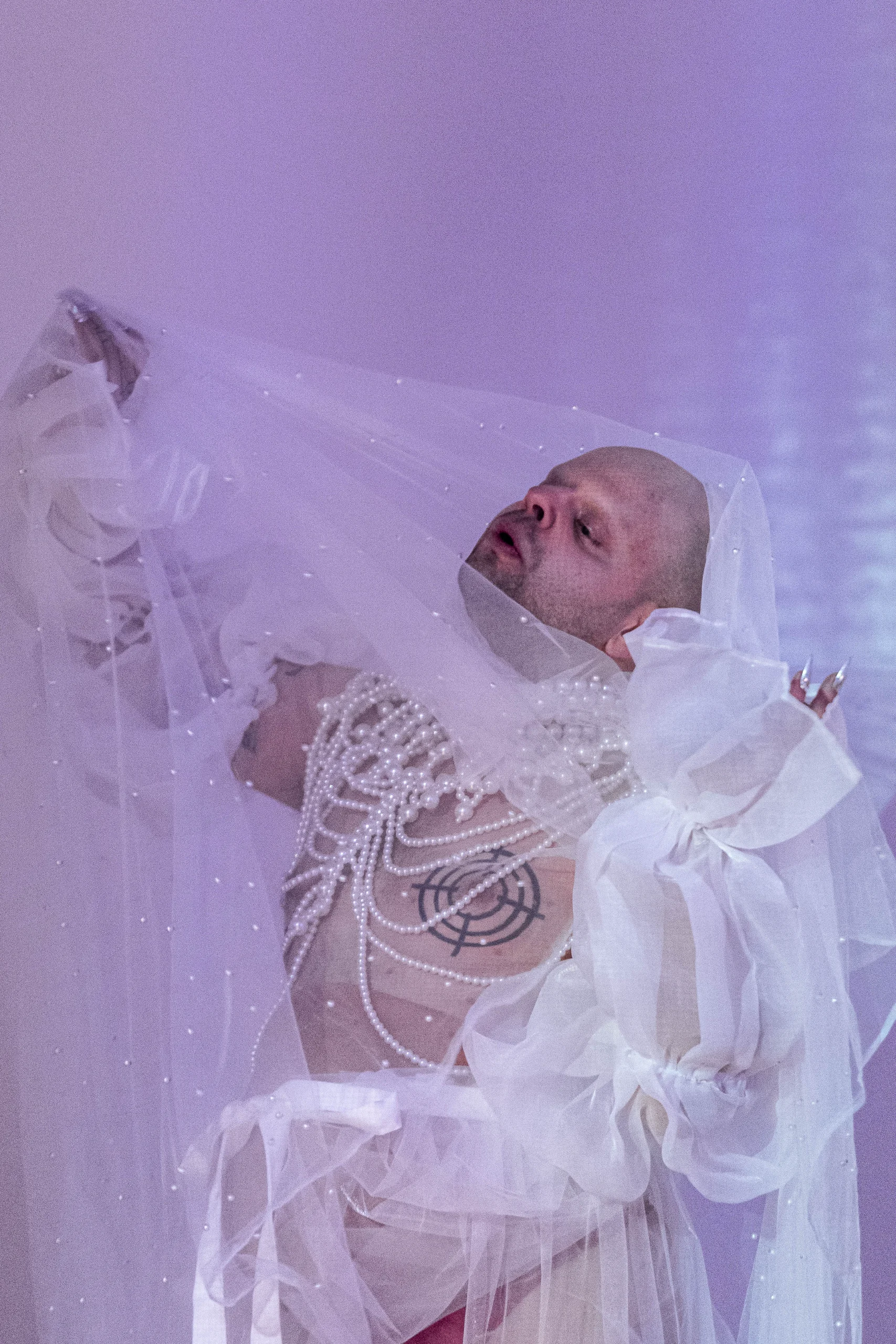
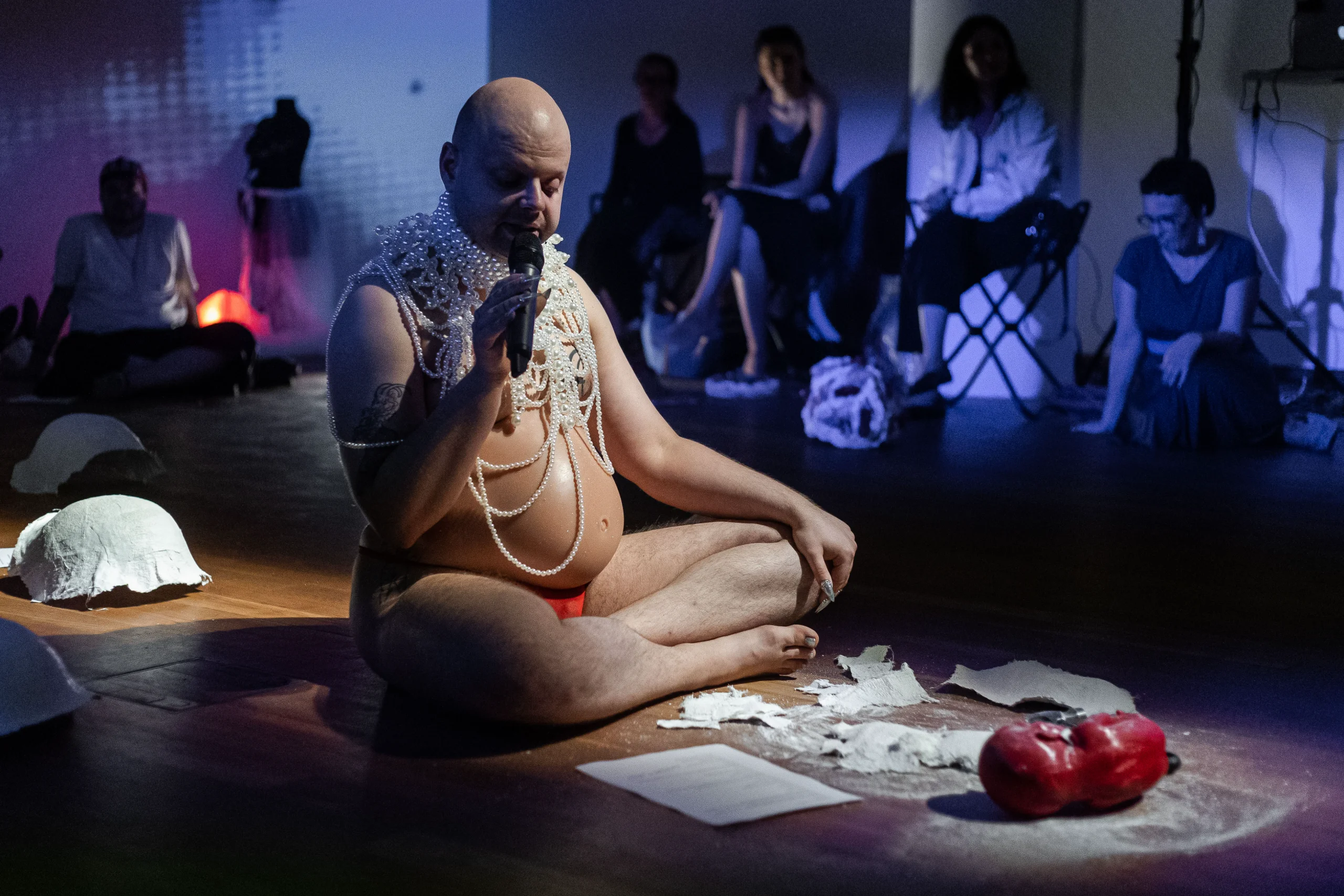
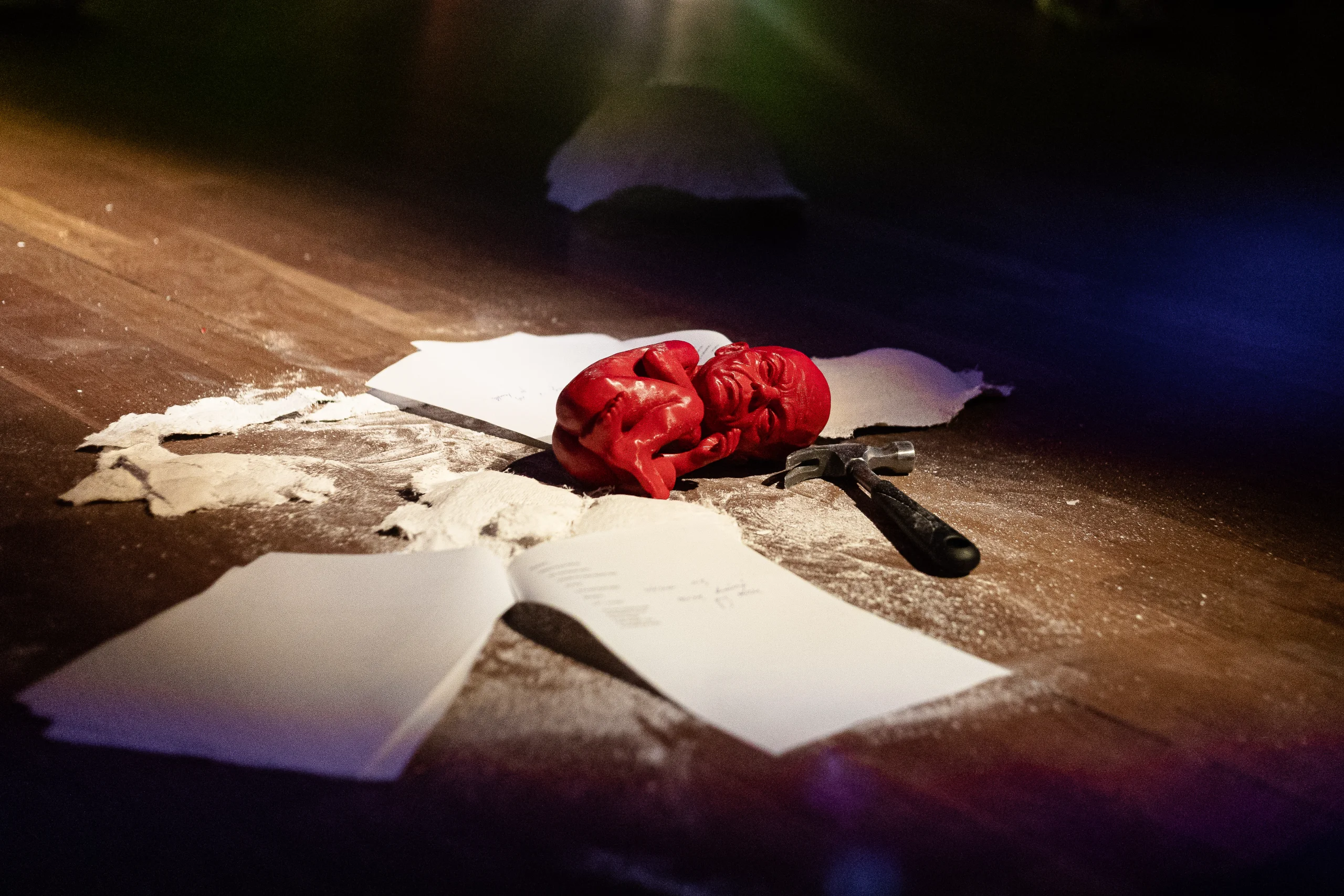
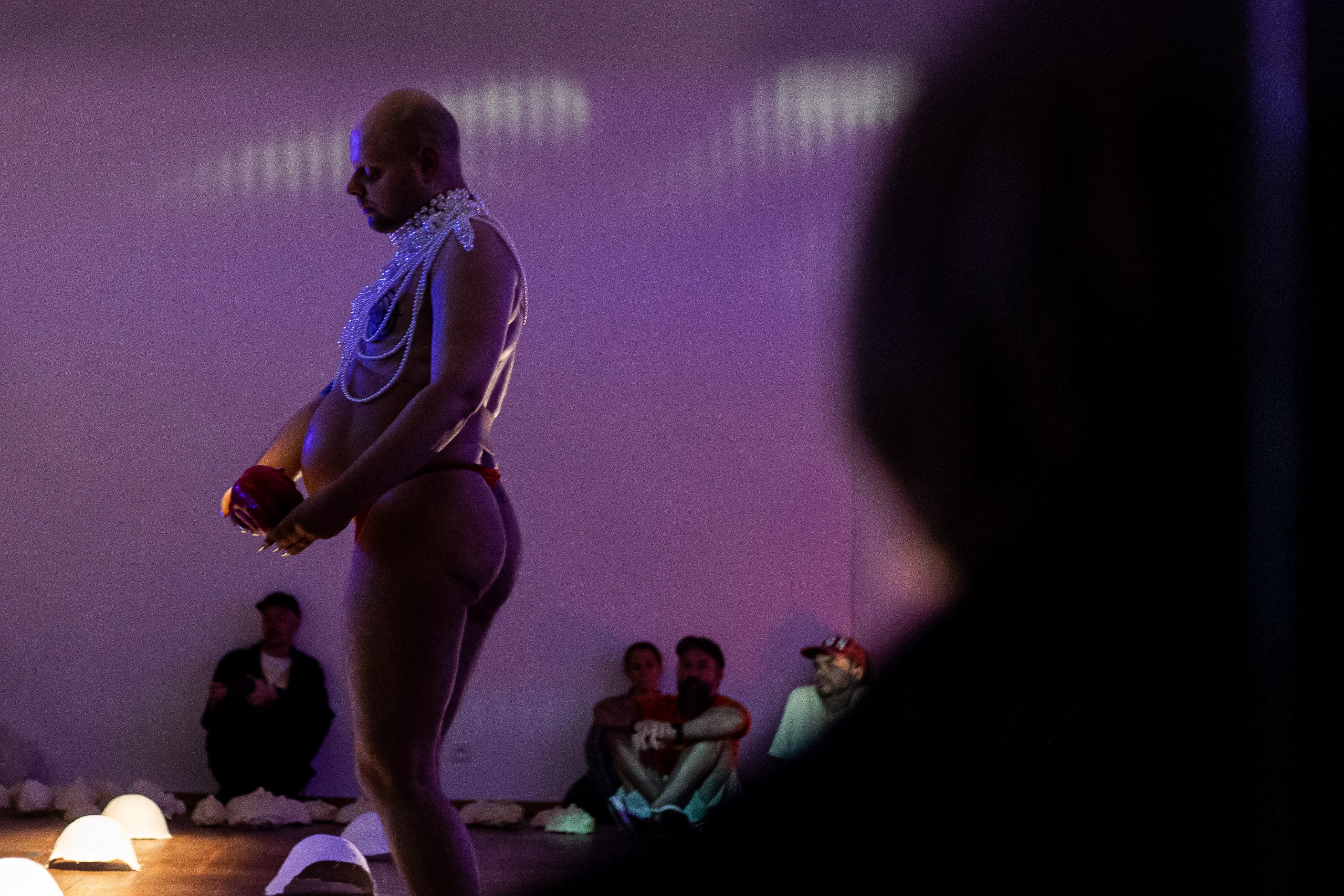
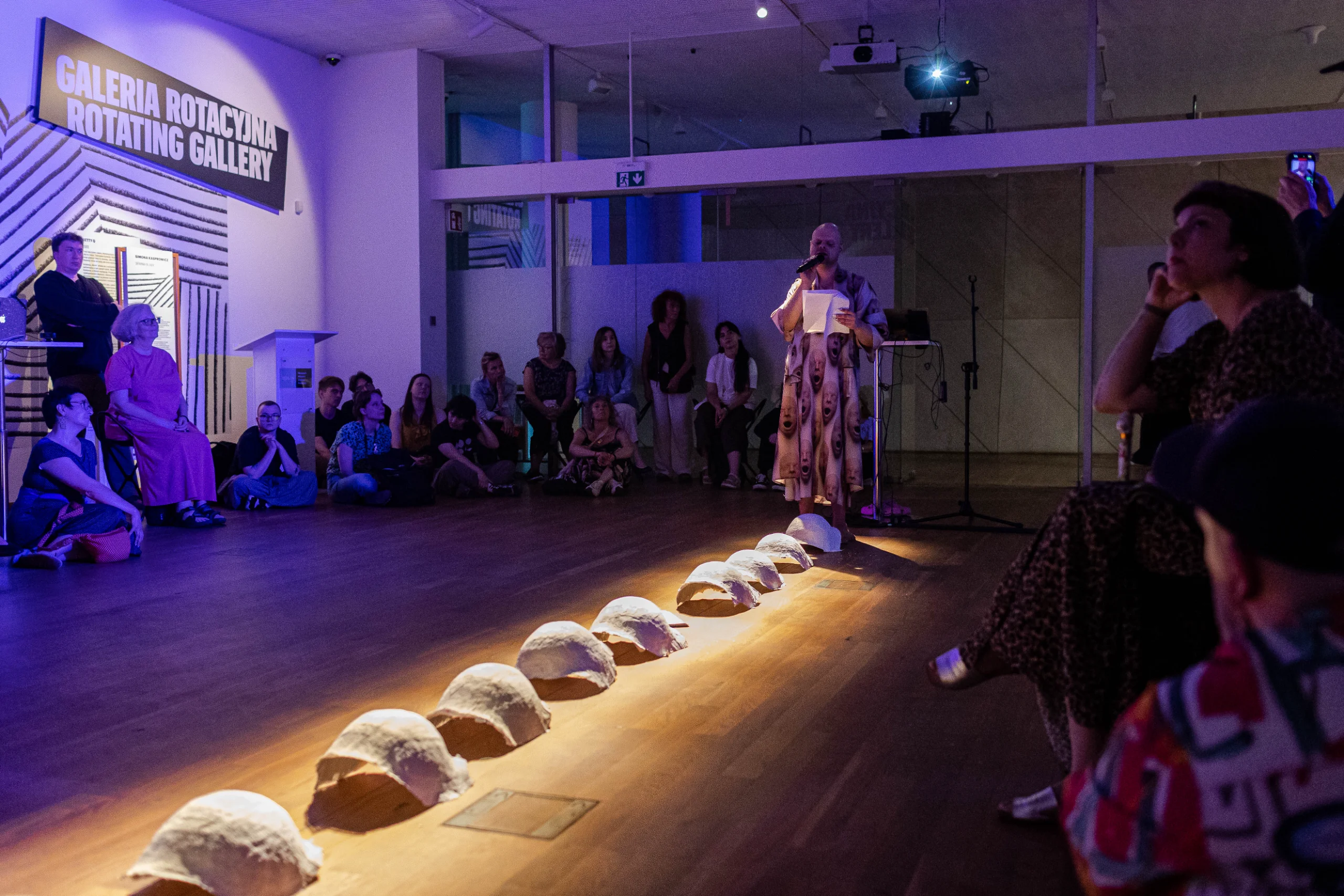
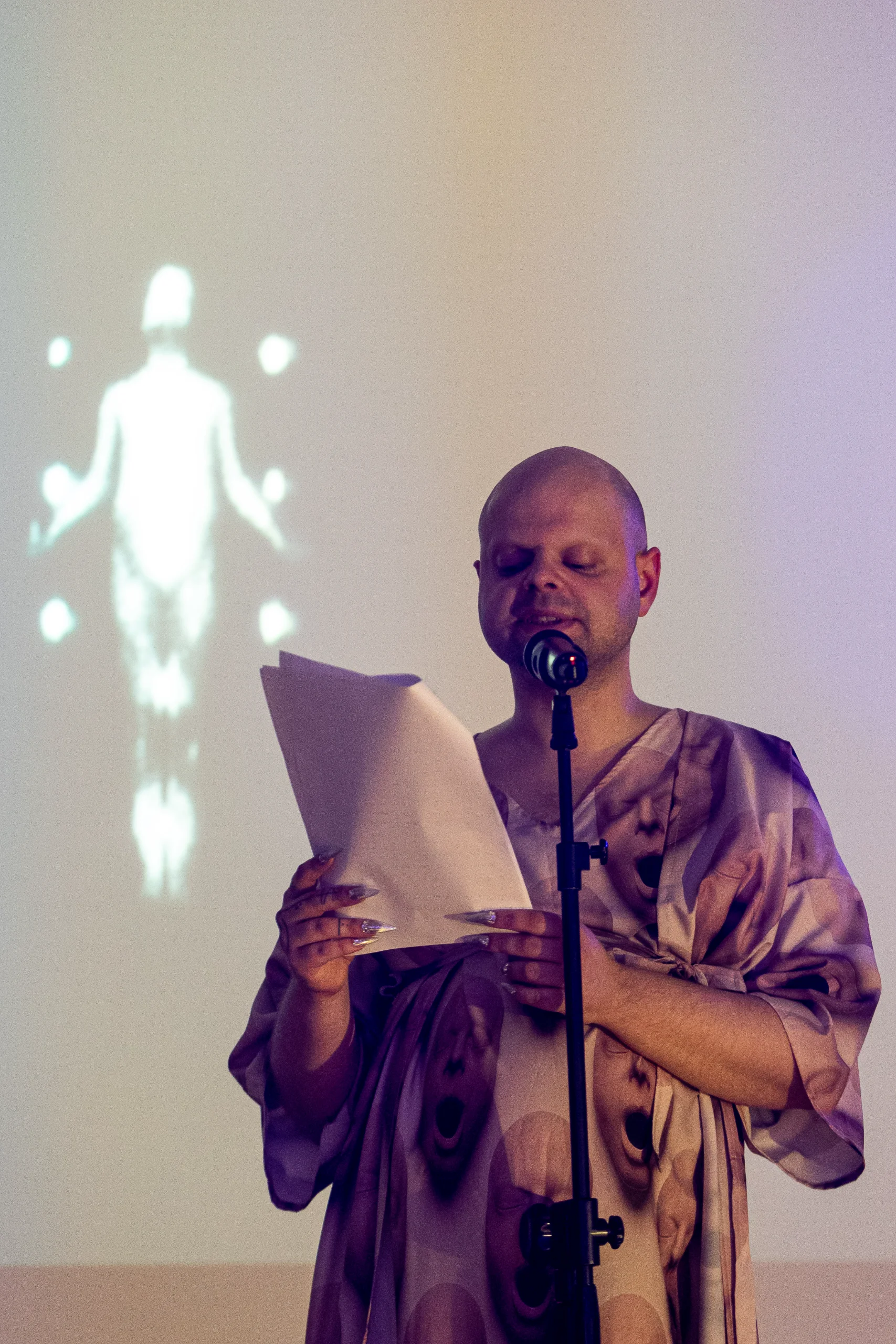
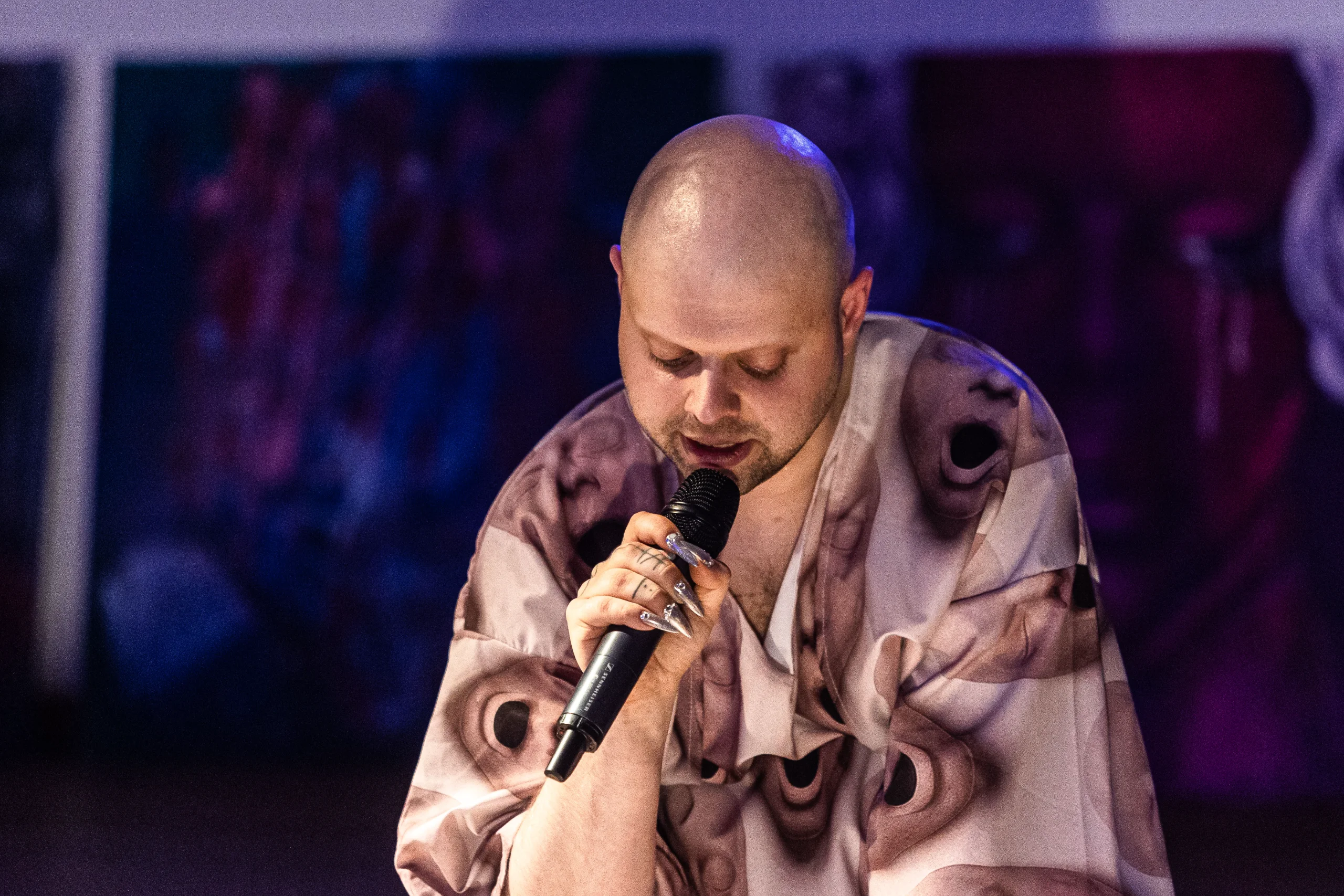
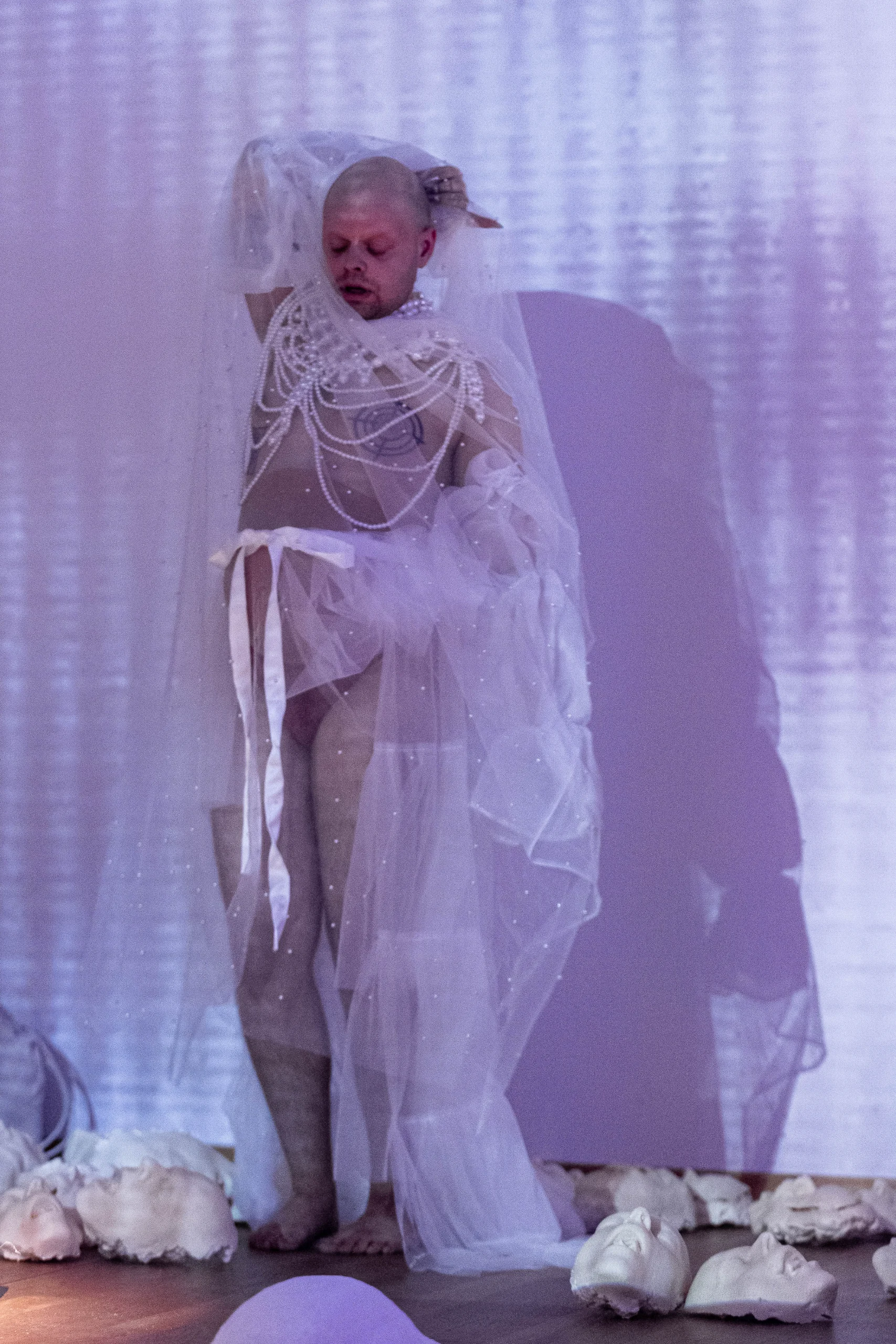
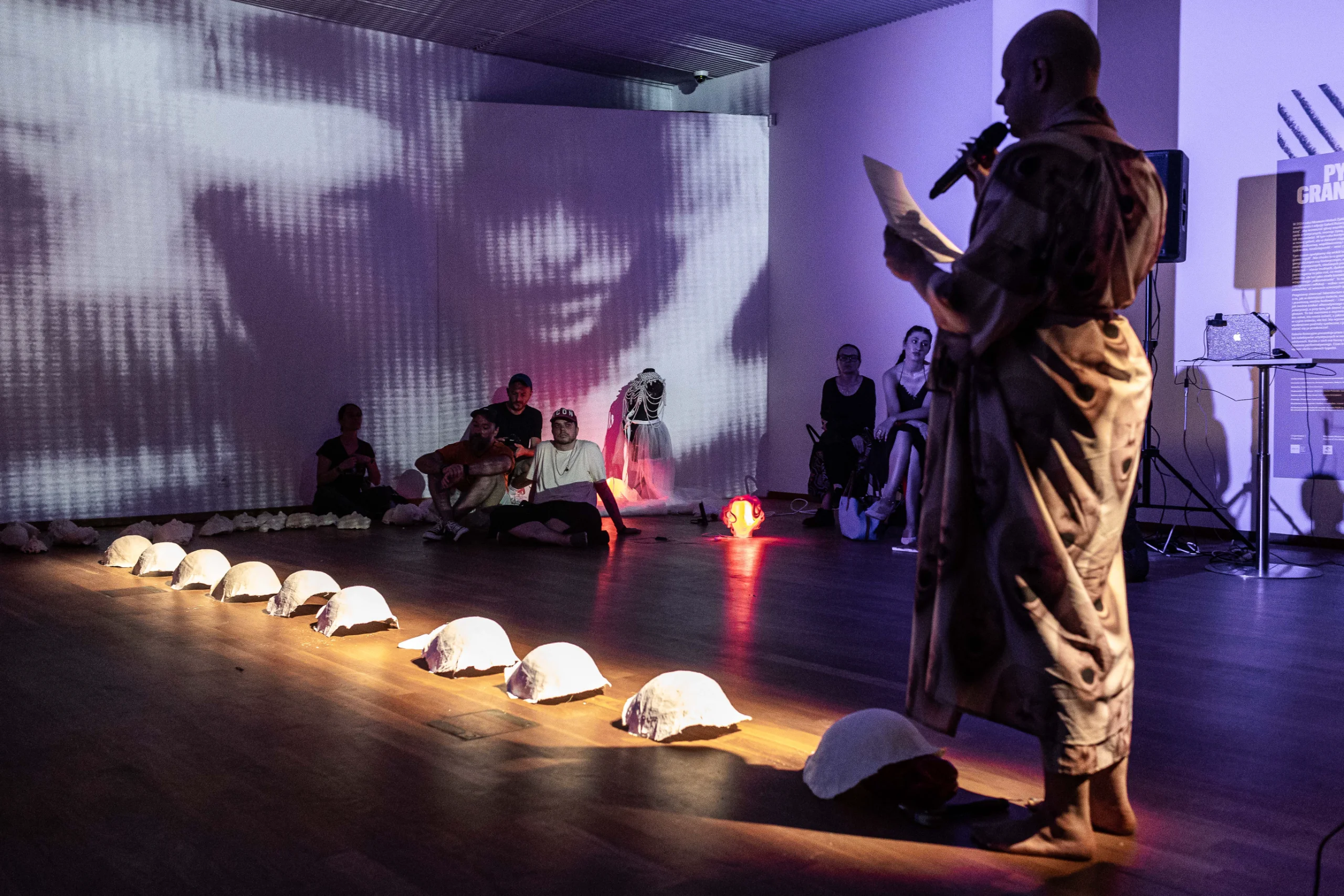
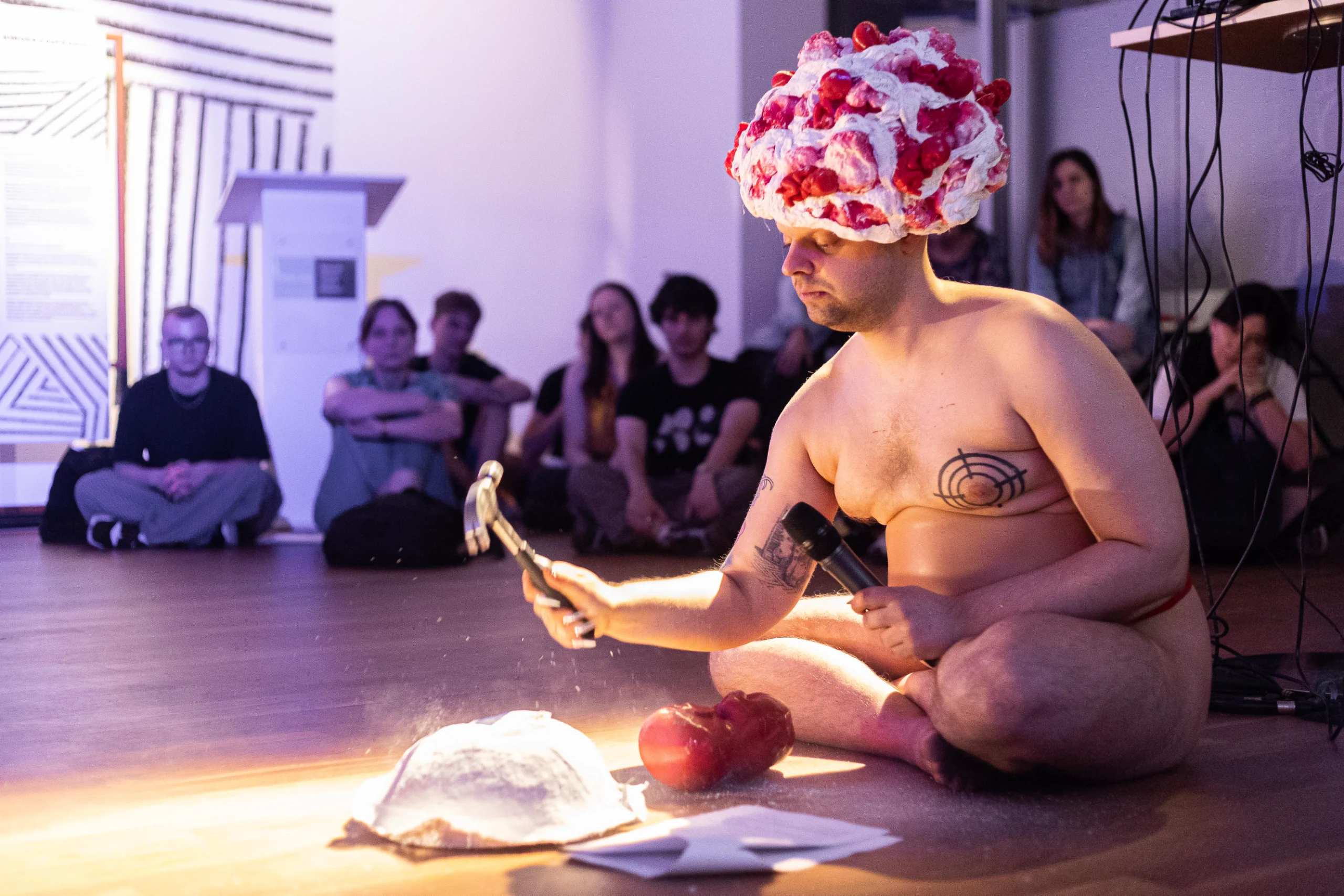
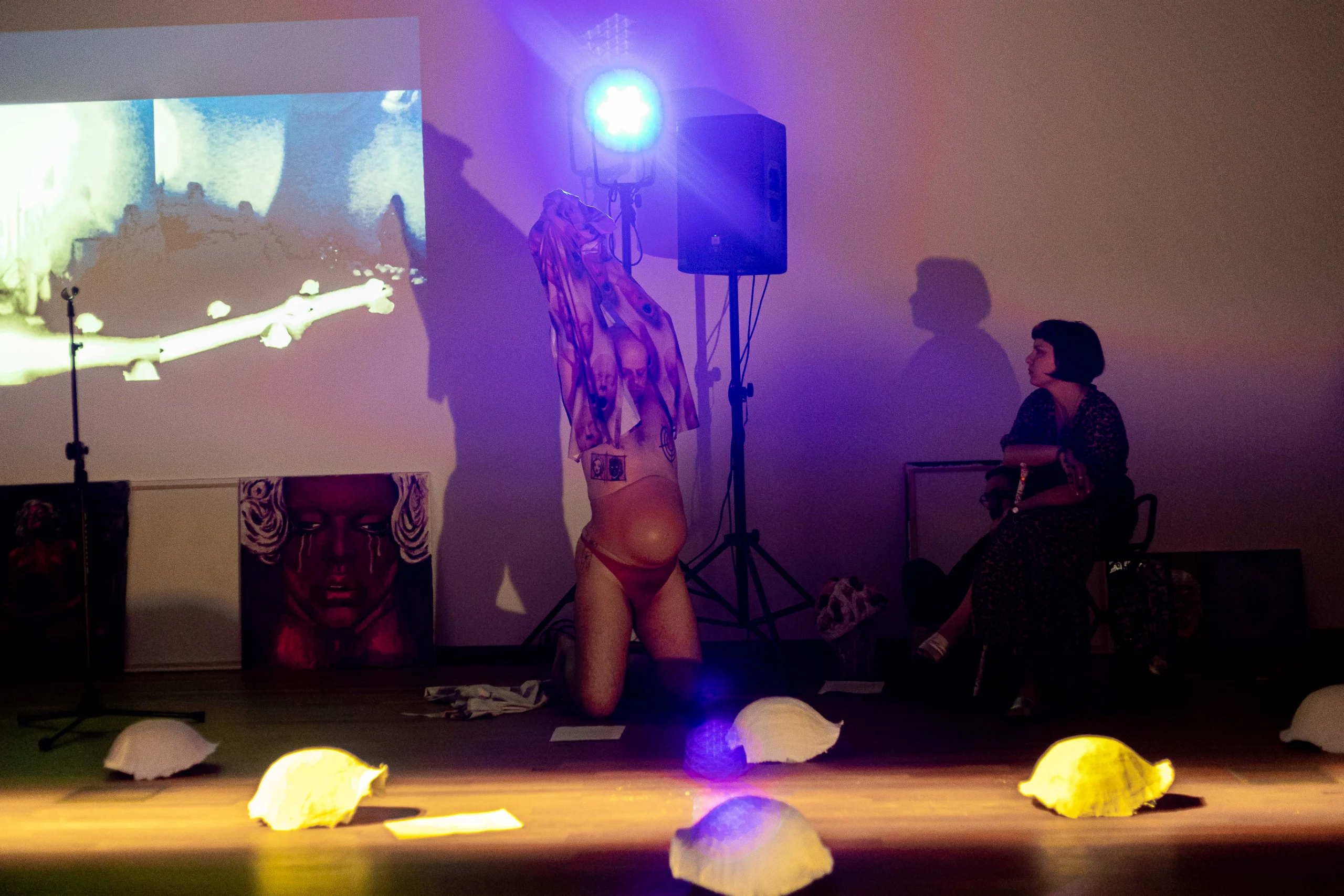
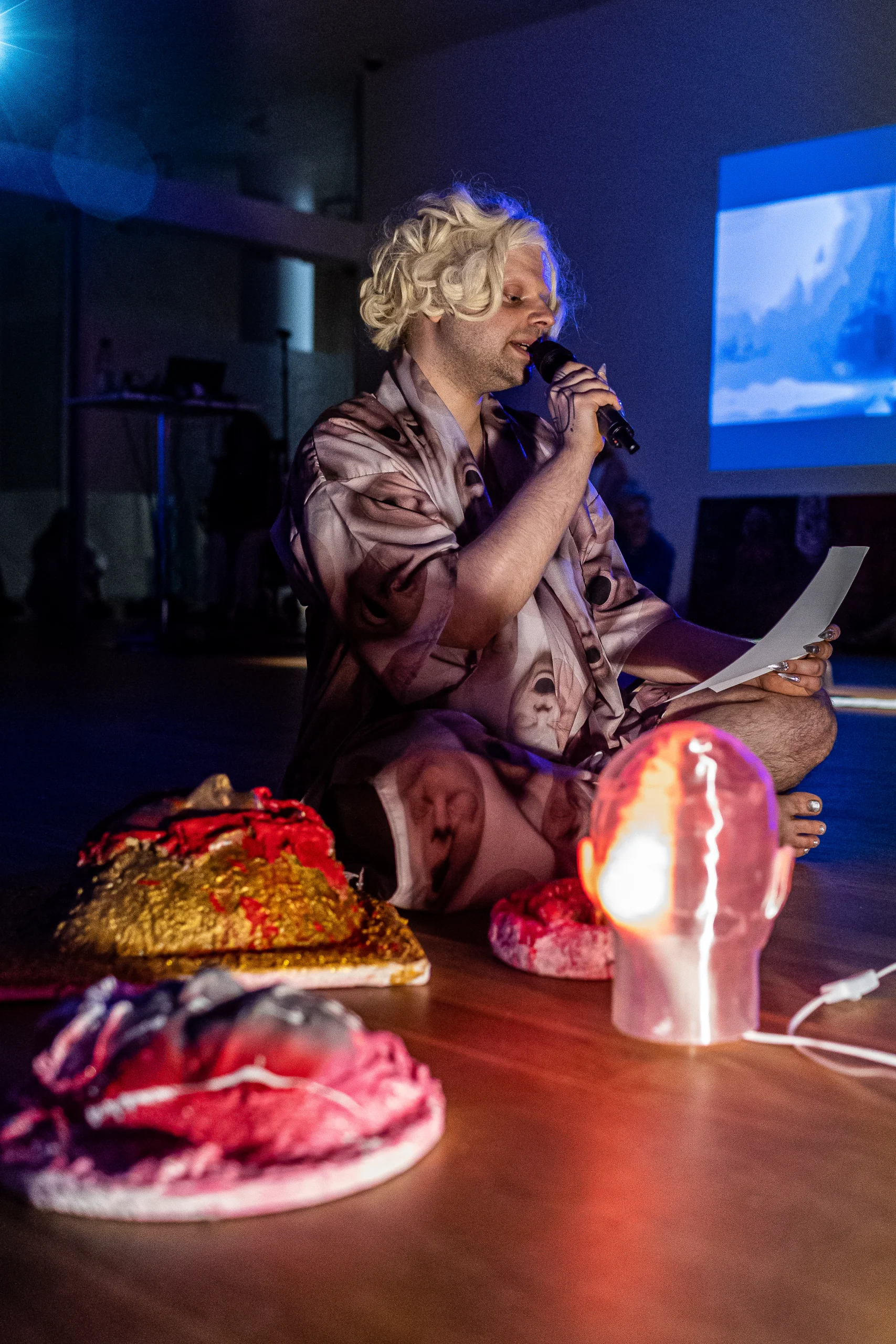
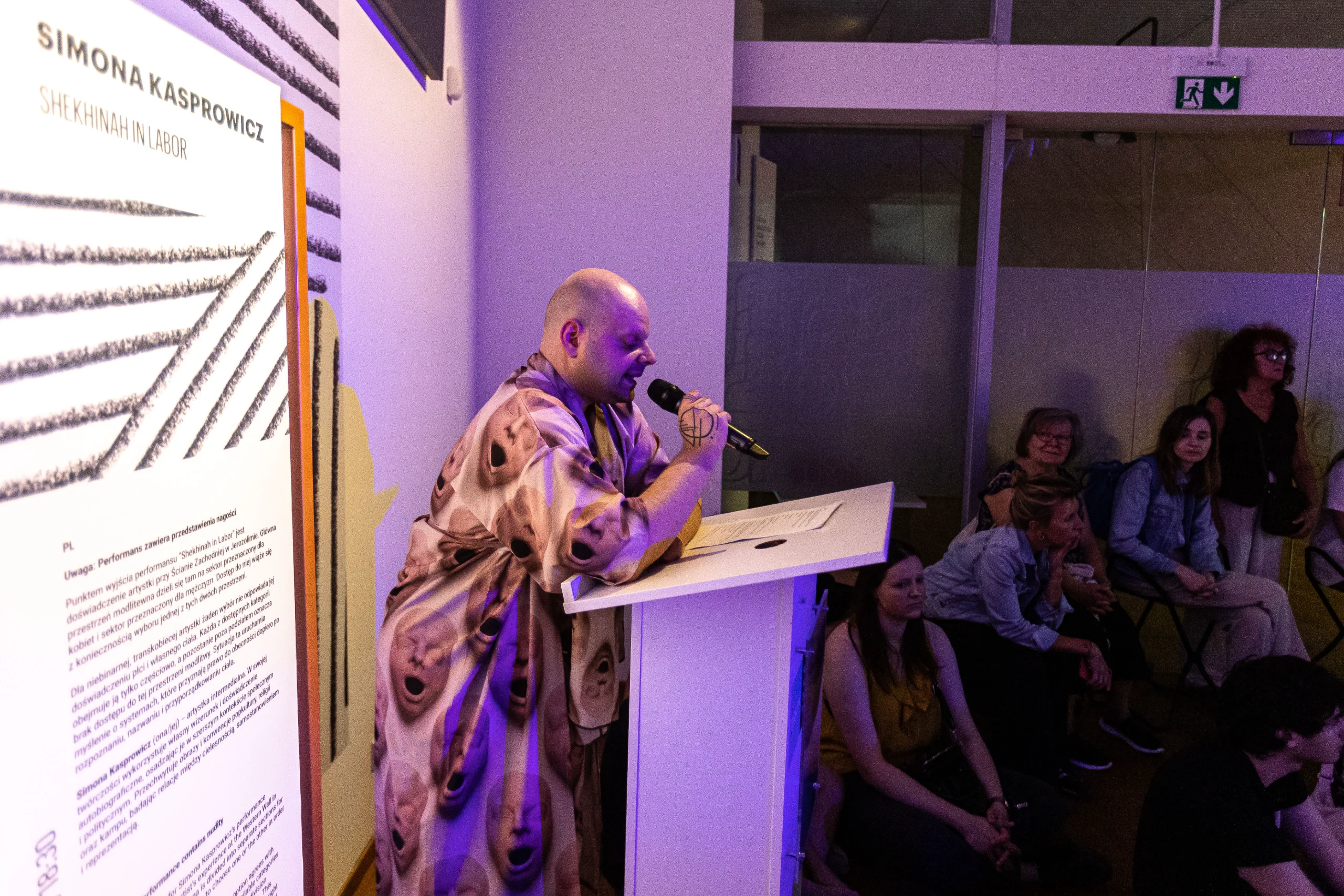
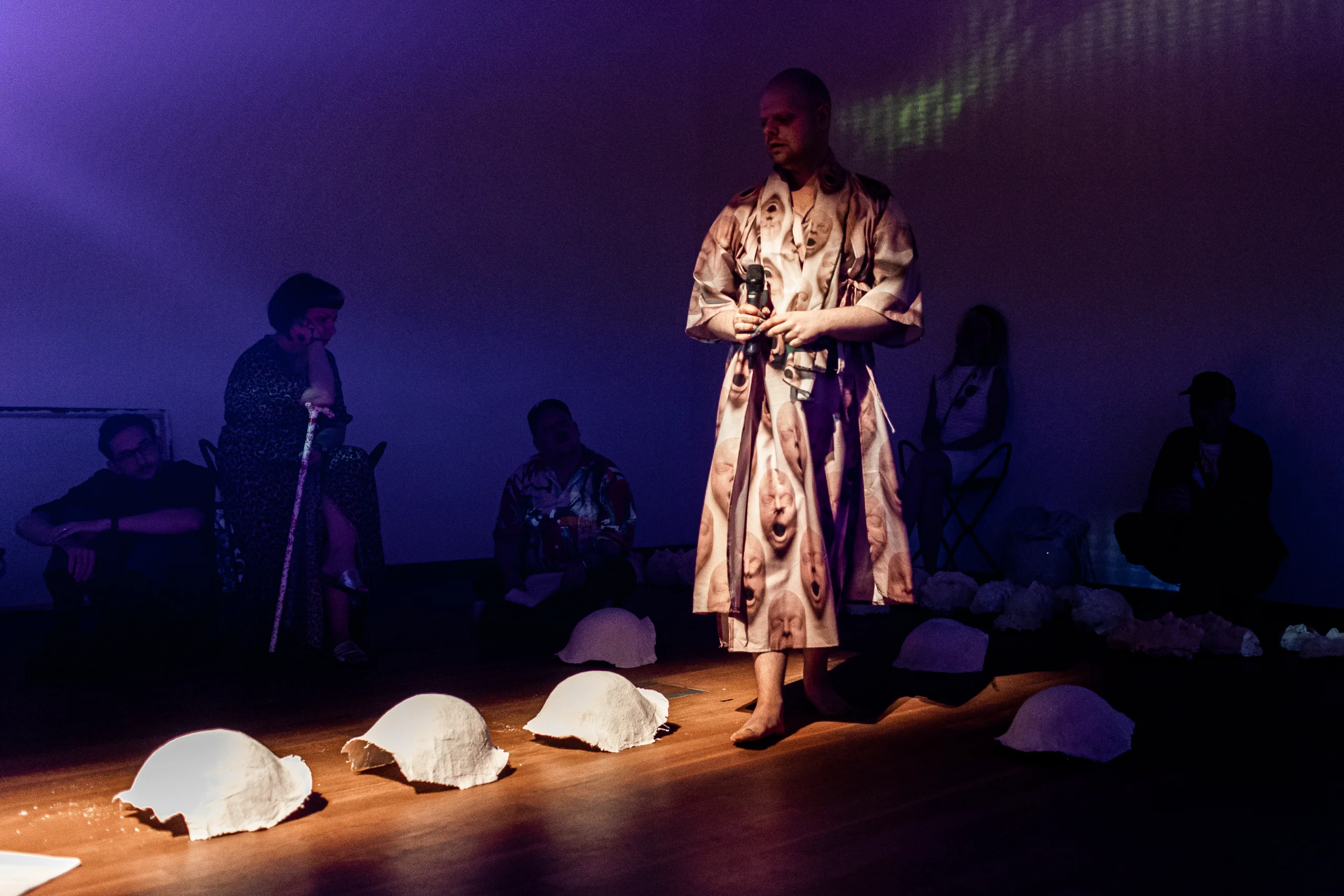
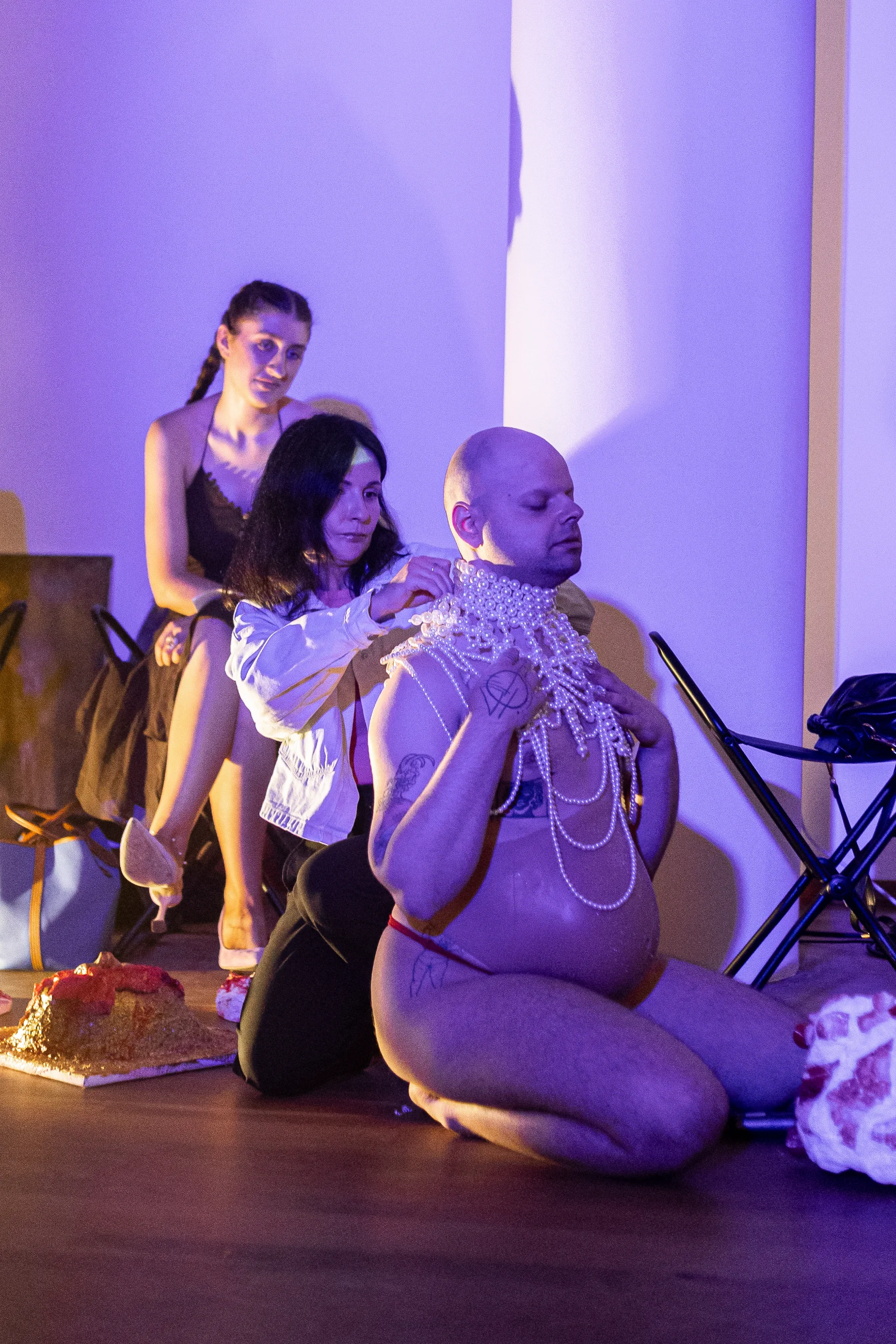
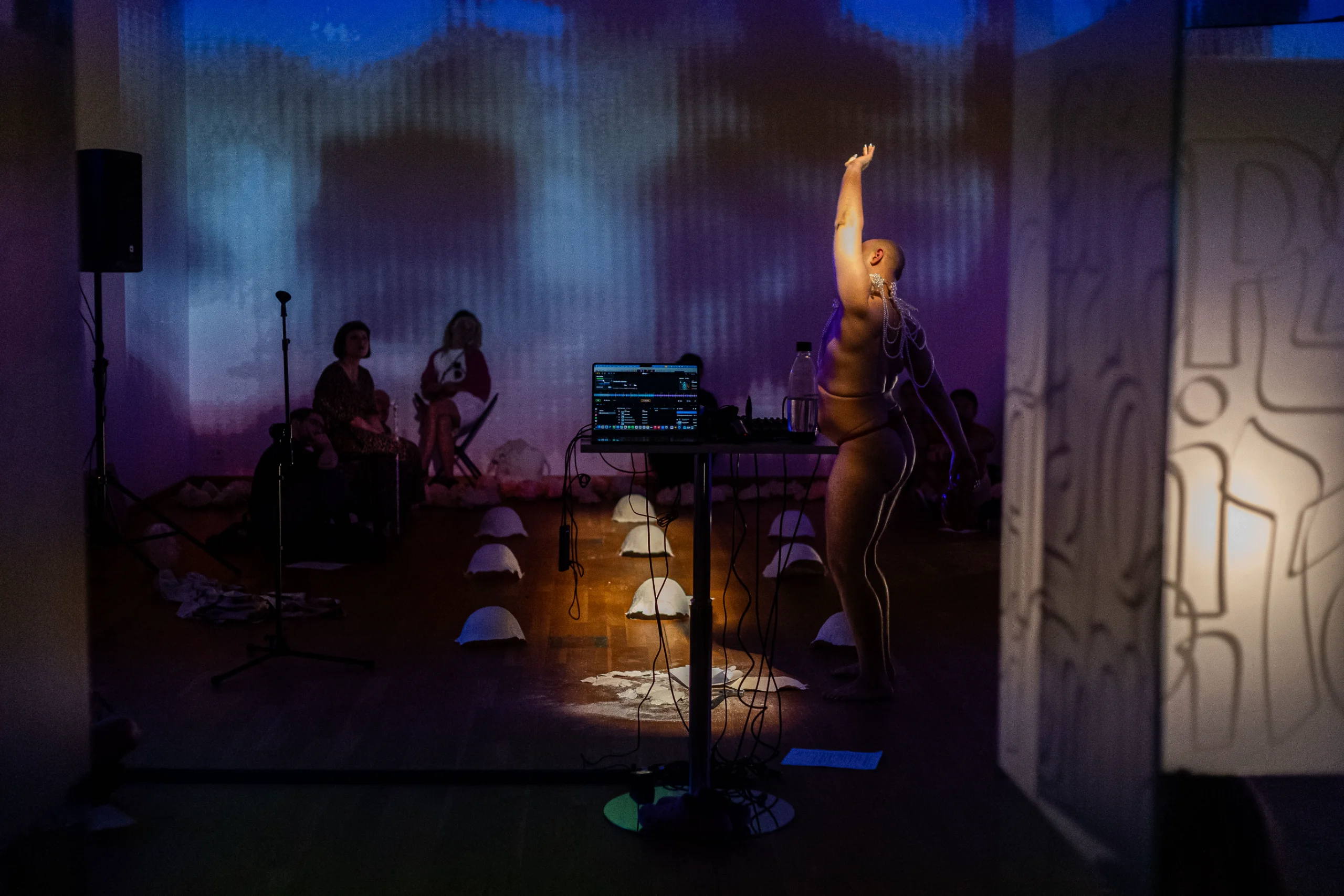
// PERFORMANCE TEXT // RESEARCH
The project originates in Kasprowicz’s experience at the Western Wall in Jerusalem, where the central prayer space is divided into separate sections for women and men. Entering the space requires choosing one side.
As a non-binary transfeminine artist, Kasprowicz found that neither section reflected her experience of gender and embodiment. Yet remaining outside the division also meant remaining outside the space of prayer. The encounter led her to examine structures that allow bodies to enter and belong only once they have been classified.
Kasprowicz connects this experience with the Shekhinah, the feminine dimension of divine presence in Jewish mysticism. Associated with Malkhut, materiality, exile and separation, the Shekhinah becomes a figure through which the artist approaches a body excluded by the architecture of the prayer space. Her reading draws on queer interpretations developed within contemporary Judaism.