Facebirth
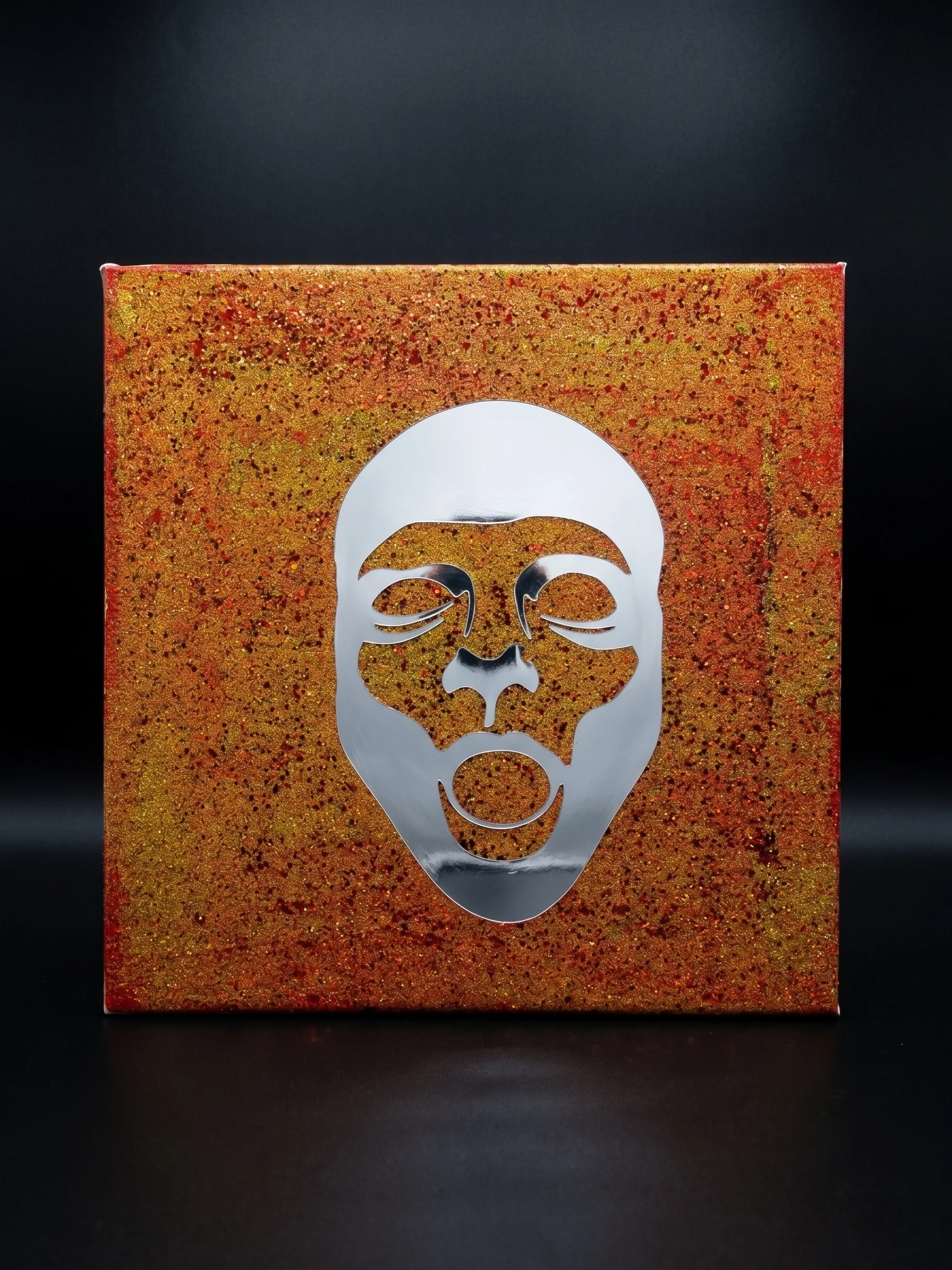
The same face returns across four works, each material altering the conditions under which it can still be recognised.
Curatorial Summary
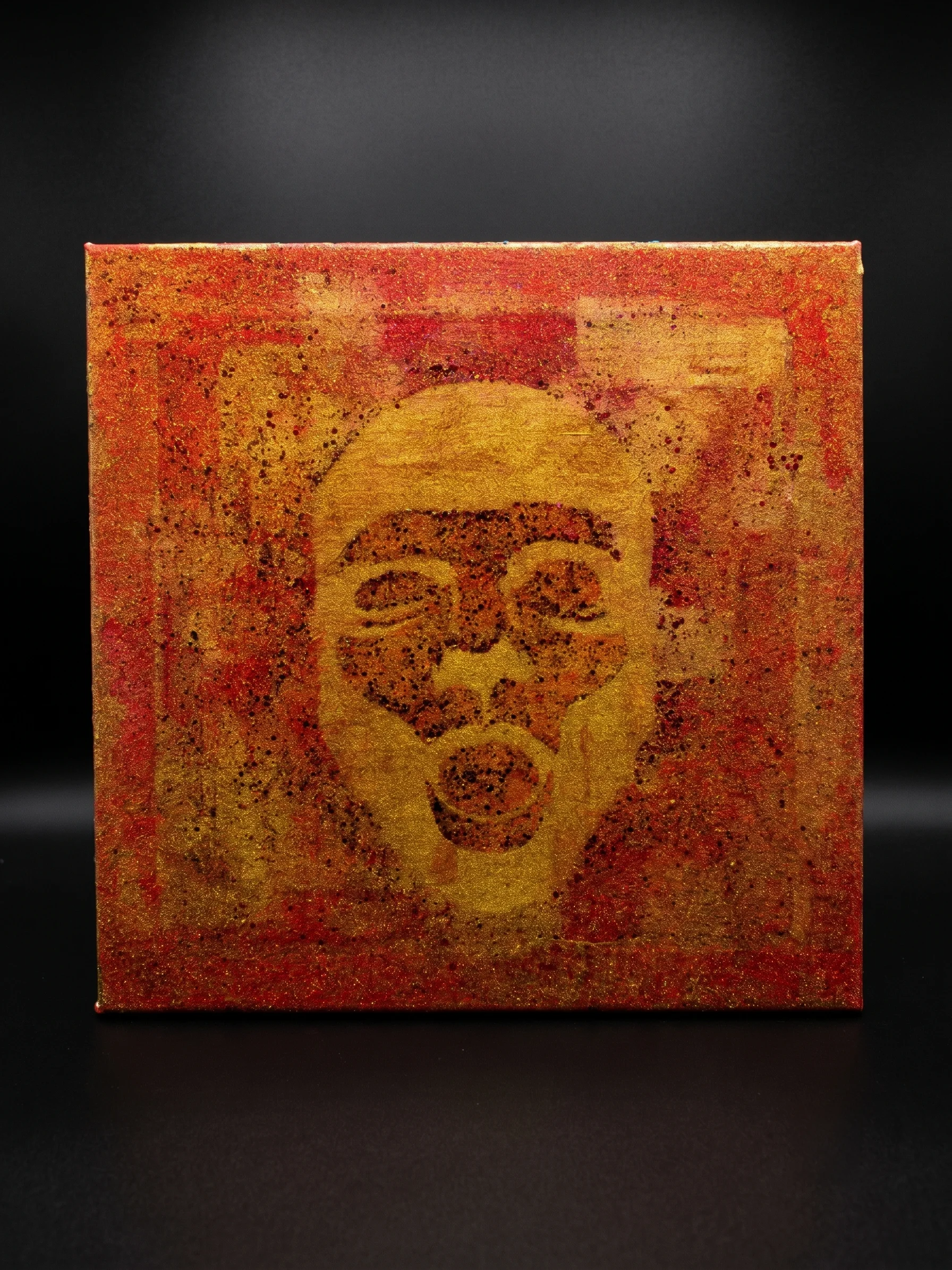
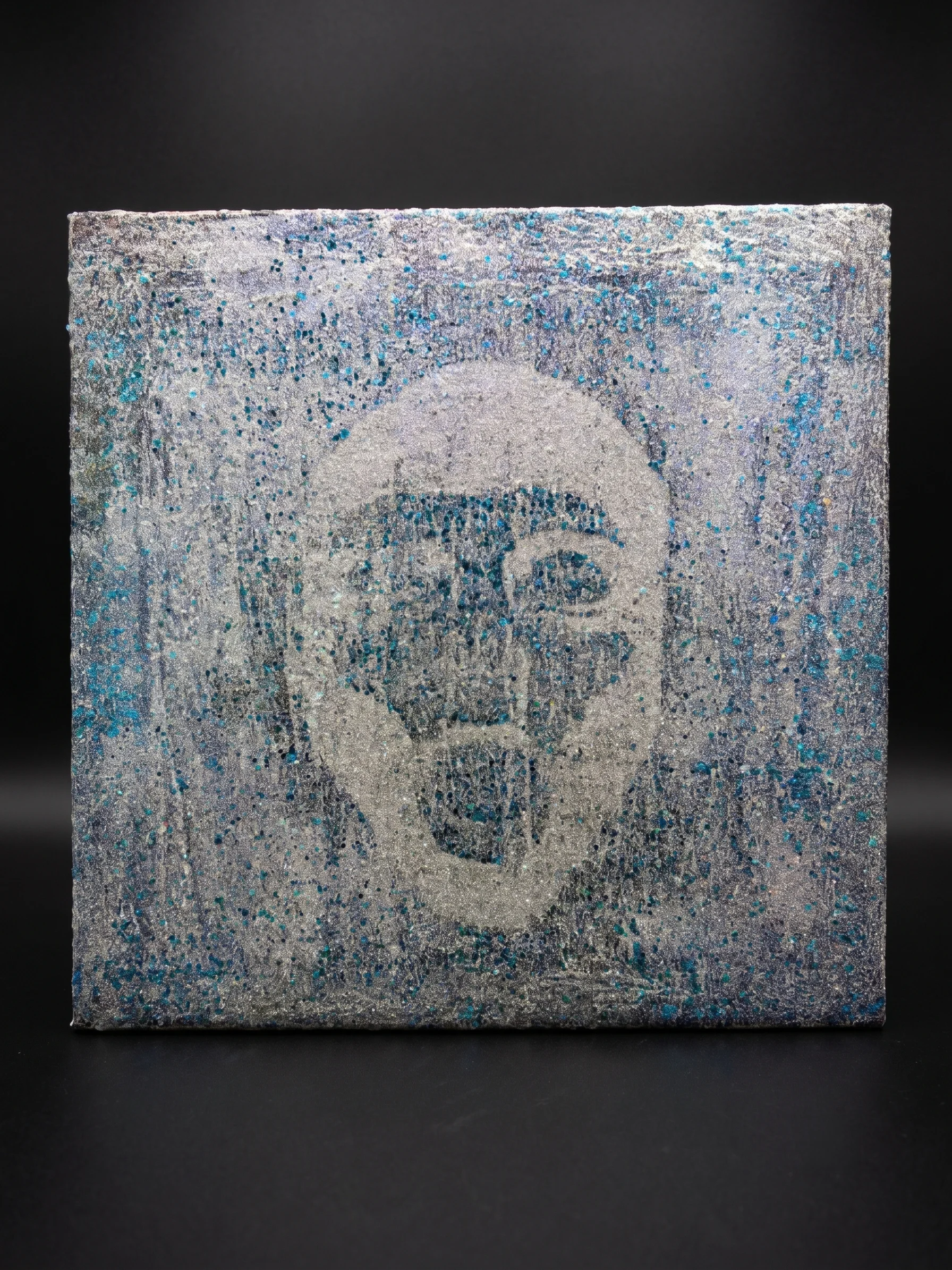
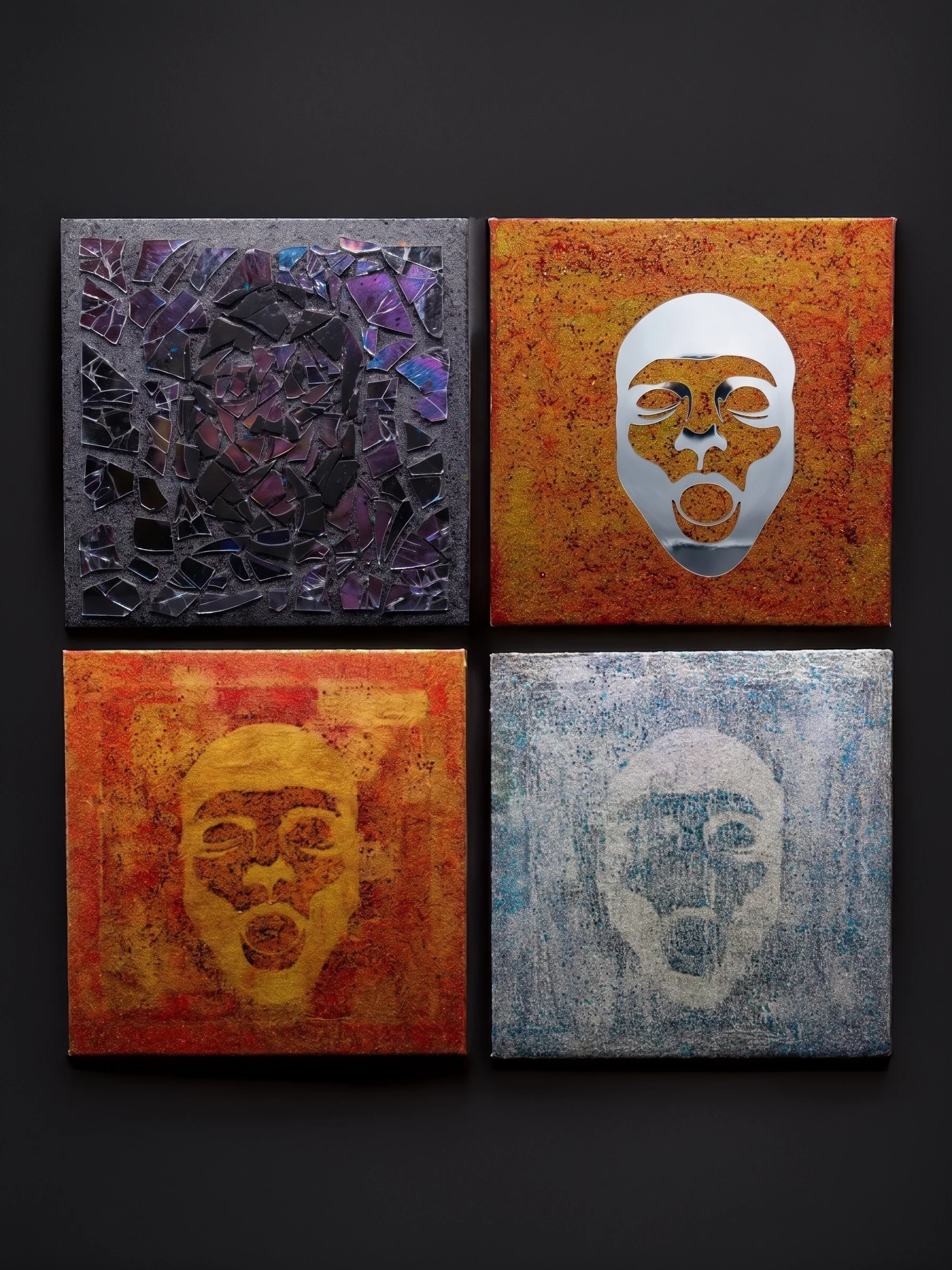
Facebirth repeats the same arrangement of features across four materially distinct works. In three panels, the face remains frontal and nearly unchanged in proportion. What shifts is the way it enters the surface.
In the mirrored work, the features are defined by openings cut into a polished form. Its appearance changes with whatever stands before it; surrounding space and the viewer enter the image through reflection. The painted panels hold the motif differently. There, the face remains as a trace, sometimes sharply visible, elsewhere almost absorbed by colour and texture.
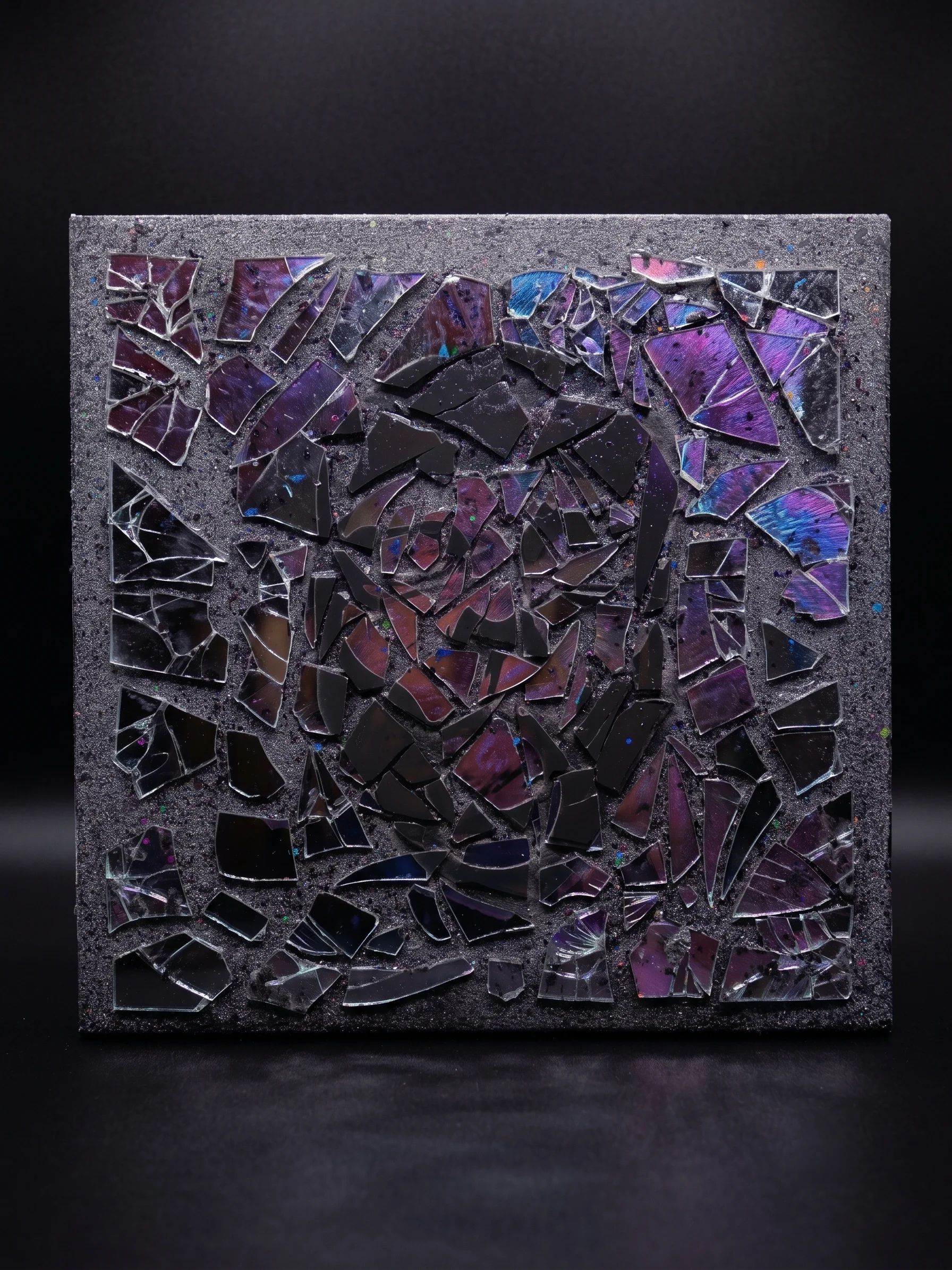
The fractured mirror dispenses with the facial outline. Separate shards return separate pieces of the room, each at its own angle. Reflection remains possible, but there is no continuous field in which a single image could assemble itself.
These variations do not form a sequence. They test the same visual structure under different material conditions. A small set of relations between eyes, nose and mouth proves enough for recognition to persist even when definition is reduced or the image itself disappears.
Within Shekhinah in Labor, Facebirth removes birth from the representation of a pregnant body. What recurs instead is the act of a face becoming visible. Each work begins again with the same configuration and gives it a different material existence.
artist
statement
I kept returning to the same face to find out how much I could change before recognition broke down.
Its proportions stayed largely the same. I changed what it was made through. Mirror made the image dependent on its surroundings. Paint allowed it to sink into the ground and remain visible at the same time.
With the broken mirror, I removed the facial structure altogether and kept only the reflective material. Each fragment catches something different, so whatever appears there is divided before it can become one image.
What interested me was how persistent recognition could be. Even when the complete face disappeared, a few remaining relations were enough to bring it back.