Cabaret
Performer / Director
- Year
- 2022
- Status
- ARCHIVED
performance documentation
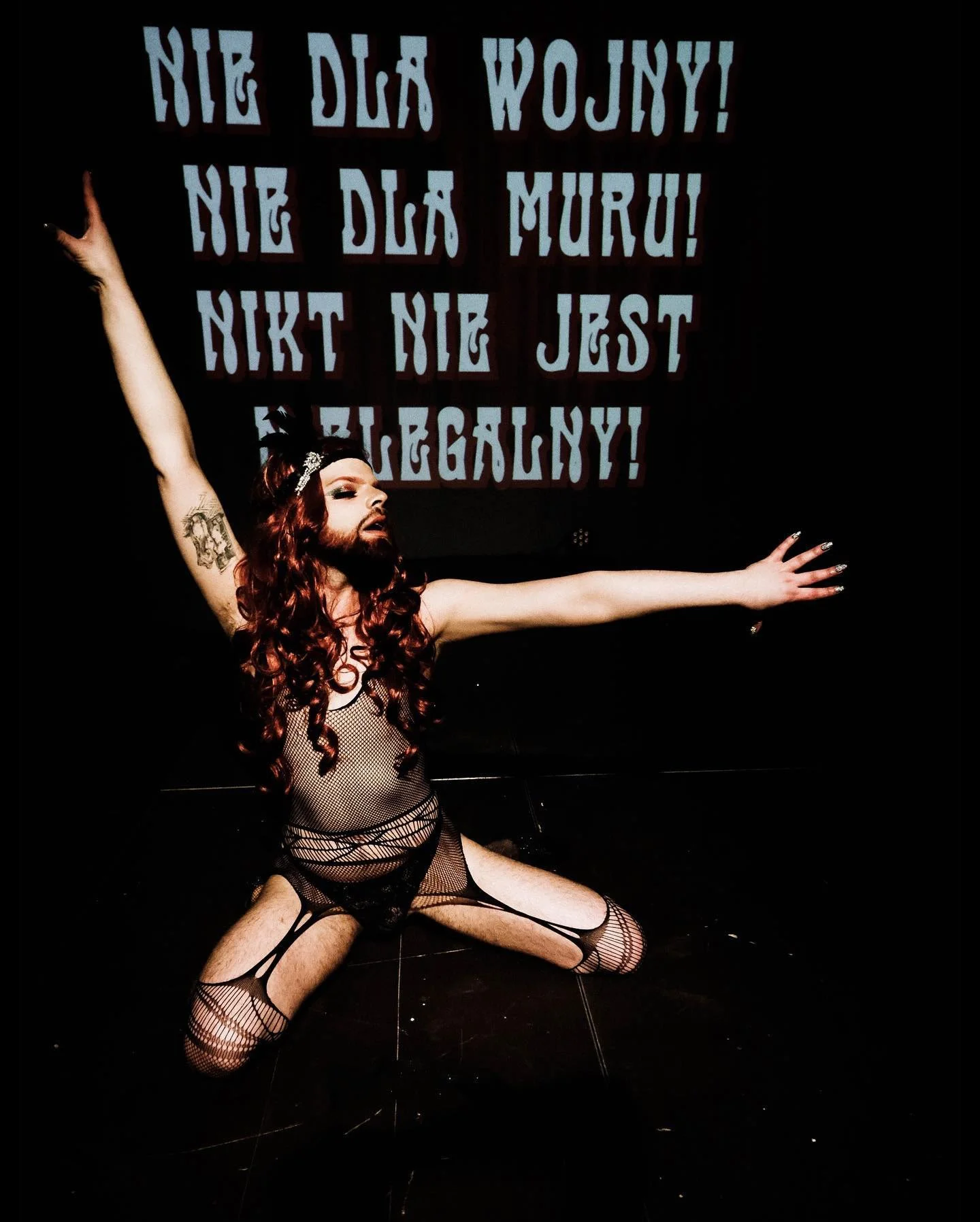
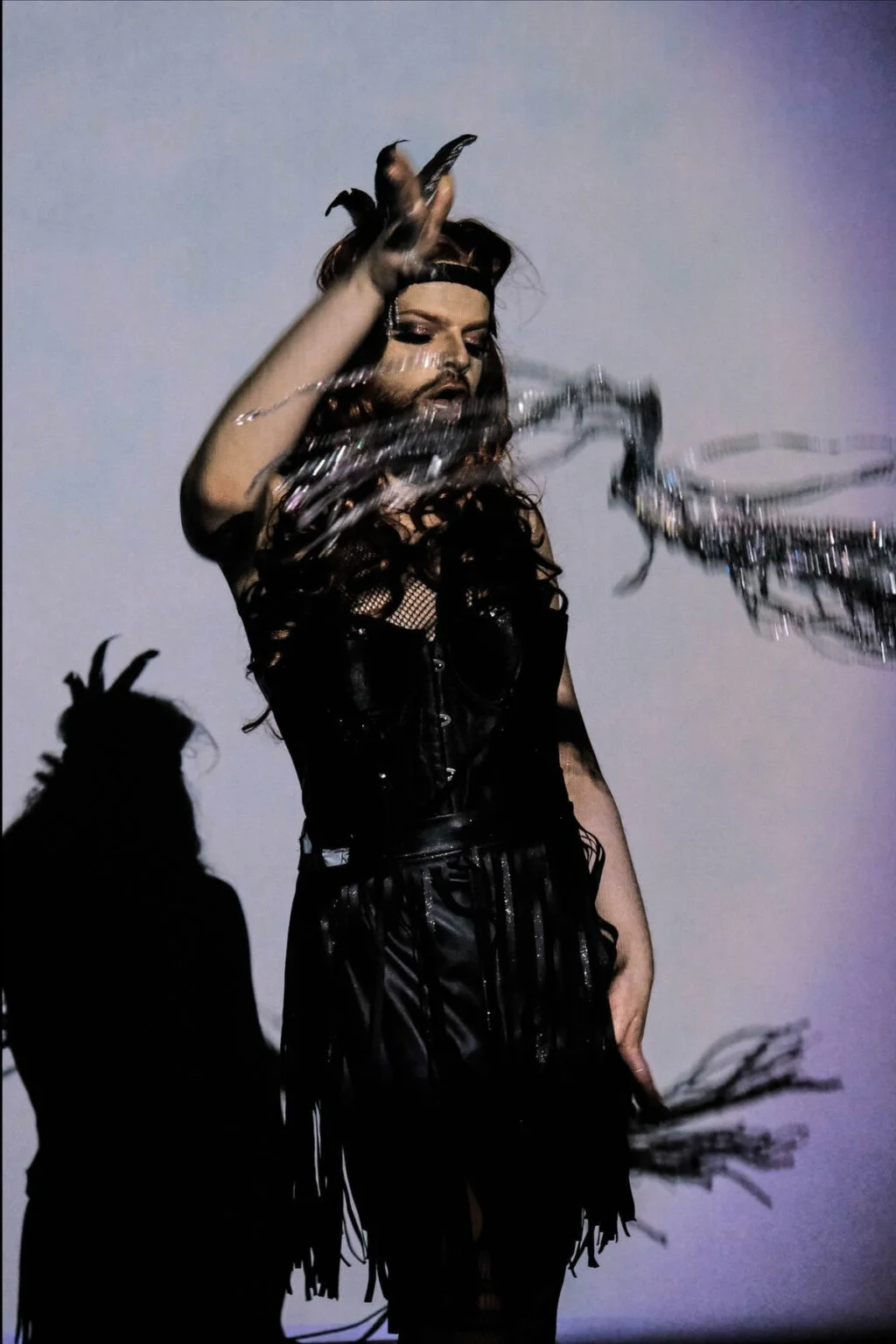
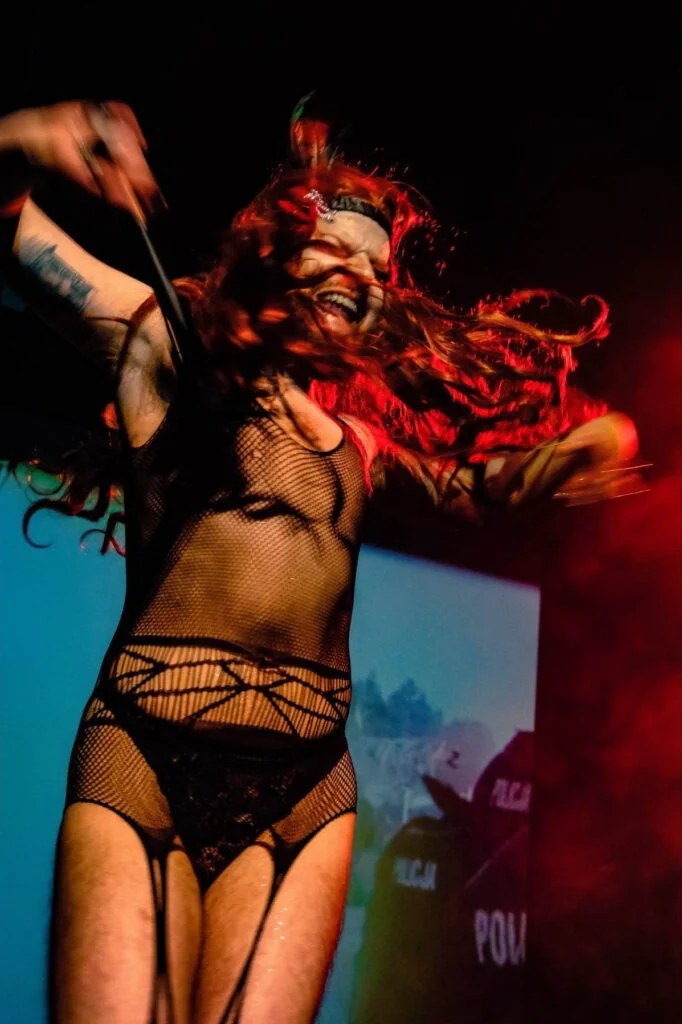
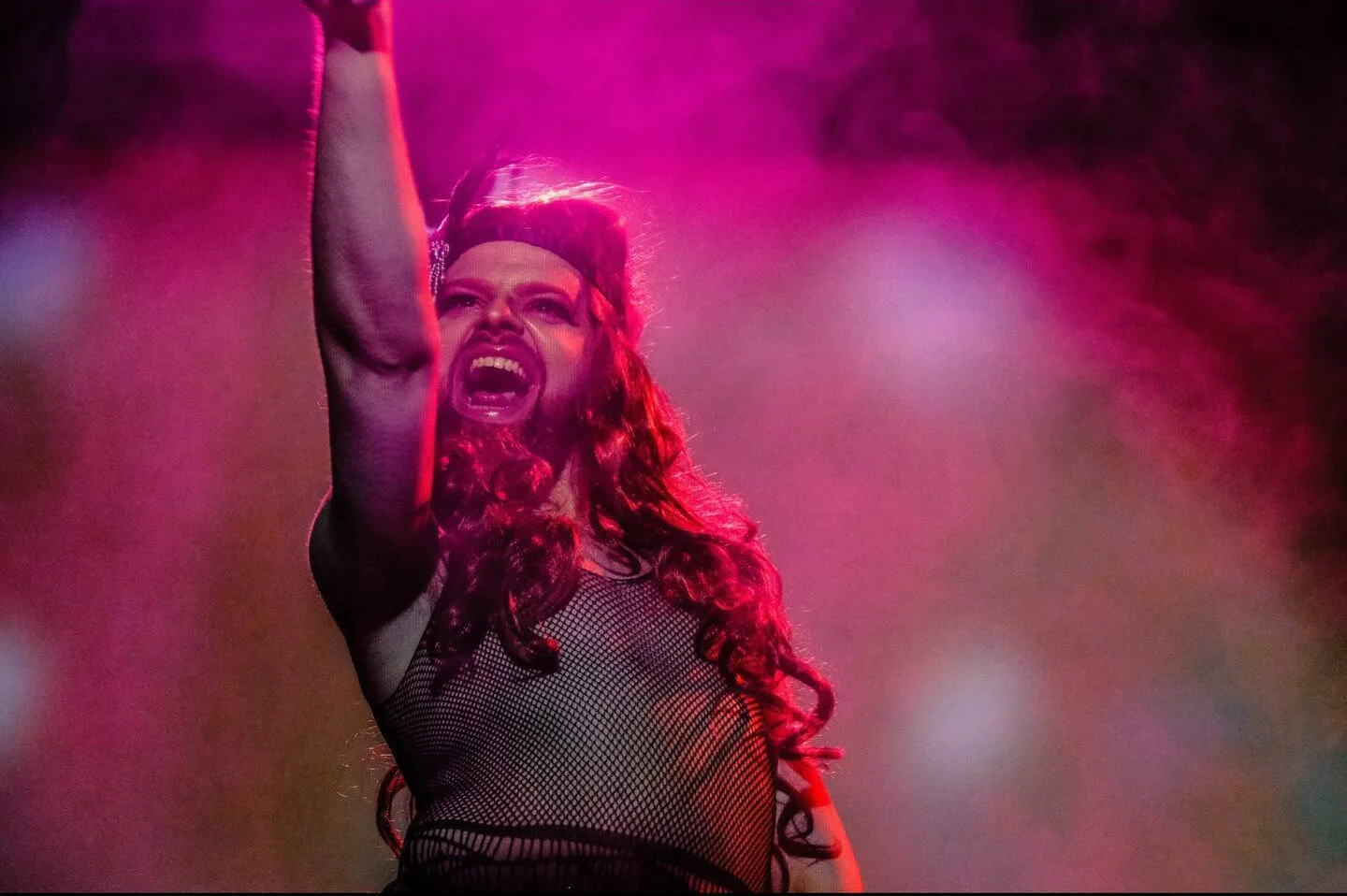
// PERFORMANCE TEXT // RESEARCH
The work refuses the idea that performance can function as refuge. Instead, it treats spectacle as a political technology—one that distracts, seduces, anesthetizes, and sometimes tells the truth by accident. In Cabaret, beauty doesn’t mask brutality; it collides with it. The stage becomes a site where the polished surface of entertainment is repeatedly punctured by the realities it usually helps us avoid.
Contemporary images and references to geopolitical violence enter as pressure rather than backdrop: the Russian invasion of Ukraine, the humanitarian catastrophe at the Polish–Belarusian border, the racialized policing of migrants and refugees. These materials do not “contextualize” the performance—they destabilize it. They interrupt rhythm, contaminate glamour, and force the audience to remain in the unresolved proximity between the glittering body onstage and the bodies made disposable offstage.
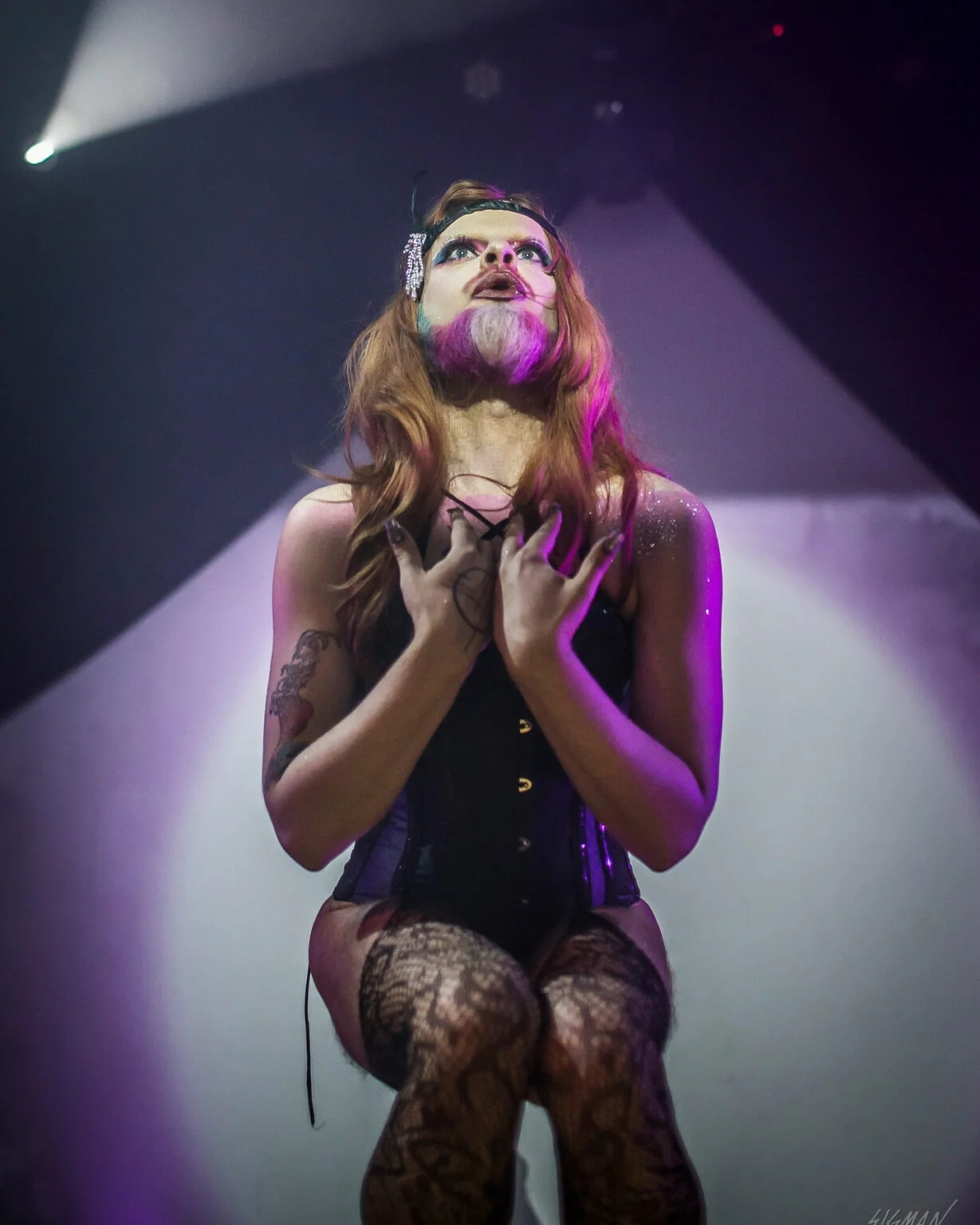
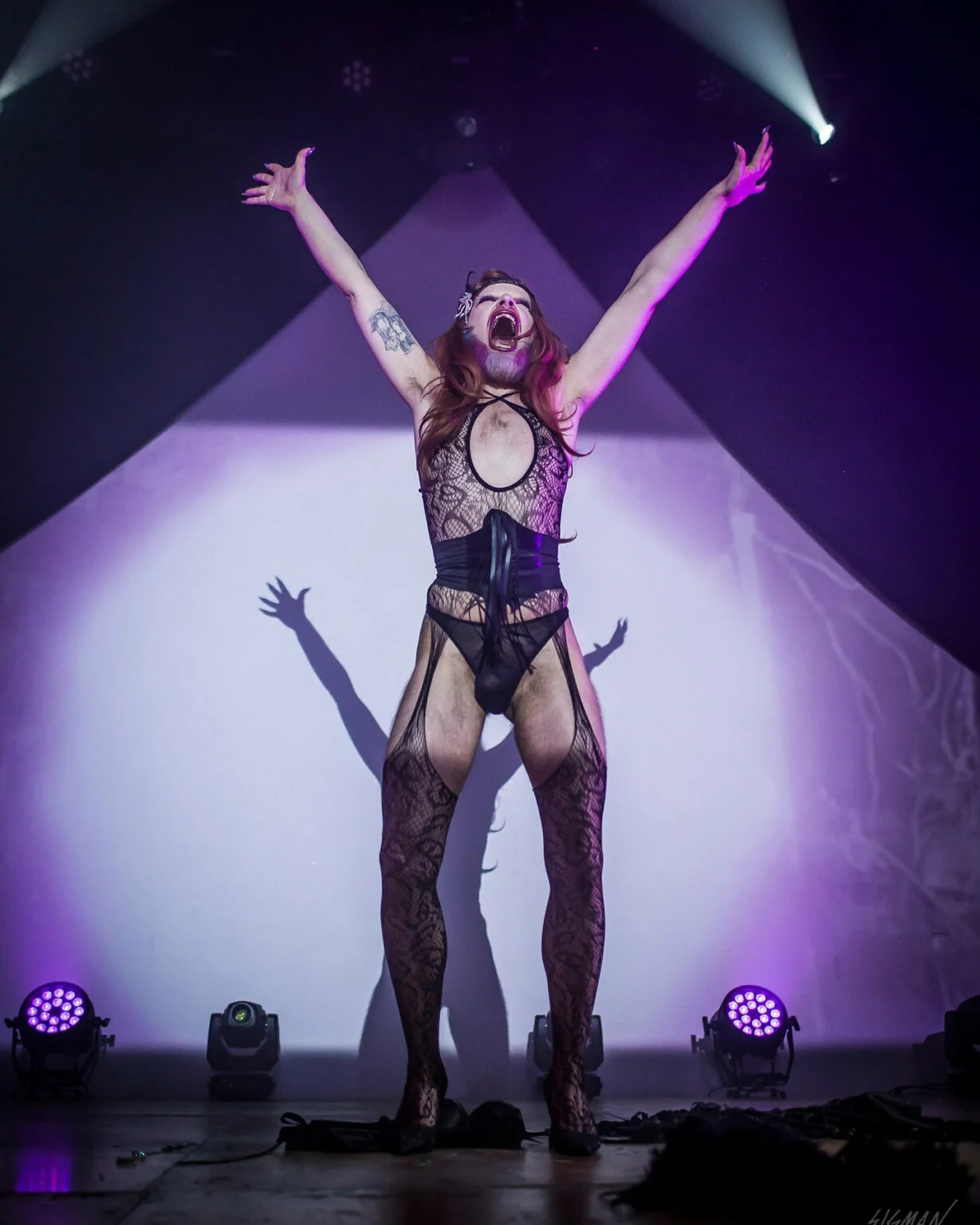
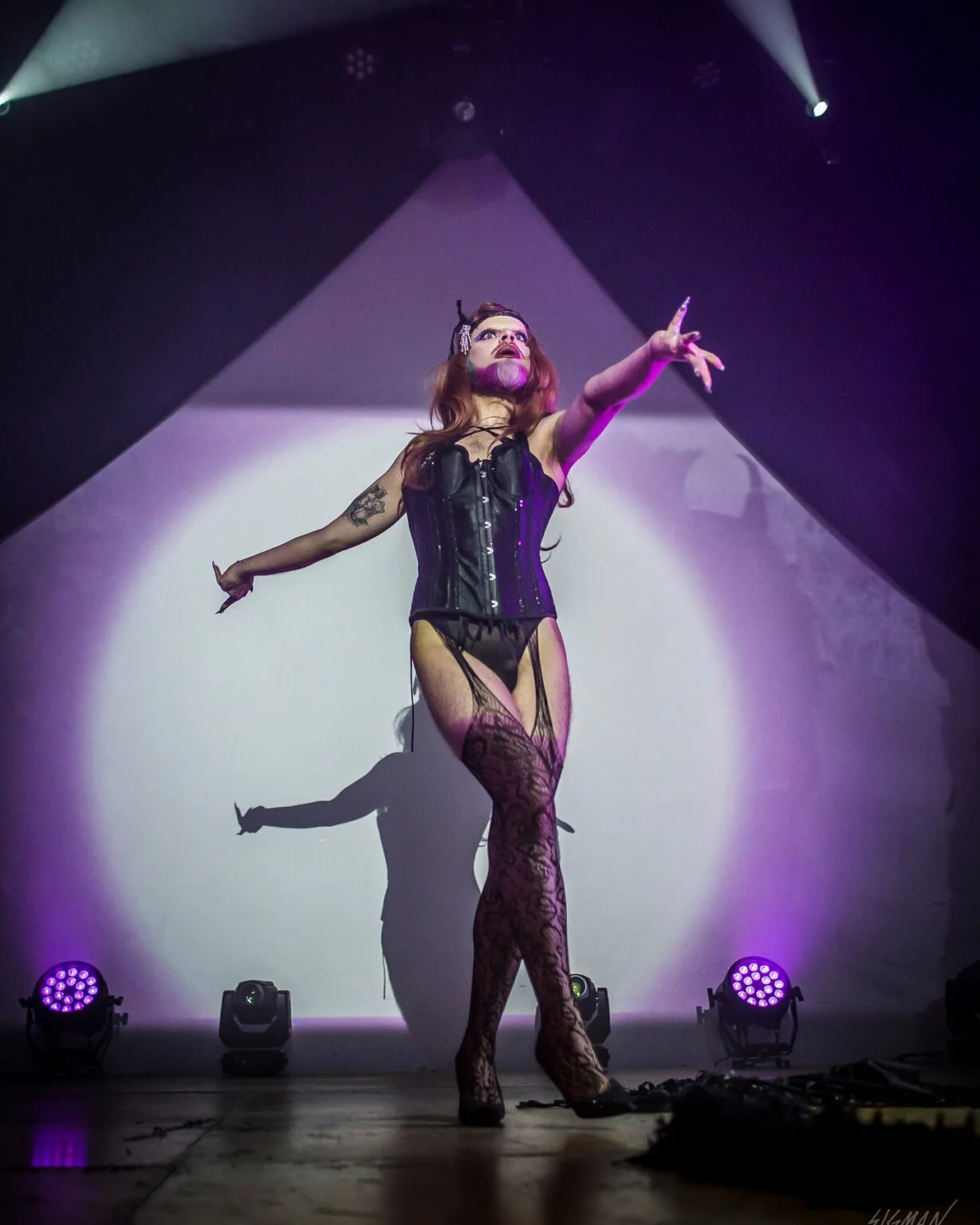
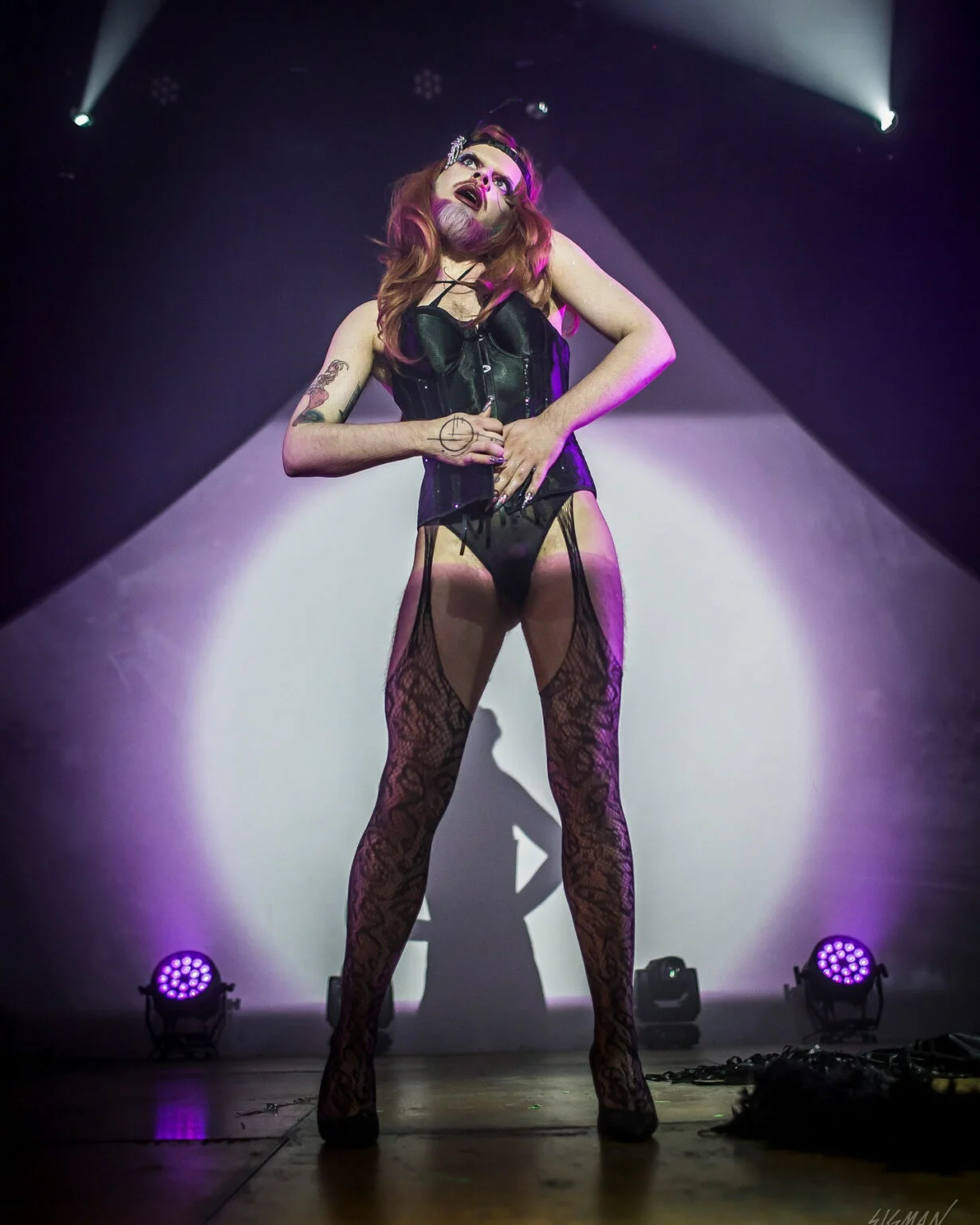
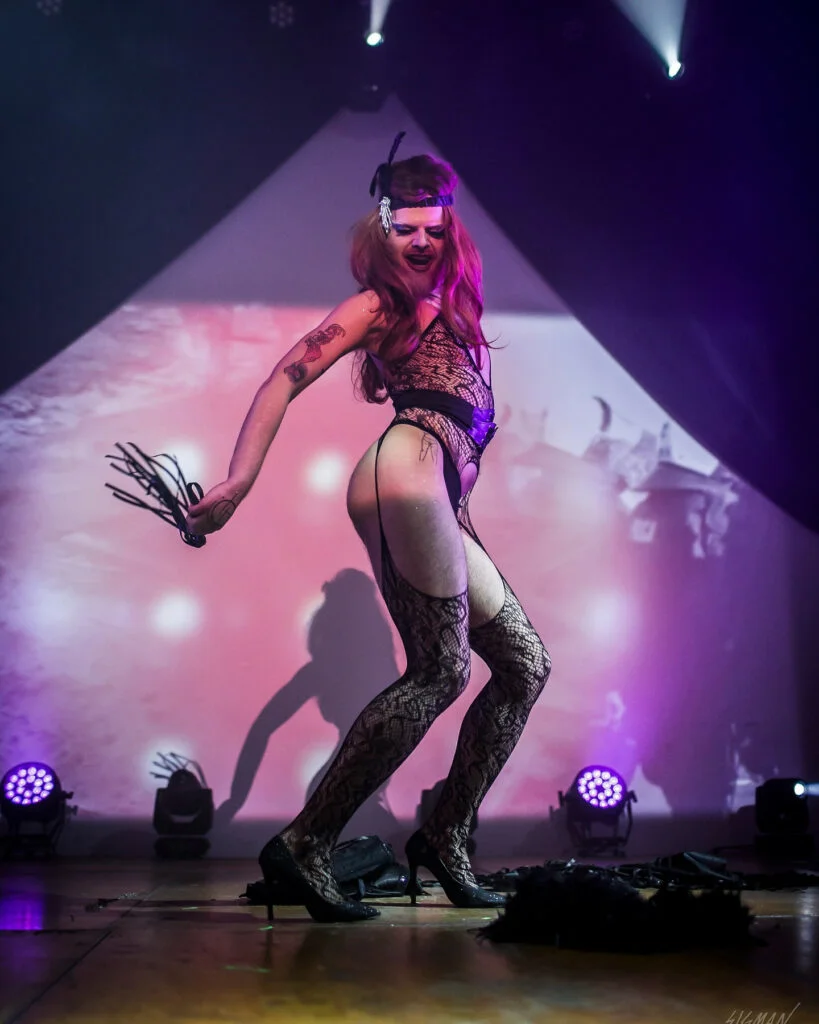
The performer’s drag hyper-femininity is central to this tension. Seduction is present, but it is not innocent. Choreographed striptease becomes a form of political exposure, not erotic payoff: an insistence on what is usually kept out of frame—state violence, regulated mobility, selective empathy, the spectacle of suffering. Undressing here does not offer access; it reveals the conditions under which access is demanded.