Bacherolette II
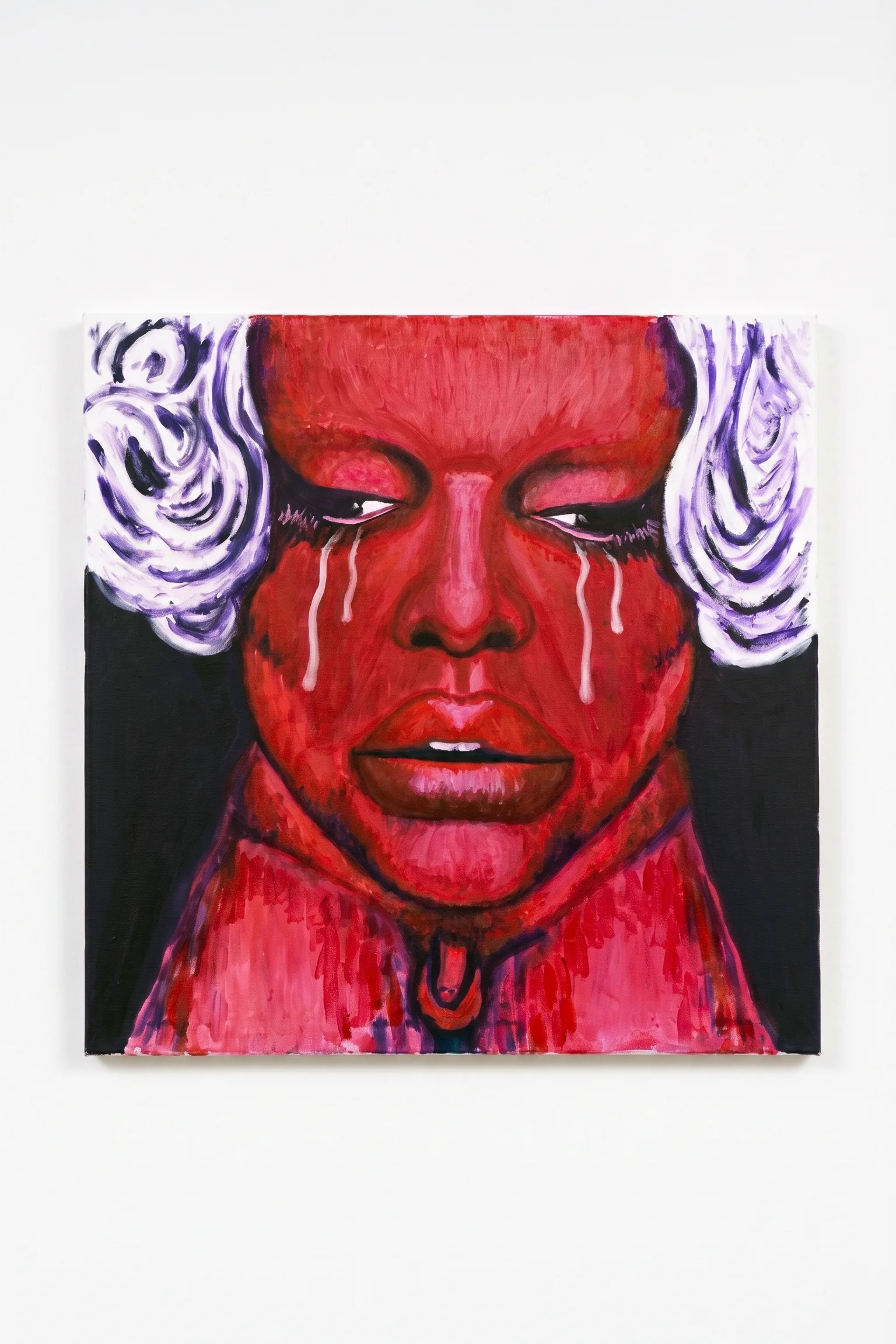
A red face presses against the limits of the canvas, its white tears held on the surface with the same insistence as eyeliner, lashes and lipstick.
Curatorial Summary
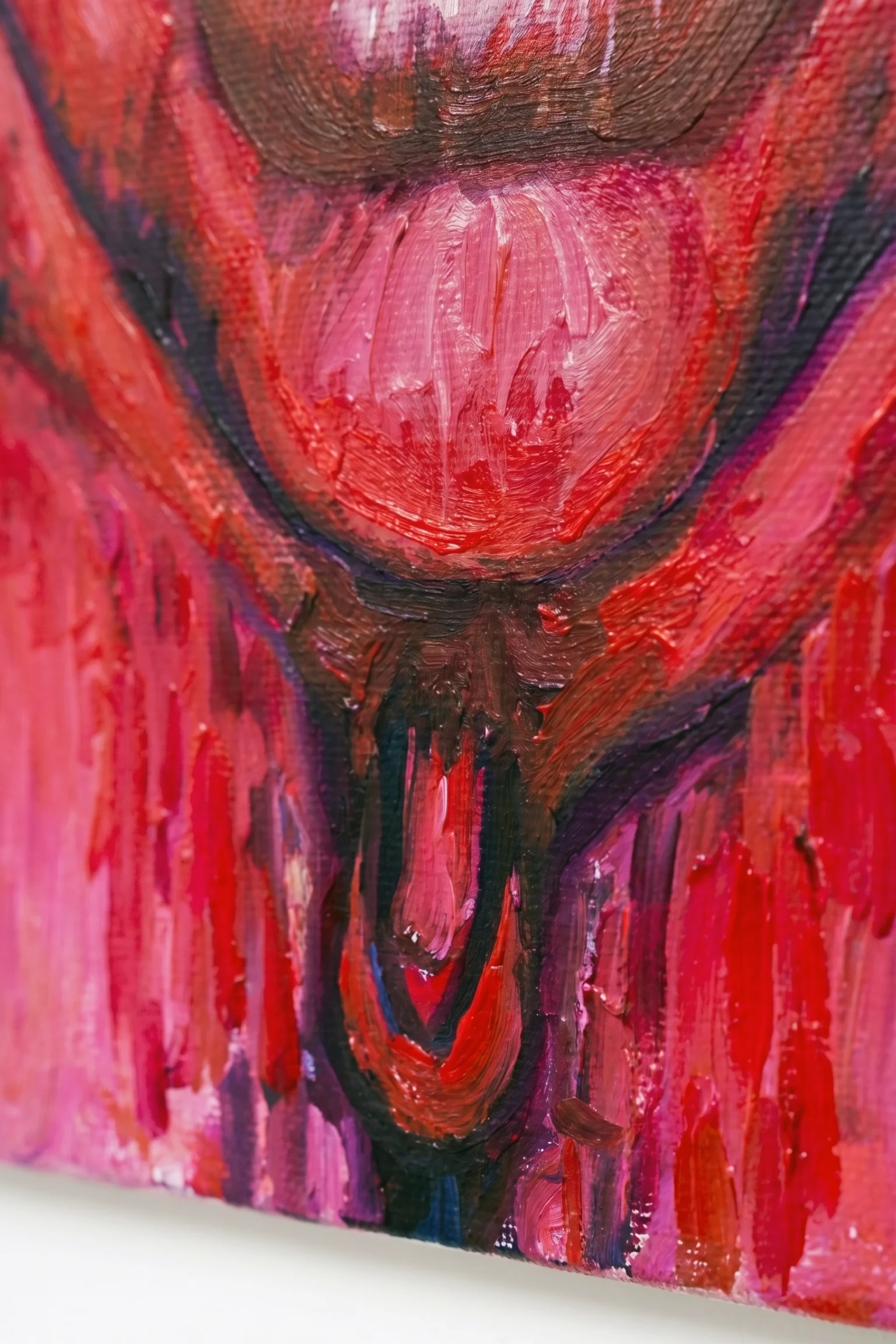
In Bacherolette II, the portrait is brought so close that the surrounding space almost disappears. The forehead meets the upper edge of the canvas; pale curls crowd both sides, while the lower face occupies nearly everything below. There is little room left for background, context or distance.
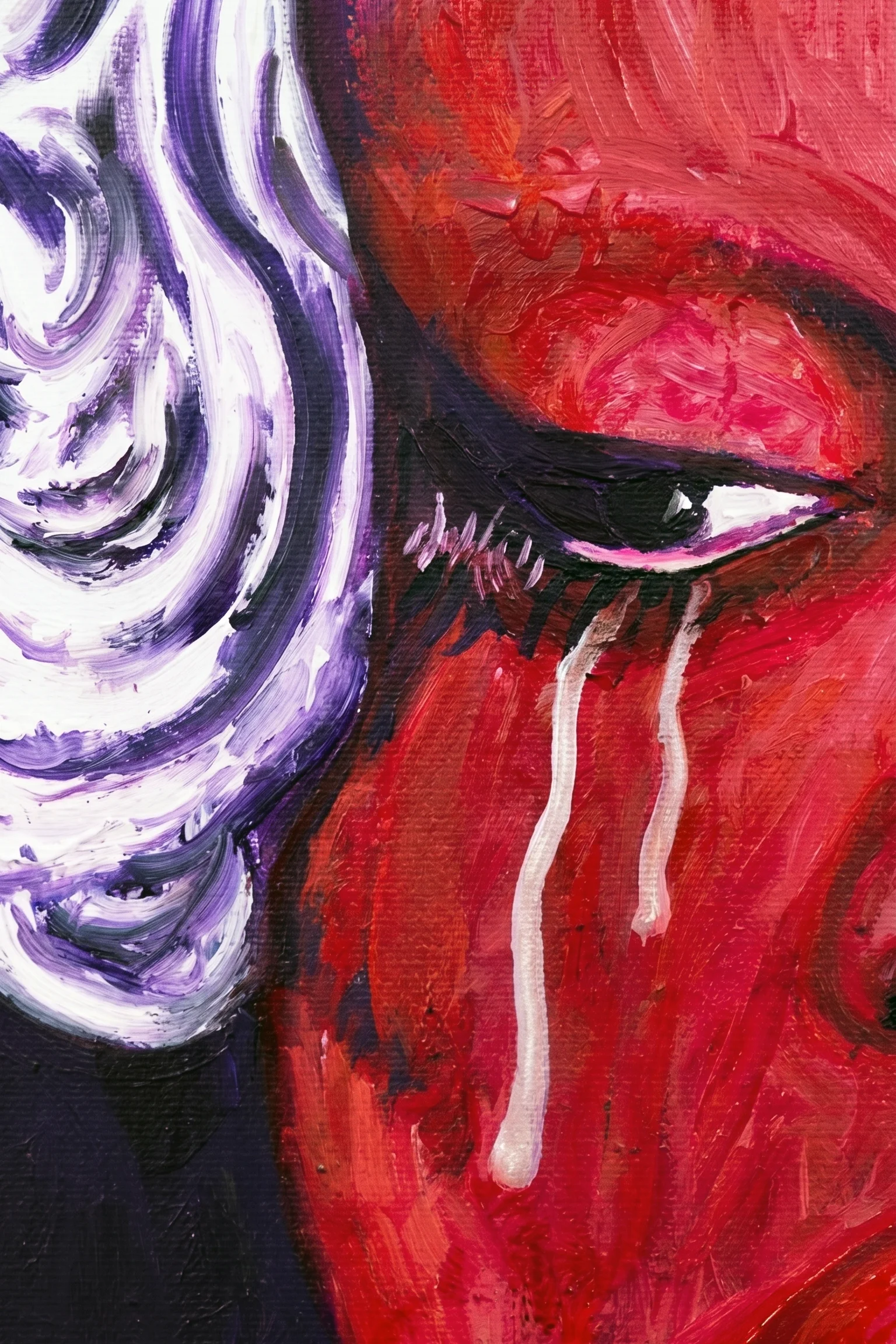
Against the saturated red skin, the tears appear as opaque white tracks. Nothing dissolves beneath them. Eyeliner stays sharp, lashes remain exaggerated, lips retain their painted shape. Rather than interrupting the made-up face, the tears enter its visual grammar.
The painting refuses the familiar passage from cosmetic surface to supposedly unguarded emotion. Crying offers no revelation beneath the makeup. It adds another mark to what is already there.
Placed beside Bacherolette I, the change is one of scale and location. In the earlier painting, a face grew inside another body. Here, no larger anatomy remains around it. The face has expanded until the canvas itself becomes its limit.
artist
statement
The face had to occupy almost the entire painting.
A tight crop removed the need for gesture or pose. Once the rest of the body disappeared, everything depended on scale, colour and what could happen directly on the surface of the face.
I painted the skin red and pushed the hair toward an almost artificial whiteness. The tears came as opaque lines rather than transparent traces. I wanted them to remain unmistakably painted.
The makeup stays in place underneath them. There is no moment when crying strips the figure back to a more truthful version of herself, because I was never interested in setting appearance against authenticity.
What finally mattered was that the tears could function like one more thing put onto the face. Once that happened, they stopped behaving as evidence of something hidden underneath it.