Bacherolette I
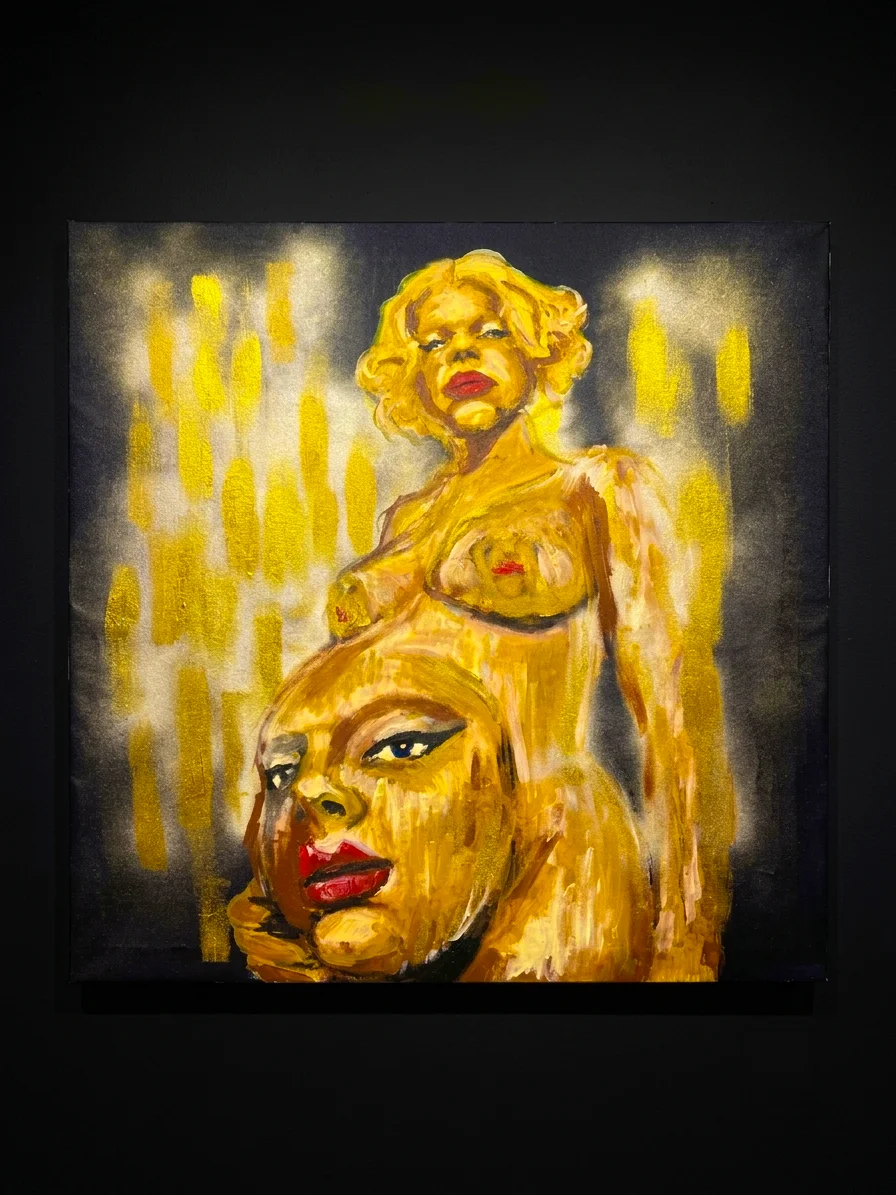
An oversized face fills the abdomen of a pregnant blonde figure, throwing the scale and coherence of her body out of balance.
Curatorial Summary
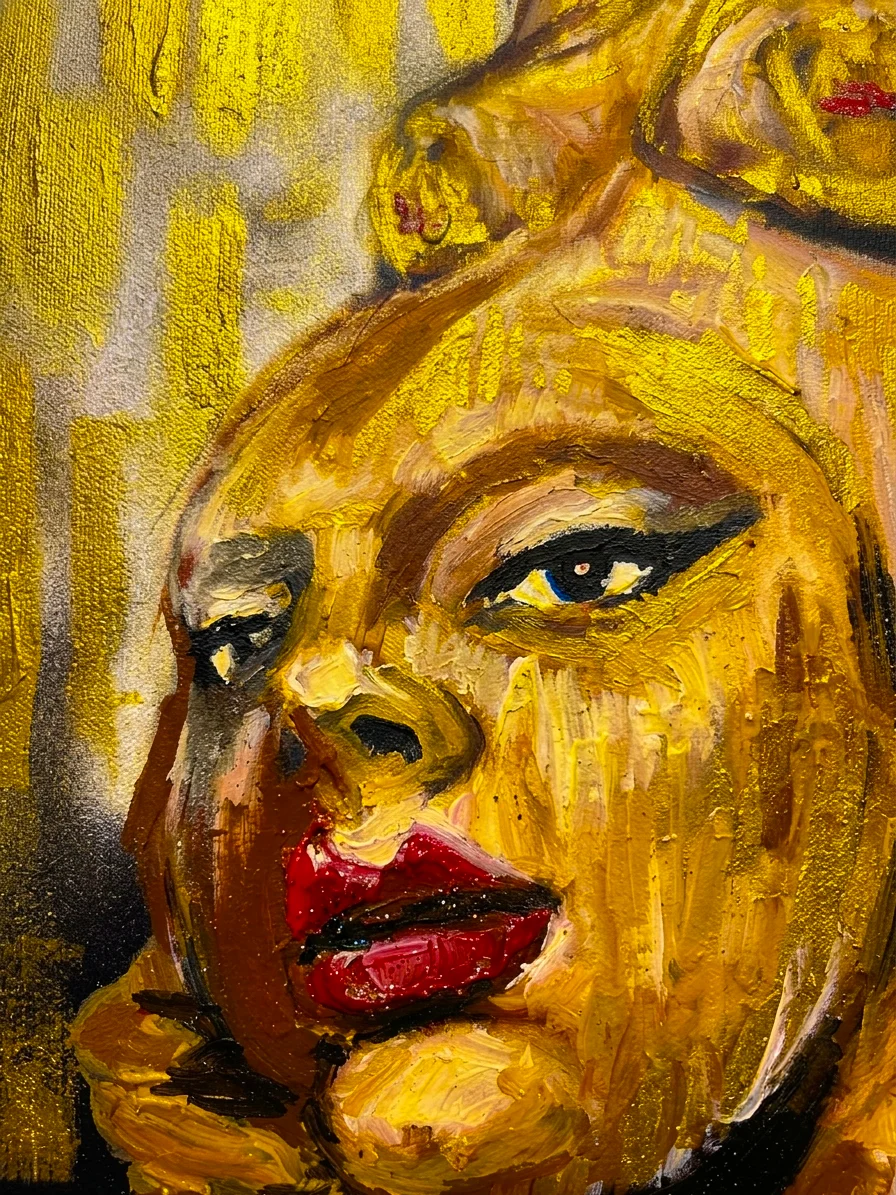
Bacherolette I is built around a distortion of scale. A blonde figure occupies the upper part of the canvas; below, an enormous face takes over the abdomen. Too large to resemble a fetus and too exposed to suggest something hidden inside the body, it becomes a second centre of the painting.
Facial features recur elsewhere in smaller, less definite forms. Recognition is no longer confined to the head. It moves across the figure, appearing in places where anatomy offers no obvious place for it. The body remains readable, but its hierarchy has been disturbed.
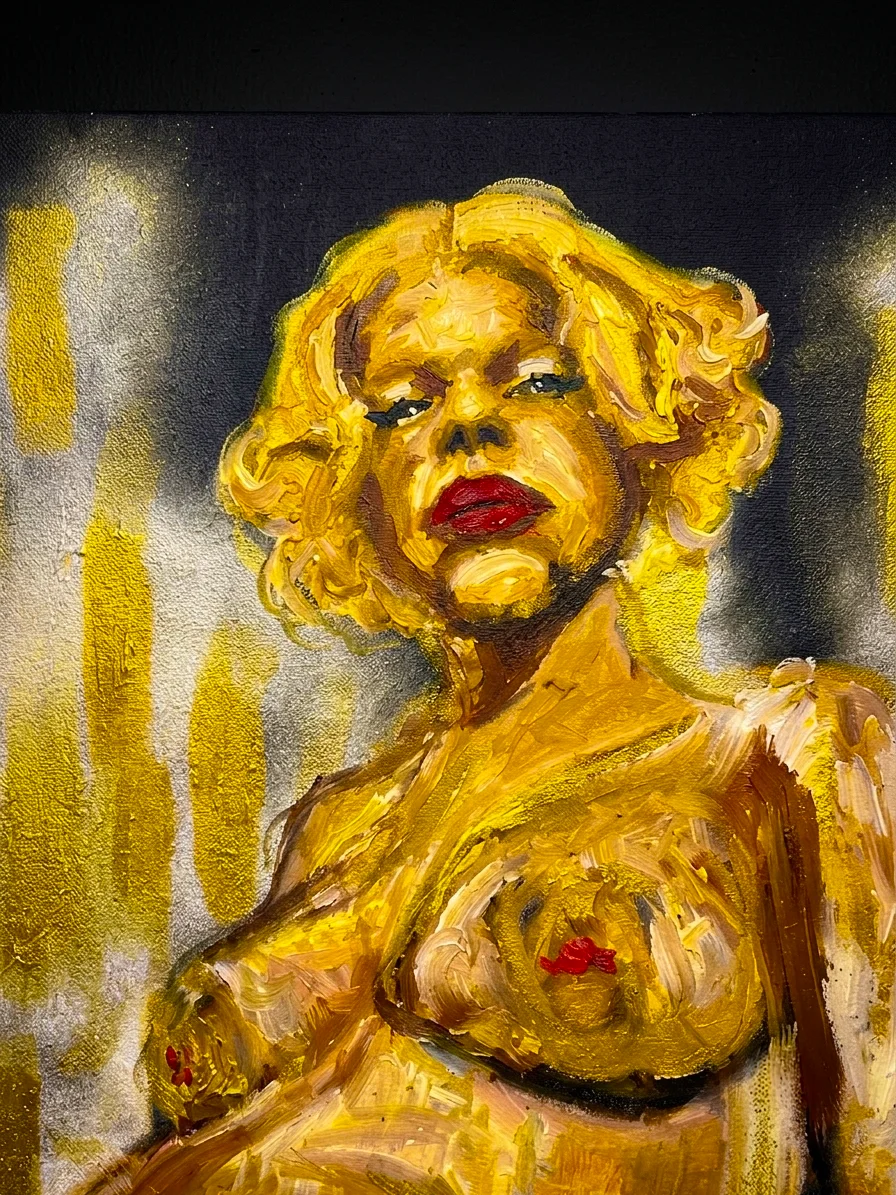
Gold runs through the entire composition. Skin, hair, background and the enlarged face share the same luminous surface, making it difficult to separate what belongs to the figure from what appears within her. The painting gives no clear visual boundary between container and contents.
In the context of Shekhinah in Labor, pregnancy provides the condition for this disproportion. What is being carried has already become fully visible and has grown beyond the scale expected of an interior form. The abdomen still marks a site of gestation, but what develops there is an image large enough to alter the body around it.
artist
statement
I knew quite early that the face in the belly had to be too big.
A smaller face would have made the relationship too easy to read. I kept enlarging it until the proportions of the figure stopped working normally. I wanted the belly to remain recognisable, but I also wanted whatever appeared there to take up an unreasonable amount of space.
I introduced smaller facial fragments elsewhere in the painting. They are less explicit, almost accidental at times. I liked the idea that the face could recur without every appearance becoming another complete portrait.
I painted the figure and the large face through the same gold surface. Separating them through colour would have made one look inserted into the other. Keeping them close in tone allowed the forms to interfere with each other.
The blonde hair and heavy makeup were important as well. I wanted the figure to look deliberately made up and visibly staged. The pregnancy belongs to that constructed image rather than interrupting it.