Ave
Performer / Director
- Year
- 2021
- Status
- ARCHIVED
performance documentation

// PERFORMANCE TEXT // RESEARCH
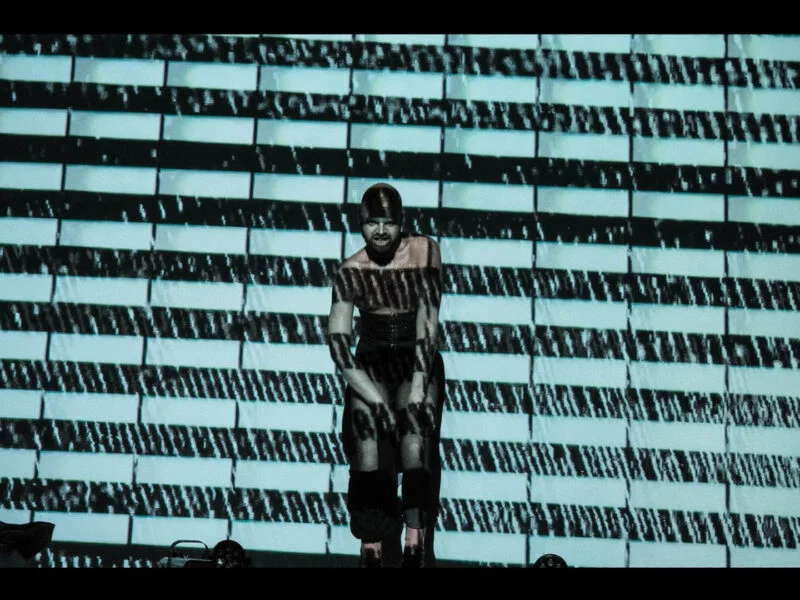
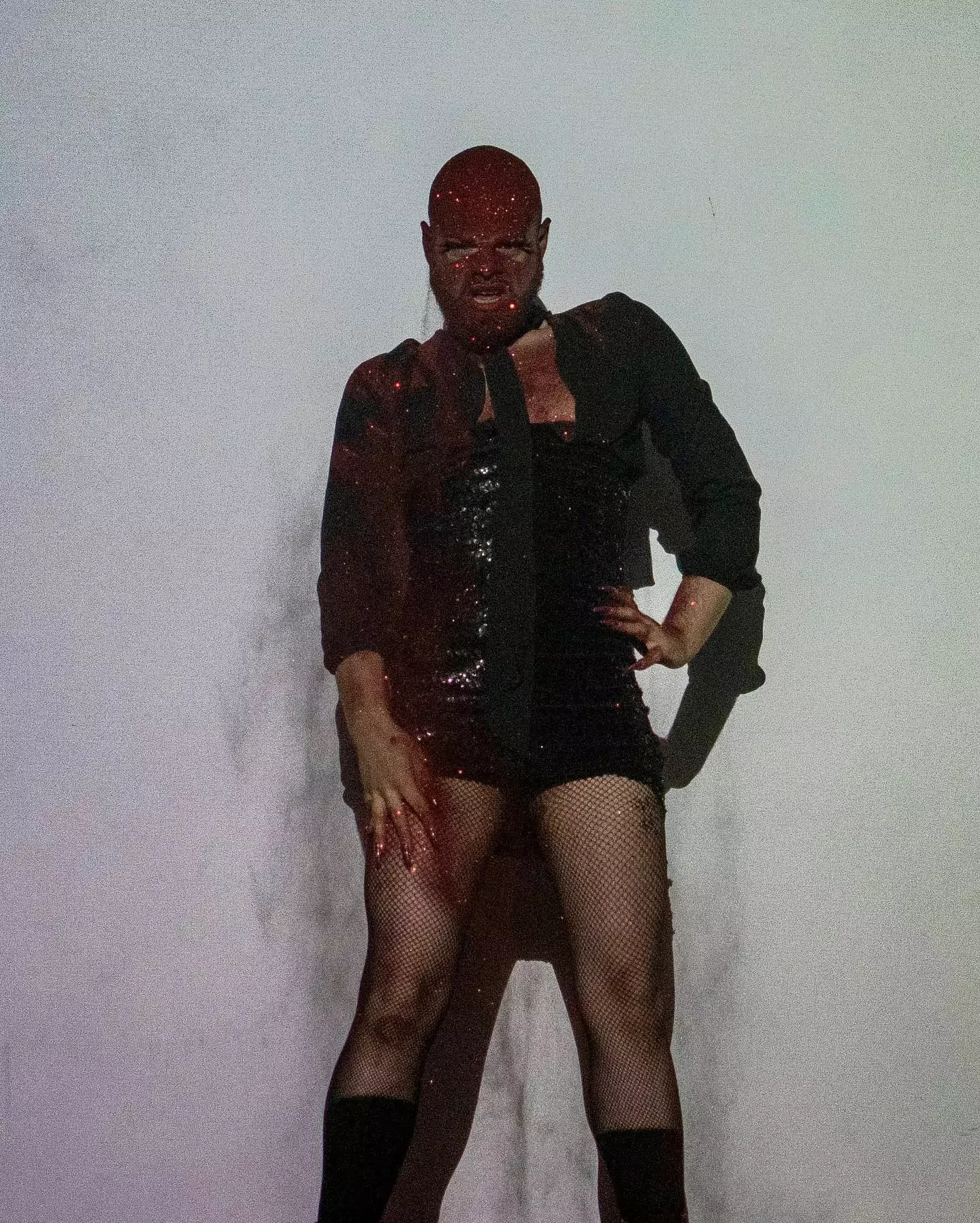
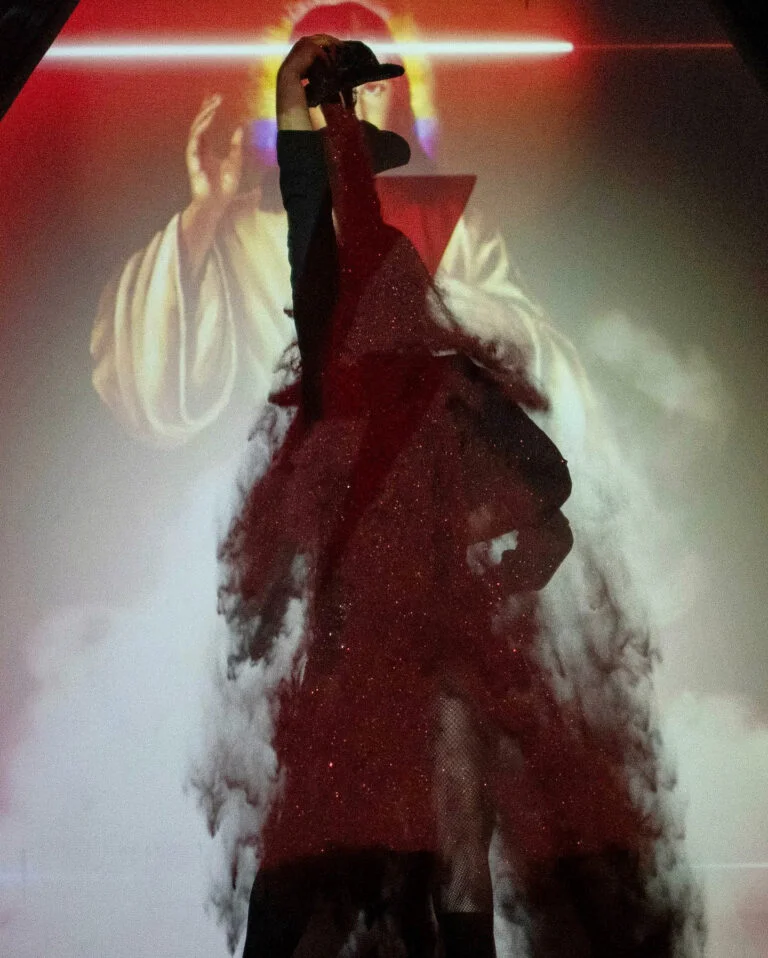
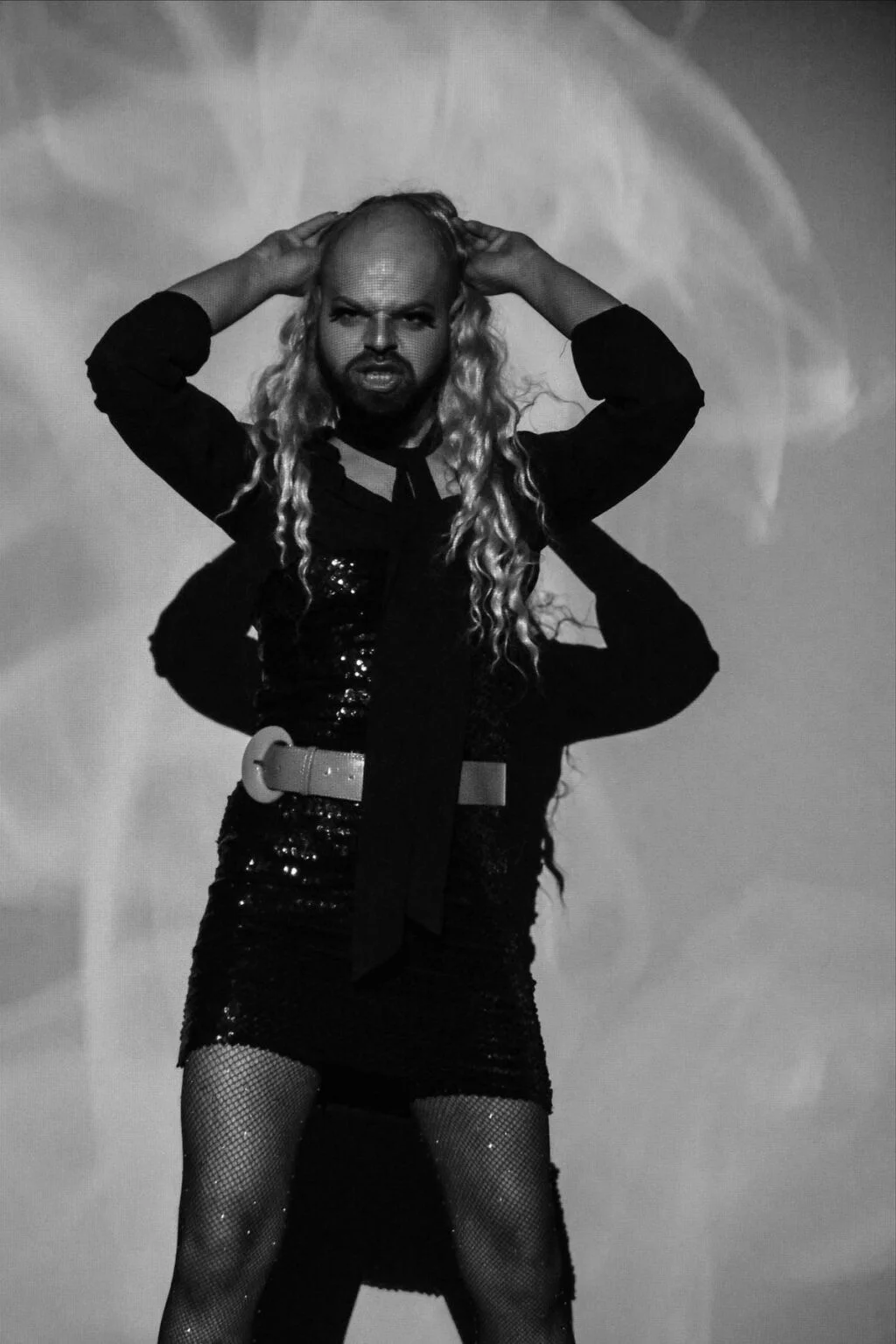
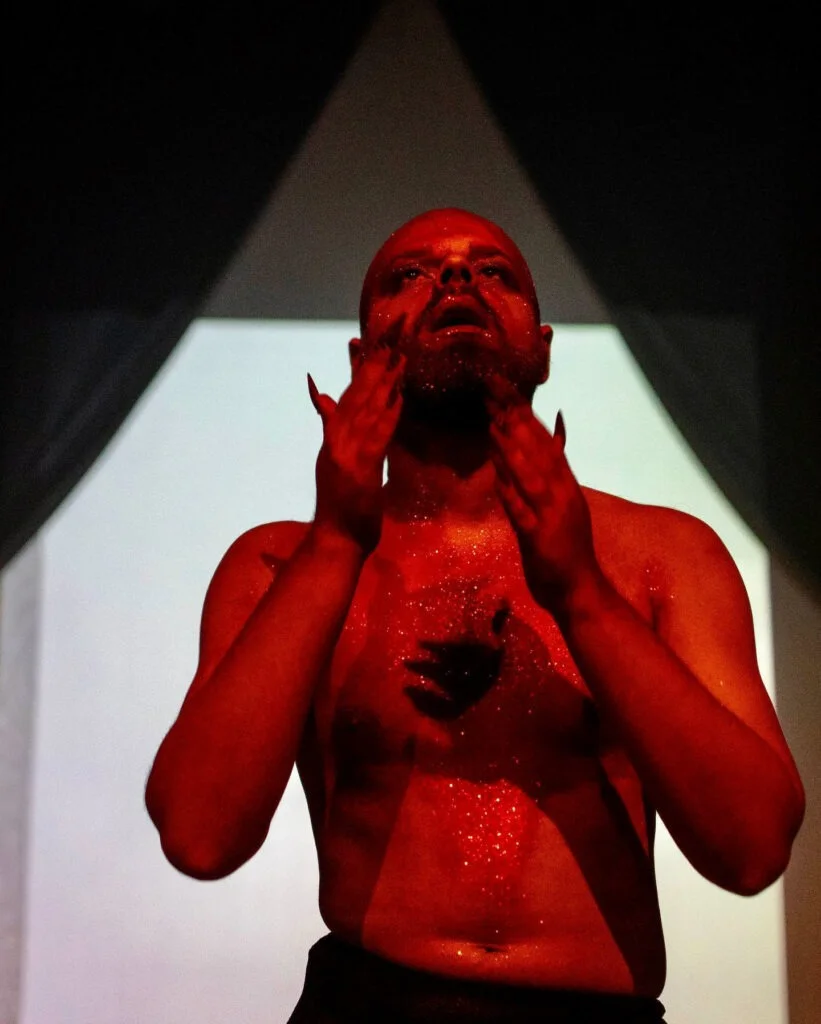
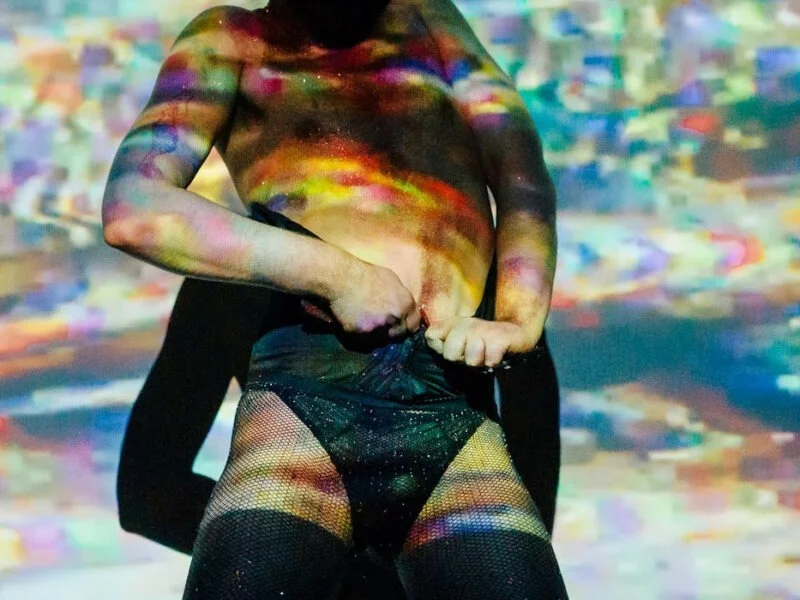
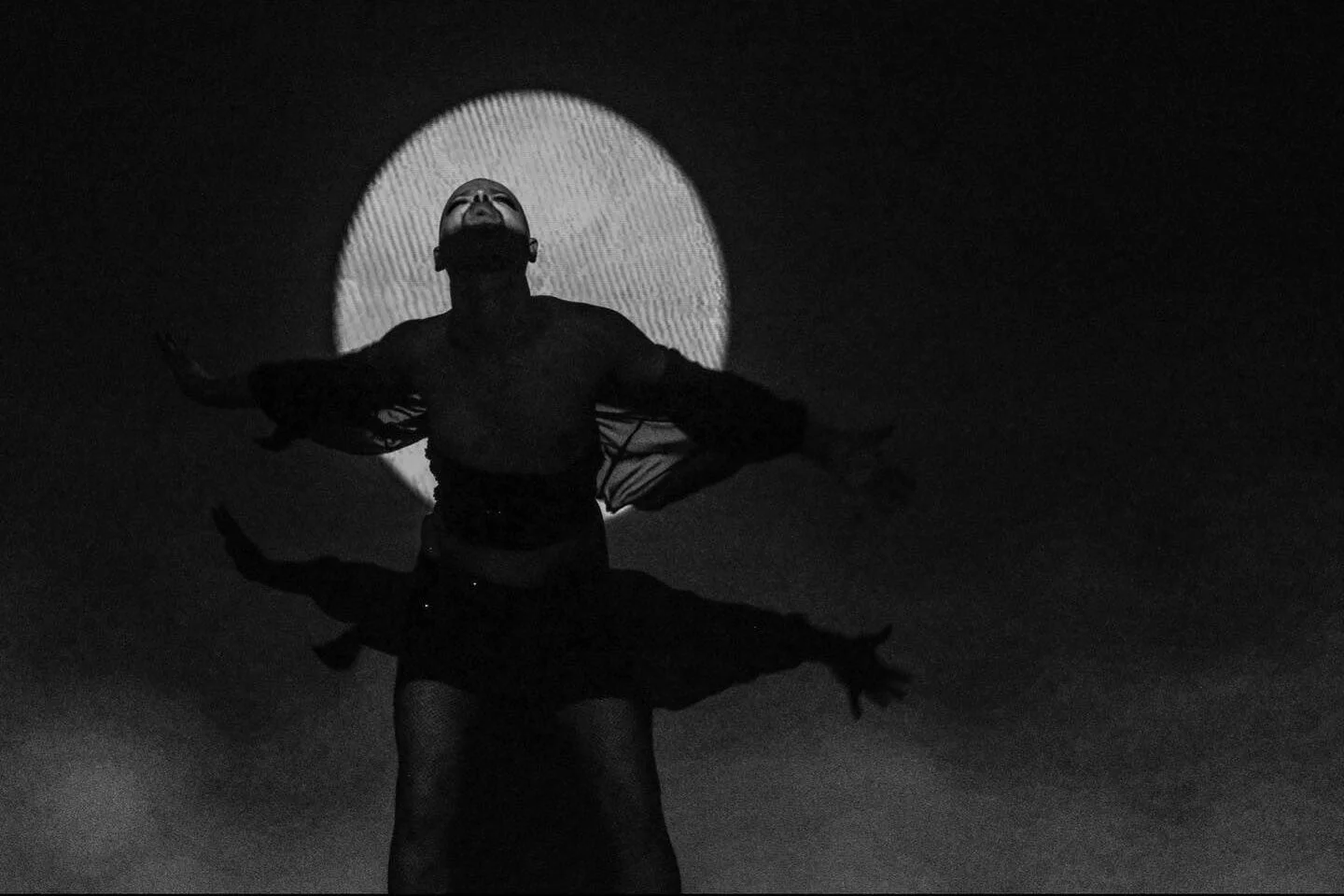
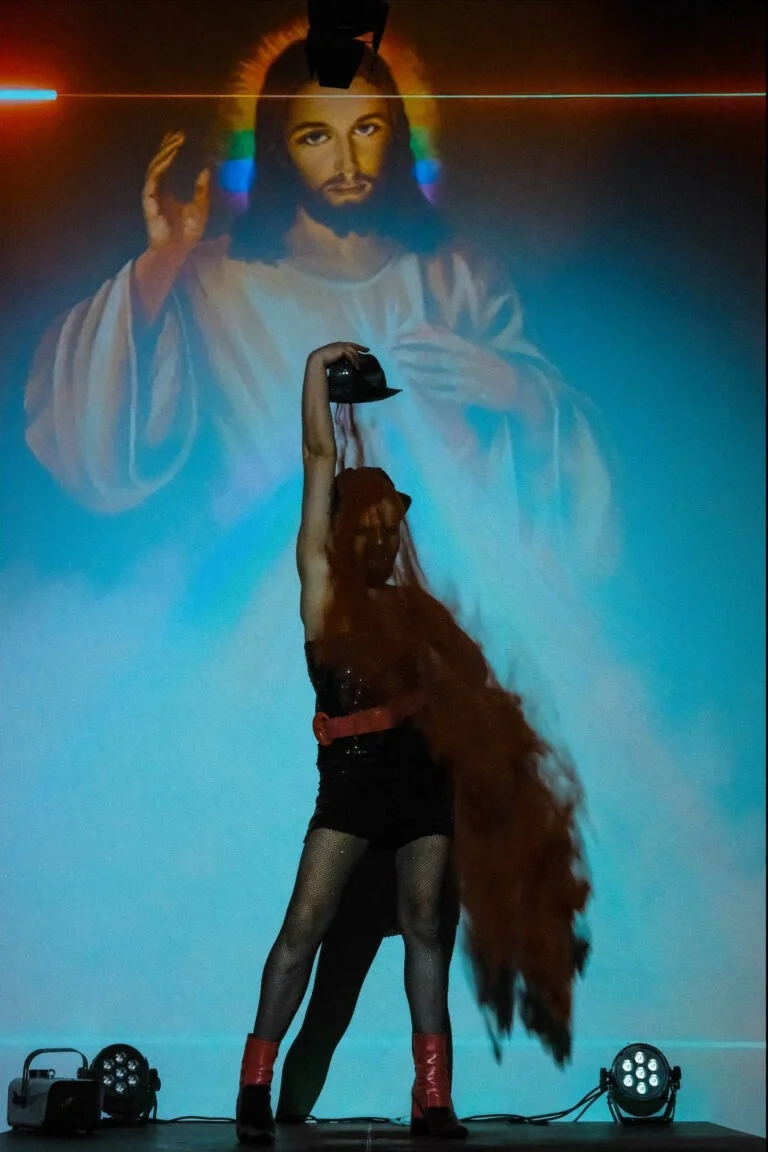
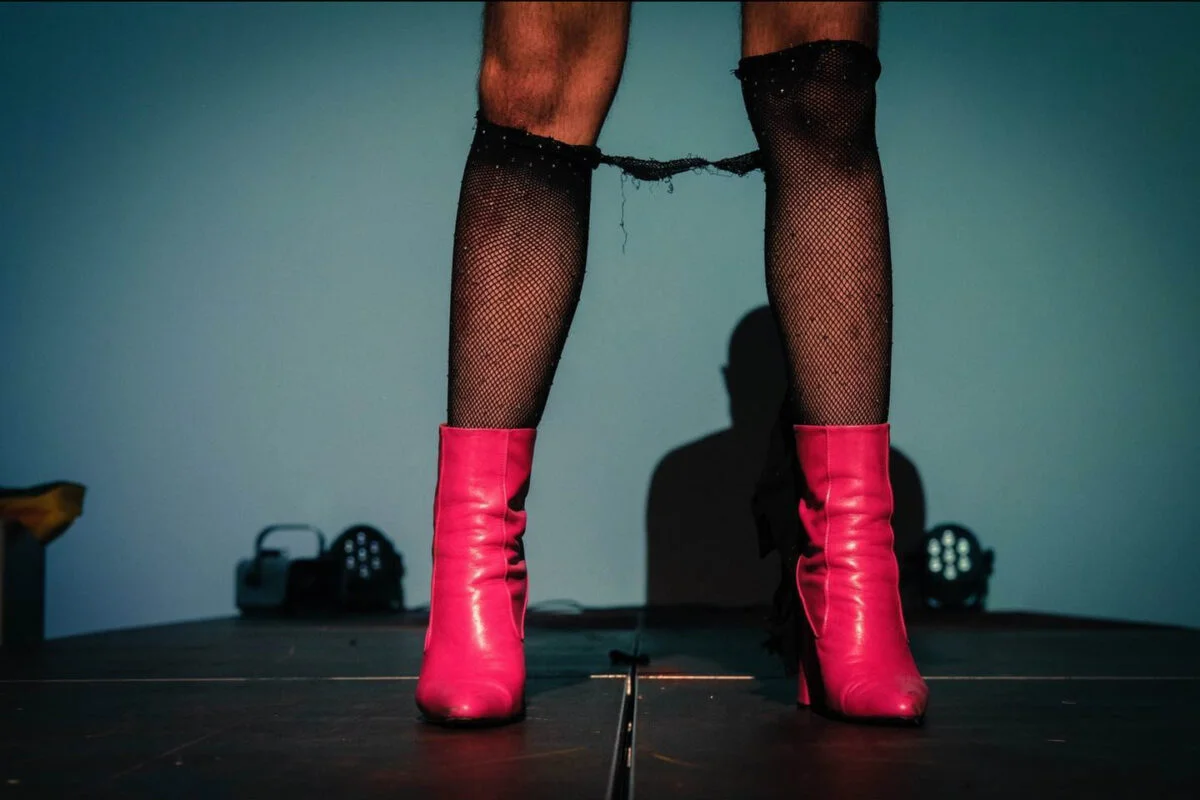
Glamour functions here as politics. Hyper-femininity is pushed into deliberate excess to make legibility visible as labor: beauty not as personal choice, but as an enforced discipline with real costs. The work refuses the fantasy that there is a “true self” beneath styling, and instead insists on the body as a site of accumulation—fatigue, strain, survival strategies, and the constant negotiation with norms that reward compliance and punish deviation. What is usually read as adornment becomes armor; what is usually framed as “revealing” becomes a refusal of the demand to be consumable.
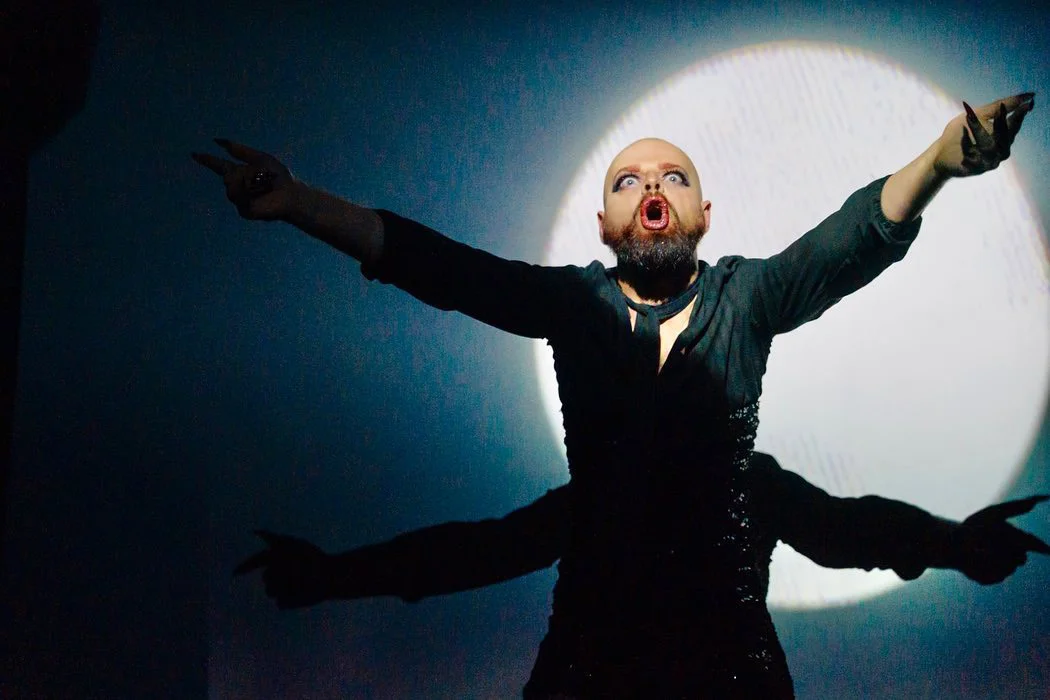
The sacred appears not as shelter but as contested infrastructure. Religious imagery and its moral economy—innocence, sacrifice, shame—are treated as unstable signals rather than stable icons. AVE renders holiness as friction: devotion entangled with damage, reverence collapsing into glitch, the halo as an error rather than a guarantee. By refusing reverent distance, the work confronts how the “universal” story has been built through exclusion, and how certain bodies are asked to disappear so that others can remain pure.
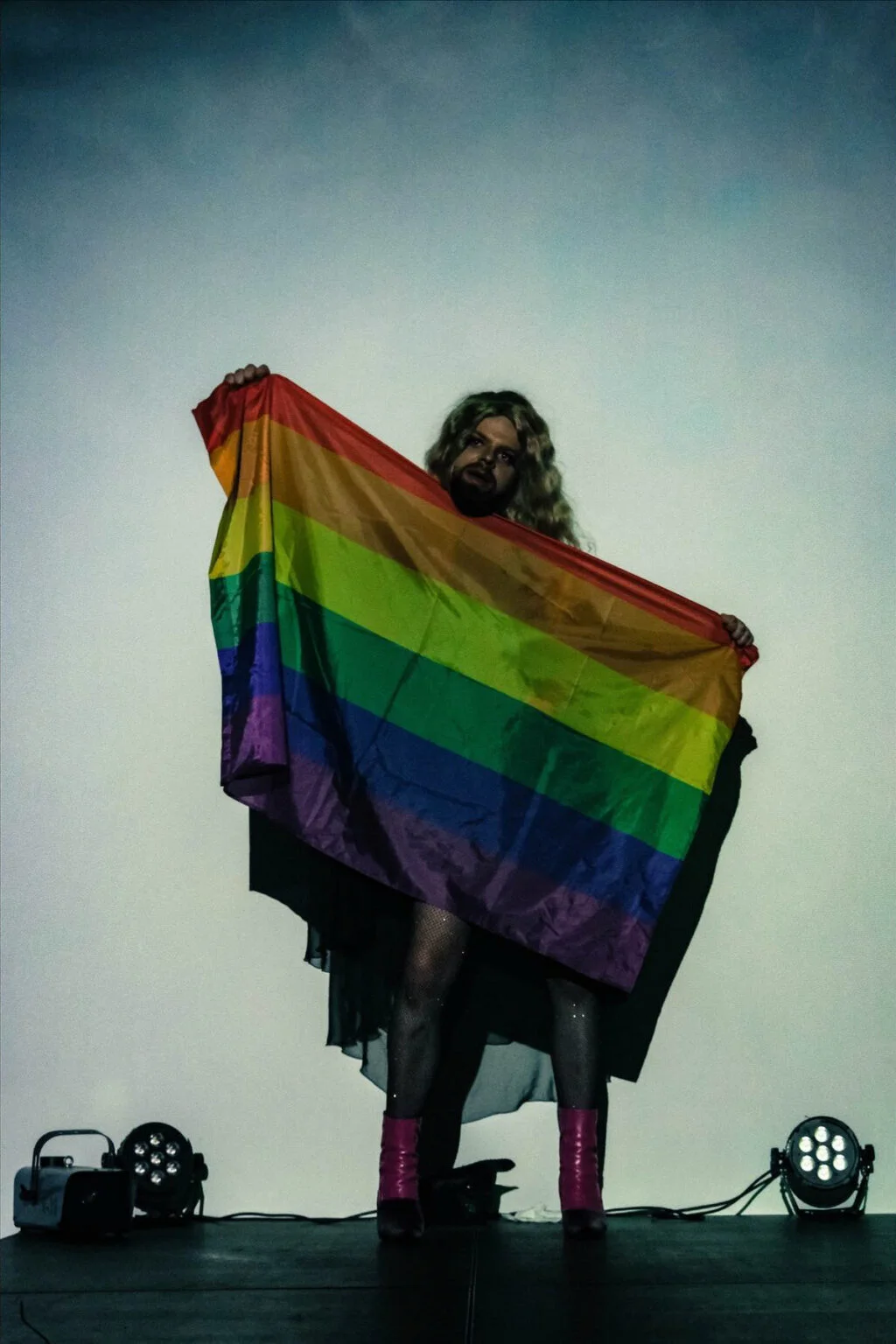
At the center is a politics of address. The AVE Manifesto does not narrate pain for empathy; it names, insists, and claims. It speaks toward those erased by the standard image of the human—femmes, queers, migrants, sex workers, neurodivergent people, survivors of violence and systemic abandonment—without translating their existence into lesson or inspiration. Prayer is recoded as public speech, not permission-seeking but boundary-setting: a refusal to be tolerated on condition of silence.